What if that awful metallic grinding sound coming from your ceiling isn’t just an aging drive chain, but an electrical drive unit working itself to death? When an overhead door suddenly shudders, stalls, or refuses to budge, it is easy to assume the entire mechanism is finished. Recognizing the early signs of a failing garage door opener motor helps you separate severe mechanical breakdown from minor system friction before you get stuck inside on a busy morning.
You probably already know the frustration of watching a door struggle, wondering whether a quick adjustment will resolve the problem or if you are looking at an unavoidable mechanical failure. We understand how disruptive that uncertainty feels. This diagnostic guide will show you how to identify true motor burnout, differentiate electrical faults from heavy spring drag, and decide whether a repair or full opener replacement makes practical sense for your home.
Below, you will find our step-by-step diagnostic checklist covering common failure symptoms, manual balance tests, and straightforward guidelines to help you choose the right path forward.
Key Takeaways
- Pinpoint the primary signs of a failing garage door opener motor, from internal casing buzzes and metallic grinding to sudden speed drops.
- Use the simple emergency release test to isolate whether sluggish movement stems from actual motor failure or heavy spring counterbalance drag.
- Apply the 50% repair-versus-replace rule to determine whether rebuilding internal gears makes financial sense compared to modern opener replacement.
- Discover how regional moisture and freezing temperatures across Washington accelerate internal electrical oxidation and drive-gear breakdown.
- Follow a clear immediate-action protocol to safely disconnect your door and protect your equipment from permanent thermal damage.
Early Warning Signs of a Failing Garage Door Opener Motor
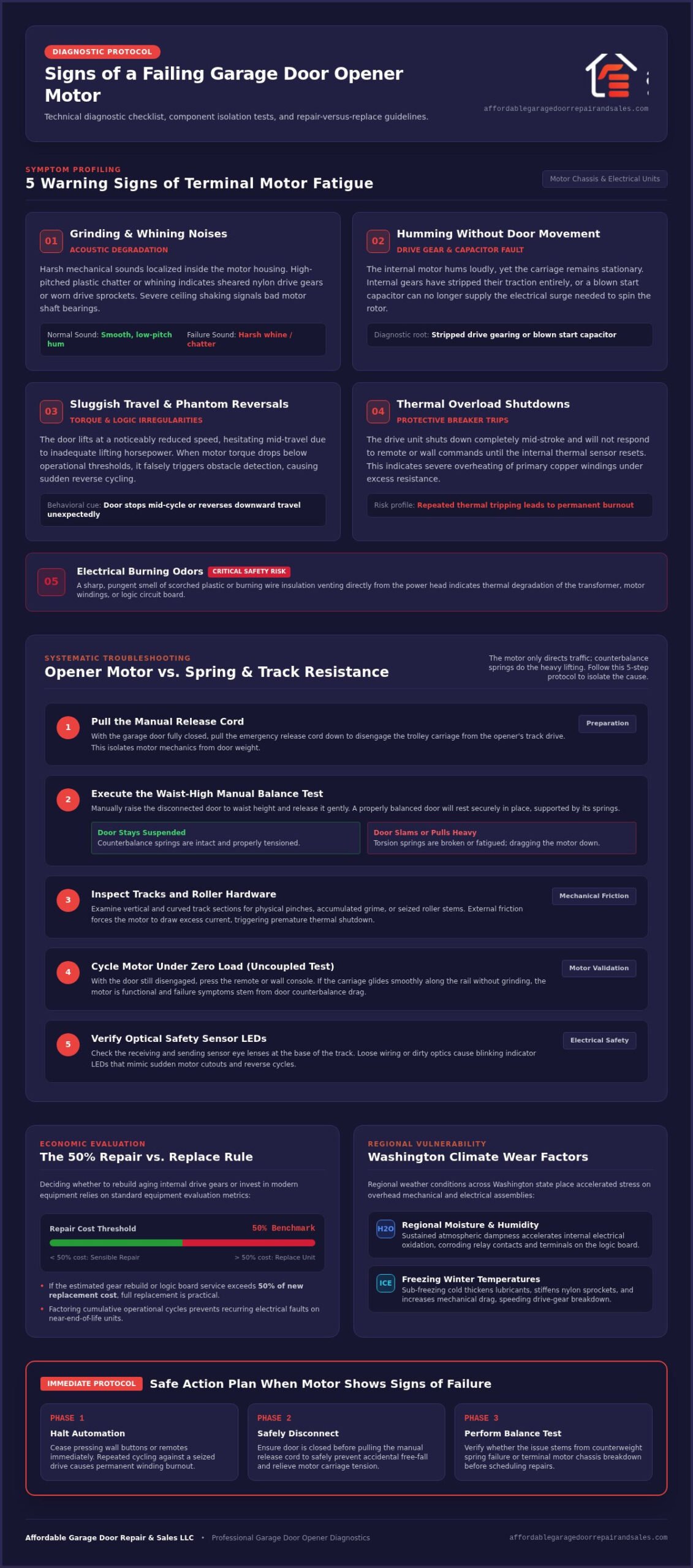
Garage door openers endure thousands of operating cycles throughout their working life, but the internal motor assembly usually warns you before it breaks down completely. Knowing the clear signs of a failing garage door opener motor prevents total lockouts and avoids unneeded stress on the surrounding hardware. When an opener motor reaches terminal fatigue, the symptoms reveal themselves through distinct operational flaws:
- Grinding and whining noises: Harsh mechanical sounds localized inside the motor chassis, usually pointing to sheared internal gears or worn drive sprockets.
- Jerky or sluggish travel: The door lifts noticeably slower than normal, shuddering or hesitating along the horizontal track.
- Motor humming without movement: The internal drive motor hums loudly, yet the carriage remains locked in place because the drive gears have lost traction.
- Thermal overload shutdowns: The motor cuts out mid-cycle and refuses to turn back on until the internal breaker cools down.
- Electrical odors: A sharp, pungent scent of scorched plastic or burning wire insulation coming directly from the power head vents.
Acoustic Indicators: Grinding, Humming, and Whining
While every operating drive makes subtle sounds, an aging motor creates specific acoustic profiles. A healthy electric drive produces a smooth, low-pitch hum. In contrast, failing nylon drive gears produce an unmistakable high-pitched whine or plastic chatter. As discussed in technical overviews of different types of garage door openers, chain, belt, and direct-drive configurations use dedicated internal gearing to translate motor rotation into lifting force. When these internal components degrade, the vibration transfers directly into the ceiling mounts. Excessive ceiling shaking indicates bad motor shaft bearings, while an electric buzzing sound without any rotor movement points to a blown start capacitor that can no longer supply the initial surge to start the motor.
Motion and Response Irregularities
Sluggish movement often reveals deeper mechanical struggles. If your door halts halfway during an upward cycle, the motor might lack the necessary horsepower to overcome normal operational weight. Homeowners often mistake this symptom for an off-track roller or misaligned travel limit. Similarly, delayed activation after pressing your wall console indicates failing internal relays or an aging logic board struggling to supply voltage to the motor windings. Another telltale issue is a phantom reversal. When internal motor torque drops below working thresholds, the opener falsely detects an obstruction during downward travel and pulls the door right back up. Recognizing these specific signs of a failing garage door opener motor allows you to take action before you find your vehicle stranded inside.
Diagnostic Checklist: Opener Motor vs. Spring and Track Issues
Before assuming your electric drive has burned out, remember that the motor only directs traffic; your counterbalance springs do the heavy lifting. When external resistance builds up, an opener will mimic the signs of a failing garage door opener motor even if its internal windings remain entirely intact. Isolating electrical faults from mechanical resistance requires a systematic approach:
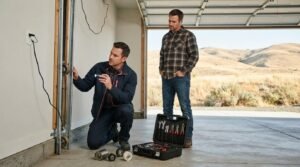
- Pull the manual release cord: With the door closed, disengage the trolley to isolate the motor from the door assembly.
- Perform a manual balance test: Lift the door by hand waist-high to evaluate physical spring tension.
- Inspect tracks and rollers: Check vertical tracks for pinches, foreign debris, or seized roller stems that force the motor to work harder.
- Run the motor uncoupled: Press your remote with the door disconnected. If the carriage travels smoothly along the rail, your motor is functioning properly under zero load.
- Verify safety sensors: Ensure the optical eye lenses are aligned with solid indicator LEDs, as loose sensor wiring can simulate motor cutouts.
The Manual Balance Test for Counterweight Verification
A properly counterbalanced garage door should rest securely waist-high when released manually, supported entirely by its springs. If the door slams down or requires significant physical effort to lift, your torsion springs are either broken or fatigued. Forcing an electric operator to haul dead door weight quickly burns out primary copper windings. Testing the uncoupled motor shows whether the internal gears spin freely without the drag of an unbalanced door assembly.
Checking Drive Components and Stripped Plastic Gears
If the uncoupled motor turns but the door still fails to travel under power, look inside the chassis. White nylon shavings scattered beneath the motor casing are conclusive signs of a failing garage door opener motor driven by a stripped worm gear. While the motor spins, the stripped gear teeth cannot turn the primary drive sprocket. Additionally, check your drive belt or chain tension; excessive sagging creates jerky travel, while an over-tightened assembly strains the motor bearings until the unit jams against the rail stop bolt.
If your manual lift test reveals that heavy mechanical drag is straining your equipment, scheduling professional spring repair will restore proper balance and protect your opener motor from catastrophic failure.
Repair vs. Replace: Evaluating a Failing Opener Motor
When you encounter clear signs of a failing garage door opener motor, determining whether to rebuild internal parts or schedule a total replacement depends on operational age and long-term value. Replacing only the core drive motor requires extensive teardown labor, often making it uneconomical compared to upgrading the entire unit. A dependable rule of thumb: if the projected repair exceeds 50% of the cost of a modern system, replacing the opener delivers far better long-term reliability.
Most residential openers carry a standard design lifespan of 10 to 15 years, though high-quality belt drives can sometimes operate for up to 20 years. Beyond simple wear, safety standards play a critical role in this calculation. Openers manufactured before 1993 lack external photoelectric safety sensors and do not comply with modern UL 325 federal safety standards. These vintage systems cannot be safely retrofitted and must be retired immediately to prevent entrapment hazards.
When Motor Repair Makes Practical Economic Sense
Repairing an existing machine remains practical under specific mechanical conditions. If your system is under seven years old, isolated failures such as a blown start capacitor, a damaged logic board, or worn drive sprockets are straightforward fixes. When high-end units with healthy primary windings exhibit nylon gear wear, installing an original manufacturer gear kit restores smooth, dependable operation without the need to replace the entire rail and carriage assembly.
When Full Opener Replacement Is the Smarter Investment
Modern overhead drive technology has advanced substantially beyond older alternating-current (AC) machines. Modern direct-current (DC) motors offer variable soft-start and soft-stop technology, which drastically reduces structural vibration and mechanical strain on your door panels. These DC units run virtually silent, making them ideal for homes with living space situated directly above or beside the garage. Upgrading to a new opener also introduces essential functionality:
- Integrated battery backup: Ensures uninterrupted operation during regional electrical outages, keeping you from getting trapped inside.
- Smart Wi-Fi connectivity: Provides real-time smartphone alerts, remote operational control, and scheduled automatic closing.
- Enhanced safety compliance: Meets the latest revisions of the UL 325 standard with robust diagnostic sensors and reliable auto-reversing systems.
If your machine is nearing the end of its functional lifespan and struggles through basic cycles, consult our comprehensive garage door opener replacement guide to evaluate current smart Wi-Fi systems and quiet belt-drive options for your home.
Environmental Stresses Accelerating Opener Motor Wear in Washington
Operating an overhead door across the Pacific Northwest subjects electromechanical equipment to unique regional demands. From the damp coastal marine air of Puget Sound to the freezing winter lows of Eastern Washington, local weather patterns significantly shorten the functional lifespan of internal drive parts. High humidity in communities like Seattle and Tacoma promotes oxidation on sensitive copper windings and terminal contacts inside the motor chassis. Over time, surface corrosion creates intermittent electrical resistance, mimicking the common signs of a failing garage door opener motor even before mechanical components physically fracture.
Across Central and Eastern Washington, including Yakima and Spokane, broad temperature swings present different mechanical challenges. Rapid thermal expansion cycles stress internal start capacitors, while sub-freezing winters cause metal tracks to contract. When vertical steel channels narrow slightly in the cold, rollers bind tightly, forcing your overhead operator to push through pinched track geometry during routine cycles.
Cold-Weather Drag and Starting Capacitor Strain
Freezing temperatures thicken standard petroleum-based chassis lubricants, turning pliable grease into a sticky paste along the drive rail and trolley. This congealed lubricant drastically increases operational drag on uninsulated garage doors. As a result, the motor draws substantially higher startup amperage to initiate door travel, which places intense electrical strain on older capacitors. Many wintertime motor stalls are misdiagnosed as terminal motor death when the system is actually tripping its internal thermal safety switch under excessive cold-weather friction.
Preventive Care to Extend Opener Motor Longevity
Proactive seasonal care prevents weather-induced friction from degrading your drive system prematurely. Implementing a few disciplined maintenance habits keeps your mechanical hardware running efficiently throughout the year:
- Use silicone lubricants: Apply non-tacky silicone or white lithium spray specifically formulated for garage door rollers, hinges, and torsion bearing plates rather than heavy grease.
- Clear housing vents: Vacuum the exterior slots of the motor housing periodically to remove spider webs, sawdust, and trapped damp debris that block cooling airflow.
- Track weather stripping condition: Inspect your bottom perimeter seals to prevent freezing moisture from anchoring the bottom panel directly to the concrete floor.
To ensure your mechanical counterweights and track clearances remain properly aligned against harsh regional weather, schedule comprehensive safety inspections with our certified team to protect your opener drive system from premature failure.
Safe Action Plan When Your Opener Motor Shows Signs of Failure
When an overhead operator stalls mid-operation, pushing the remote button repeatedly only worsens the mechanical damage. Continued electrical activation under locked-rotor conditions spikes internal heat, risking permanent winding burnout or board damage. If you observe clear signs of a failing garage door opener motor, following a methodical containment protocol keeps your home secure and prevents collateral damage to the surrounding track hardware:
- Cease power cycles immediately: Stop pressing wall consoles or keypads when the motor refuses to turn smoothly.
- Disconnect electrical power: Unplug the primary power cord from the overhead ceiling receptacle before inspecting the housing.
- Disengage the emergency trolley release: Pull the red manual release cord straight down and back toward the motor unit to free the door from the carriage.
- Check chassis mounting brackets: Visually inspect the overhead perforated angle iron to confirm that violent motor torque has not cracked the fasteners or shifted the power head out of alignment.
- Secure the door manually: Lower the door completely and slide the interior manual side lock into the vertical track slot to ensure perimeter security.
Immediate Safety Precautions for Homeowners
Never attempt to force an opener carriage that has jammed against the rail stop bolt by pushing or pulling the door panels with physical force. This can bend top section struts or shear roller stems inside the radius tracks. If your vehicle is trapped inside and the door feels excessively heavy to lift manually, the issue involves tension hardware rather than just the drive head. For urgent access disruptions, request local emergency garage door repair in Everett or nearby service hubs to safely extract your vehicle without risk of personal injury.
Professional Evaluation and Upgrades Across Washington
Accurate mechanical diagnosis requires a comprehensive system evaluation. Certified technicians test operating electrical amperage, measure gear lash, and evaluate spring balance to confirm whether the drive unit can be rehabilitated. If internal windings or gear teeth have reached terminal wear, technicians can present direct replacement options suited to your home. Pairing your new whisper-quiet belt or direct-drive motor with balanced torsion hardware or a complete new garage door installation in Washington guarantees smooth operation, updated safety features, and lasting durability for years to come.
Restore Reliable Operation to Your Garage Door System
Diagnosing the signs of a failing garage door opener motor early protects your entire overhead assembly from avoidable strain. Unchecked motor drag quickly damages track fasteners and wears out drive gears, turning minor electrical servicing into an urgent safety issue. By performing a manual door balance test, checking for nylon shavings, and evaluating equipment age, you can confidently decide whether to repair individual components or upgrade to an efficient smart opener.
You don’t have to navigate mechanical troubleshooting alone. At Affordable Garage Door Repair & Sales LLC, our certified technicians deliver dependable expertise spanning belt, chain, and direct-drive smart openers. With 24/7 emergency service across Western and Eastern Washington, we provide the honest assessments and lasting mechanical solutions you need to keep your home running smoothly.
Schedule your garage door opener diagnostic inspection today to receive a free on-site estimate and restore quiet, dependable performance to your garage.
Frequently Asked Questions
How can I tell if the problem is my opener motor or the garage door spring?
Pull the red emergency release cord while the door is closed and lift the door by hand. A properly balanced door opens smoothly with one hand and stays stationary midway up. If the door feels exceptionally heavy or crashes back down, your counterbalance springs are broken or fatigued. When the door lifts easily by hand but refuses to move under electrical power, you are likely observing signs of a failing garage door opener motor.
What does it sound like when a garage door opener motor is burning out?
A failing motor typically emits a high-pitched metallic whine, intense buzzing, or harsh grinding directly from the ceiling chassis. Straining electrical windings generate a heavy, vibrating hum without turning the drive sprocket. If the internal nylon drive gear has stripped, the motor will spin rapidly with an unnaturally light whirring noise, but the drive chain or belt will remain completely stationary.
Can I replace just the electric motor inside my garage door opener unit?
Technicians rarely replace only the electric motor core because the labor required to rebuild the internal chassis often exceeds the value of the unit. Sourcing individual motors for older models is difficult, and replacing just one component leaves an aging logic board, worn drive gears, and tired safety sensors in place. Installing an entirely new operator delivers modern safety compliance, full warranties, and dependable performance.
Why does my garage door opener motor hum or click without opening the door?
A clicking or humming motor that produces no physical movement usually points to a blown starting capacitor, seized drive gearing, or an active thermal lock. The capacitor provides the electrical boost necessary to spin the motor. If it fails, the unit hums under locked-rotor current. Alternatively, the trolley carriage may have jammed against the rail stop bolt, triggering internal electrical overload switches.
How long does a typical residential garage door opener motor last?
Most residential garage door openers last between 10 and 15 years under typical operating conditions. Belt-drive units equipped with modern DC motors can often perform reliably for up to 20 years with proper routine lubrication and spring maintenance. Operating an opener alongside poorly balanced springs, bent tracks, or heavy damp weather across Washington will shorten that expected operating window considerably.
Is it dangerous to keep operating a garage door opener with a struggling motor?
Repeatedly cycling a struggling motor creates serious electrical and mechanical safety hazards. Drawing high amperage through locked or dragging windings generates extreme internal heat that can melt wire insulation and crack surrounding plastic housings. Additionally, if the motor fails while lifting an unbalanced door, the structural stress can snap lift cables or strip track brackets, putting your property at risk.
Does cold winter weather permanently damage electric garage door opener motors?
Freezing temperatures rarely destroy internal motor windings permanently, but cold conditions dramatically increase external mechanical resistance. Sub-zero temperatures in areas like Spokane or Ellensburg stiffen drive lubricants and contract metal tracks. This added physical drag forces the motor to pull extra startup amps. If you notice signs of a failing garage door opener motor during a freeze, cleaning thick grease and lubricating rollers usually restores operation.