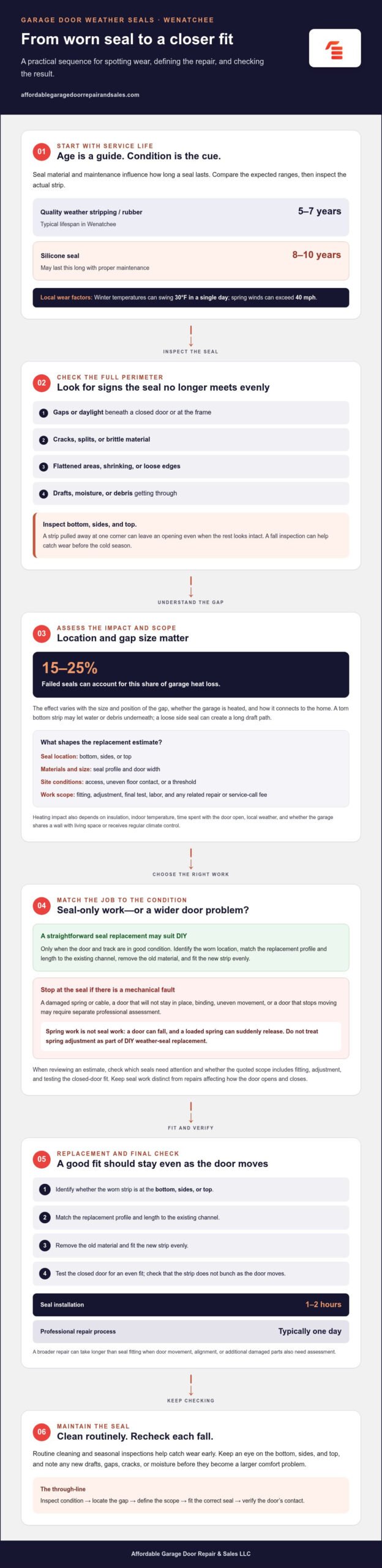
A garage door seal can wear out long before the door itself needs replacing. Quality garage door weather stripping in Wenatchee typically lasts 5 to 7 years, while silicone seals may last 8 to 10 years with proper maintenance. The right time for garage door weather stripping replacement in Wenatchee depends on the seal’s condition, not just its age.
If you’re noticing a draft, gap, or damaged strip, garage door weather stripping replacement in Wenatchee may help restore a closer fit. Worn seals leave openings around the door, so it’s worth identifying the cause and scope of the problem.
This guide explains what affects seal life, how to spot wear, and how replacement costs are shaped by the seal’s location, material, door size, labor, and service-call fees. You’ll also learn what to expect from the repair process and when a garage door professional can help assess related door problems.
Key Takeaways
- Quality garage door seals typically last 5 to 7 years in Wenatchee, while silicone seals may last 8 to 10 years with proper maintenance.
- Look for gaps, brittle or cracked material, and drafts to spot seals that may need replacement.
- Delaying replacement can let drafts and moisture enter; the impact depends on the size and location of the gaps and how the garage is used.
- Seal material, door size, and whether the bottom, sides, or top need attention all affect the replacement work.
- Routine cleaning and fall inspections can help you catch wear early and maintain a better seal.
How long do garage door seals last?
Quality garage door weather stripping and seals typically last 5 to 7 years in Wenatchee’s climate. Quality rubber seals also typically last 5 to 7 years, while silicone seals may last 8 to 10 years with proper maintenance. Age is a useful guide, but visible condition matters too. Look for cracks, flattened areas, loose edges, or daylight beneath a closed door. These signs can show the seal no longer meets the floor or frame evenly.
Wenatchee’s changing conditions can test a seal over time. Winter temperatures can swing 30 degrees in a single day, and spring winds can exceed 40 mph. Check the flexible material along the bottom, sides, and top for splits or shrinking. A seal that has pulled away at one corner may leave an opening even if the rest looks intact. Inspecting every fall helps identify wear before the cold season.
When comparing garage door weather stripping replacement in Wenatchee, look for a clear inspection, a description of which seals need attention, and an explanation of the proposed work. The estimate should also say whether it includes testing the door’s fit after installation.
A careful DIY approach can suit a straightforward seal replacement when the door and track are in good condition. First, identify whether the worn piece sits along the bottom, sides, or top. Then match the replacement profile and length to the existing channel, remove the old material, and fit the new strip evenly. A poor fit can leave gaps or bunch up as the door moves. Seal installation typically takes 1 to 2 hours.
Stop at the seal if the job involves a damaged spring, cable, or door that will not stay in place. Garage door springs typically break every three to seven years, depending on their quality and condition. Replacing or repairing a spring can be dangerous: the door can fall, and a loaded spring can suddenly release. Seal work and spring work are different tasks. Don’t treat spring adjustment as part of a DIY weather-seal replacement.
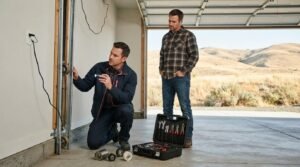
Professional garage door repair and installation in Wenatchee can address a seal alongside other visible door problems. A repair is typically a one-day process, while seal installation itself takes 1 to 2 hours. The distinction matters when a technician needs to assess door movement, alignment, or additional damaged parts. Ask for the work scope to separate seal fitting from any repair that affects how the door opens and closes.
Garage door opener installation is a separate job from replacing weather stripping. The opener must work with the door’s movement and be tested through its opening and closing cycle. The installation time depends on the opener setup and whether the existing door operates smoothly. If the door binds, slips off track, or has a broken spring, those mechanical issues need attention before opener testing can show reliable operation.
Costs of waiting to replace worn seals
A worn seal can turn a small maintenance issue into a wider comfort and moisture problem. Gaps around a closed door let outside air enter, and failed seals can account for 15 to 25 percent of garage heat loss. The effect depends on the size and position of the gap, whether the garage is heated, and how it connects to the home. A torn bottom strip may let water or debris beneath the door, while a loose side seal can leave a long draft path.
Look at the cost in two parts: the seal work itself and the consequences of delaying it. Replacement scope affects labor and materials. A bottom seal may use a different profile from side or top seals, and door width changes how much material is needed. A threshold may also be relevant when the floor is uneven. A replacement price depends on the case and is provided after a quote request; door size, seal location, material, access, and any related repair affect the estimate.
When reviewing an estimate, check whether it covers the worn strip alone or also fitting, adjustment, and a final test of the closed door. A useful breakdown identifies the materials and work involved, including any separate issue such as a damaged retainer or uneven floor contact. This explains why similar-looking gaps may call for different repairs.
Heating expense is another reason to address a clear gap. A poorly sealed door can contribute to higher heating use, especially when the garage shares a wall with living space or receives regular climate control. The effect is not identical in every home. Insulation, indoor temperature, time spent with the door open, and local weather all influence how much energy escapes. Track drafts and temperature changes before and after repair to understand the difference in your own space.
For a seal-only replacement, the work normally leaves the door opening and structure unchanged. Permit considerations can depend on whether the project expands into structural alterations or electrical work, such as changing an opener installation. Keep the scope clear: replacing flexible weather stripping differs from modifying the frame or wiring. In Wenatchee, the project’s actual scope is the key distinction to establish.
Separate seal wear from mechanical damage before deciding on repair. If the door still opens and closes smoothly, the issue may be limited to the perimeter seal. If it binds, drops unevenly, or stops moving, a spring, cable, track, or opener problem may also need attention. Those faults involve different work from sealing gaps. A garage door repair can address mechanical symptoms that prevent safe, consistent movement.
Before approving a replacement, note each damaged edge, whether drafts or moisture get in, and which seal profile is proposed for each location. These details make the estimate easier to understand and help distinguish seal work from unrelated repairs.
Garage door maintenance and insulation
A few simple checks can help you catch worn weather seals before gaps affect comfort. Combine seasonal inspections with routine cleaning, and note any change in how the door meets its frame.
Seal Maintenance and Prevention
Clean garage door seals monthly with mild soap and water, then dry them and check for loose sections. Simple maintenance after replacement can extend seal life by 2 to 3 years. Inspect the bottom strip where it meets the floor, plus the side and top edges where dust or daylight may show a gap. Avoid harsh cleaners that can damage flexible material.
Inspect the full perimeter before the cold season. Look for a seal that has pulled away from its channel, hardened, or lost contact when the door closes. If a gap appears only at one corner, note its location so the inspection can focus on the fit there.
Signs of Worn Weather Stripping
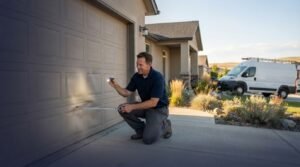
Cracks, flattened areas, missing sections, or brittle material are signs to assess the seal. With the door closed, check for daylight around the bottom and frame. A draft, water trail, or leaves inside the garage can also point to a gap. These clues help distinguish worn stripping from a door that sits unevenly.
Check whether the door closes evenly before deciding that the seal alone needs replacement. A changing gap from one side to the other can indicate alignment trouble, while a localized split suggests material damage. Note the affected edge and whether the gap remains along the floor or frame after the door closes.
Insulation and Heat Loss
A well-sealed garage door can reduce heat loss by 15 to 25 percent. Failed seals can also reduce the effectiveness of an insulated door’s insulation by 40 percent or more. These figures show why insulation panels alone may not solve drafts: air can still pass through a gap around the door’s perimeter.
For a practical check, close the door and inspect the perimeter from inside. Identify whether the opening is below the bottom seal, beside a vertical edge, or above the door. The location helps determine whether a seal adjustment or replacement is more relevant than adding insulation to the door panels.
Garage Door Maintenance and Tune-Ups
During a seasonal inspection, watch the door through a full opening and closing cycle. Look for rubbing, jerking, uneven movement, or a door that stops before closing. Note any change in the gap along the floor. This can help distinguish seal wear from a mechanical issue affecting how the door meets its frame.
Keep seal inspection separate from work on springs, cables, or the opener. If the door moves unevenly or fails to close, note what happens and don’t treat it as a weather-seal issue alone. A clear description helps focus the inspection on the right part of the system.
Planning Maintenance
Keep a brief record of each inspection: the date, damaged edge, visible gap, and any drafts or moisture. Pair routine cleaning with a seasonal perimeter check, then note changes after rain or a cold spell. Specific details can help identify whether the bottom seal or side material needs attention.
Bottom, side, and top seal replacement
Measure each edge separately before choosing replacement weather stripping. With the door closed, measure the bottom from one outside edge to the other, then measure both vertical sides and the top. Record each length and inspect the channel or retainer that holds the existing seal. Matching the profile matters as much as matching the length.
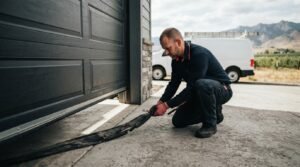
The bottom seal meets the floor, so check its contact across the full door width. Look for a curled end, a torn section, or a gap where the floor dips. A wider door or different seal profile can change the work involved.
Side seals run along the vertical frame, while the top seal closes the gap above the door. Inspect both sides and the top with the door closed, noting any daylight or loose sections. The cost of replacing side or top seals depends on the amount of material needed, the door’s dimensions, and the condition of the frame or retainer.
Measure the full length of each damaged section, not just the visibly split part. Record the bottom width, each side height, and the top width separately. Note whether the old strip slides into a track or attaches to the frame. These details help match the replacement to the door’s setup.
Seal types are not interchangeable based on appearance alone. A bottom strip must fit its retainer and meet the floor without preventing the door from closing. Side and top material must sit evenly against the door edge. Compare the replacement profile with the old piece, and check the channel for bends or debris that could prevent a snug fit.
After fitting a new seal, close the door and check contact along each replaced edge. The bottom should meet the floor consistently, while side and top seals should lie against the door without bunching. If a gap remains at one corner, check whether the seal is seated evenly or the door meets the frame at an angle. That distinction helps show whether the seal alone explains the opening.
A threshold is separate from the bottom seal. It may be considered when the floor prevents the bottom strip from making consistent contact. Inspect the floor and include threshold work separately when comparing the project scope.
Service call fees and labor
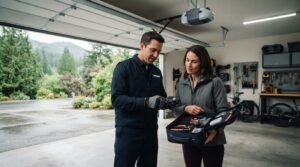
An estimate should explain the visit and the work involved. Affordable Garage Door Repair & Sales LLC offers a free garage door inspection and free safety inspection before work begins, along with upfront honest pricing and no hidden fees. Review the quote to see what fitting and testing the replacement material involves.
For a complete garage door seal replacement, labor typically takes 1 to 2 hours. The time depends on whether the work covers the bottom, both sides, the top, or the full perimeter. A strip that slides into an accessible retainer is a different task from material attached to a damaged channel. Door condition and access also affect the work sequence.
An inspection can identify issues that change the work required, such as a loose retainer, uneven floor contact, or a door that closes out of alignment. These call for different work from simply fitting a new strip. The estimate should distinguish seal replacement from any adjustment or separate repair, so it’s clear what the work covers.
The price depends on the case and is given after a quote request. Factors include the number of edges needing replacement, door size, seal type, retainer condition, access, and whether related door repair is needed. A clear estimate should describe the material and work scope, then show how the service visit and labor are accounted for.
Before scheduling, note where each gap appears and how the door behaves. A short list can make the inspection more focused:
- Record whether the worn section is at the bottom, side, or top.
- Describe whether the door closes evenly or leaves a gap at one corner.
- Note any binding, unusual movement, or difficulty completing a full closing cycle.
These observations help distinguish weather-seal work from a mechanical problem. A sectional or roll-up door that moves unevenly may need attention beyond its perimeter material. Seal replacement does not correct a door that is off track or a damaged lifting component. Identifying that difference early helps keep the proposed work focused and makes the labor estimate easier to understand.
After installation, testing should confirm that the door closes and the new seal meets the frame or floor consistently. If the door reverses, stalls, or leaves a visible opening, the result needs further assessment. For help with a garage door problem that affects movement as well as sealing, arrange garage door repair support.
Affordable Garage Door Repair & Sales: Spring Repair
Affordable Garage Door Repair & Sales LLC can help when a seal problem comes with a mechanical fault. If the door feels unusually heavy, won’t move properly, or has a visibly broken spring, the company provides spring repair. A door that has slipped off its track may need off-track repair, while an opener that no longer operates the door may need replacement.
Keep the symptoms clear when deciding what help is relevant: gaps around the door point to seal work, while movement problems can indicate a separate repair need. For garage door concerns beyond weather stripping, contact Affordable Garage Door Repair & Sales or visit the company website.
Take the Next Step Toward a Better-Fitting Door
Use your inspection notes to decide whether the next step is seal replacement or a separate mechanical repair. A clear record of the gaps, door movement, and affected edges can make a conversation about garage door weather stripping replacement in Wenatchee more focused. Weather stripping closes perimeter gaps; mechanical repairs address how the door operates.
If the door also has a spring problem or an opener that needs replacing, Affordable Garage Door Repair & Sales LLC provides spring repair and opener replacement. These services address mechanical concerns rather than worn seals, helping you identify the right work for the problem.
For help with a garage door repair need, contact Affordable Garage Door Repair & Sales LLC. A practical next step starts with a clear description of what your door needs.
Frequently Asked Questions
Can I replace just the bottom seal?
Yes, you can replace only the bottom seal if the side and top strips still fit closely. Before choosing material, check whether the retainer is intact and whether the floor slopes beneath the door. A new strip may still leave a corner gap if the floor is uneven. Replace just the bottom component when the problem is localized and the other seals remain flexible.
Do I need a professional or can I DIY?
DIY may suit a straightforward seal replacement when the door moves normally and the retainer is undamaged. A professional is a better fit if the door binds, sits unevenly, or has a damaged track or lifting component. Those symptoms may involve more than weather stripping. Keep the task limited to the seal, and don’t adjust springs or cables yourself.
Will new seals reduce my heating bill?
New seals can reduce drafts, but their effect on energy use depends on how the garage is used. A heated garage connected to living space may benefit more than an unheated, detached garage. Insulation, door-open time, and indoor temperature also matter. Note drafts and garage temperature before and after the repair to assess the change.
Can I replace weather stripping myself?
Yes, a careful homeowner can replace weather stripping if the work is limited to accessible seal material. Identify the seal location, match its profile and retainer, then remove and fit the strip without forcing it. Test for even contact with the door closed. If the door won’t close smoothly or another component is damaged, stop and address the operating problem separately.
Do I need to replace all seals at once?
No, replace only sections that are damaged or no longer meet the door properly. A torn bottom strip, for example, does not automatically mean sound side and top seals need replacement. Inspect each edge separately and check that the remaining material is flexible, secure, and making consistent contact. Replacing several sections together makes sense when wear is widespread.
What’s the cost difference between vinyl and rubber seals?
That difference refers to the seal material, not the complete installed job. The total work also depends on which edges need replacement, how much material the door requires, and whether the retainer needs attention. Compare the seal profile and fit as well as material cost, since a lower material price alone doesn’t show whether it is the right match.
How much does garage door weather stripping replacement cost in Wenatchee, WA?
The price depends on the case and is given after a quote request. The main factors are door size, seal location, material, how many edges need replacement, and the condition of the retainer or frame. A bottom-only job differs from replacing the full perimeter. For garage door weather stripping replacement in Wenatchee, describe the affected edges and any uneven contact to help define the work scope.
Which Wenatchee companies replace garage door weather stripping?
Affordable Garage Door Repair & Sales LLC serves Wenatchee and handles garage door work related to seal replacement. If the door also has a mechanical problem, the company offers Spring Repair, Broken spring repair, Opener Replacement, and Off-track repair. Keep the symptoms distinct when describing the job: a perimeter gap points to seal work, while a door that won’t move properly may need mechanical repair as well.