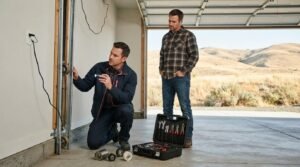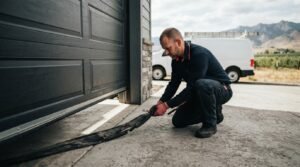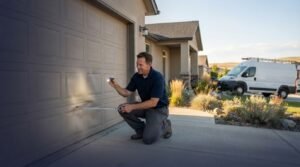
A broken roller isn’t automatically a safe DIY repair. For garage door roller replacement in Ellensburg, only consider replacing a roller that isn’t at the bottom of the door, and disconnect the opener from power first. If a roller is broken or could come off, keep the door out of use until it’s repaired.
It’s understandable to want to replace one worn part and get the door moving smoothly again. But rollers differ in material, bearings, stem length, and track fit, and a poor match can leave the door operating unevenly. According to American Garage Door Supply, garage door rollers need to be replaced every 5-7 years.
This guide explains how to spot worn rollers, compare steel, plastic, and nylon options, and understand how roller wear can affect door movement and strain the opener. You’ll also learn when a limited repair may be manageable and when professional help is the safer choice.
Key Takeaways
- Choose replacement rollers to match the door’s weight and track setup; material, bearings, and stem length all affect fit and operation.
- Keep the door out of use if a roller is broken or may come off. A homeowner should only consider replacing a roller away from the bottom of the door, with the opener disconnected from power.
- Rough or uneven travel can point to worn rollers, but bent tracks, loose brackets, or misaligned door sections may also need attention.
- Use the replacement interval as a prompt to inspect roller condition, and replace rollers that have cracks, flat spots, missing pieces, or don’t spin freely.
- When the repair involves a bottom roller, an off-track door, or another damaged component, professional repair can address the broader door problem.
Steel, plastic, nylon, and bearingless rollers
Roller material affects noise and wear, but fit comes first. Most residential garage doors use rollers with a 2-inch diameter. Commercial and industrial doors may use 2-inch or 3-inch rollers. A 2-inch roller rides on a 2-inch track; a 3-inch roller rides on a 3-inch track. Match the wheel diameter, stem length, and bearing style to the door’s track and hinge configuration.
Steel rollers have a metal wheel and can include ball bearings. For a bearing-style steel roller, the recommended minimum is 10 ball bearings. More bearings support rotation within the roller, while the wheel still needs to match the track. A steel roller designed for a 2-inch track won’t properly substitute for one built for a 3-inch track. Check the wheel and stem before selecting a replacement.
Plastic and PVC-covered rollers differ from bare steel in construction. A short-stem plastic roller may include 10 ball bearings, while a PVC-covered steel roller may have 11. The covering doesn’t remove the need to match wheel diameter and stem. For example, a roller with a 2-inch wheel belongs on a 2-inch track, not a 3-inch track. Inspect the existing roller and hinge arrangement to identify the needed style.
Nylon rollers with sealed bearings can reduce operating noise. Nylon absorbs vibration and reduces metal-on-metal contact compared with steel. Some nylon models use a 2-inch wheel, a 4-inch stem, and a sealed 6200ZZ bearing. Those dimensions describe a specific configuration, not a universal replacement. A quieter material won’t correct a mismatched wheel or stem.
Bearingless rollers have no ball-bearing assembly. They’re available in stainless steel for 2-inch or 3-inch tracks, and bearingless options come with several stem lengths. Match the stem to the door’s hinge and roller placement. A bearingless roller can fit a particular setup, but it won’t provide the sealed bearing arrangement found in some nylon rollers.
For garage door roller replacement in Ellensburg, compare the old roller’s wheel diameter, stem length, material, and bearing design before choosing a replacement. Confirm the track size and inspect nearby rollers for similar wear. Rollers should roll through the track, not slide. Cracks, flat spots, or missing pieces mean the roller needs replacement; lubricant won’t restore damaged material. The correct roller supports smooth travel, while the wrong fit can leave the door moving unevenly.
Broken roller safety
If spring tension remains, the door or connected hardware can move suddenly. A technician should handle roller work that involves adjusting springs or cables, because these components affect how the door moves.
A broken roller can leave the door unstable in its track. Keep the door out of use if a roller is broken or could come off. Don’t ask someone to hold the door or operate the opener to test it. If the door shifts while moving, the damage could worsen or the roller could leave its position.
Look for visible damage from a safe distance. A cracked wheel, missing piece, or roller tilted out of the track signals a problem. A roller that no longer stays seated also needs attention. Don’t reach into the track or try to push a loose roller back while the door is under load.
Only consider changing a broken roller if it isn’t at the bottom of the door and the opener is disconnected from power. Even then, not every repair is suitable for DIY. Stop if the door is crooked, a cable looks loose, a bracket has shifted, or the roller is near a spring or cable connection. These signs point to more than a simple wheel swap.
- Keep the door unused: Block access while a roller is broken or at risk of falling off.
- Disconnect the opener: For a non-bottom roller repair, disconnect power before any work.
- Leave the bottom roller alone: Homeowners shouldn’t attempt to replace that roller themselves.
- Watch for related damage: A bent track, loose bracket, or misaligned section needs inspection too.
Disconnecting the opener prevents powered movement, but it doesn’t remove spring tension. Don’t loosen springs, cables, or hardware to reach a roller. If access depends on moving these components, stop and arrange professional repair. Do the same if the door is off track or cannot stay in place.
Before using the door again, have the damaged roller and surrounding hardware inspected. Replacing the roller alone won’t fix a bent track, loose bracket, or misaligned door section. In Ellensburg, address the fault before returning the door to normal use, especially if the roller could come off. A qualified technician can assess the roller and related parts before a small failure leads to a wider repair.
Effects of worn rollers on the opener and door
A garage door roller should roll through its track, not slide. A worn or damaged wheel can add resistance as the door moves, forcing the opener to work against uneven travel. You may notice hesitation, uneven movement, or extra noise. Replacing rollers can improve smoothness and reduce noise, but it won’t make the door open faster.
Watch the door through its full travel. A section that jerks, wobbles, or shifts near the track can signal roller trouble. Uneven travel may also point to a bent track, loose bracket, or misaligned section. These problems can affect movement even after a roller is replaced. Rollers are just one part of the door’s track system.
Roller condition can also affect how the opener sounds and behaves. If the door pauses while the opener continues running, don’t assume the opener is the cause. A roller or another part of the track may be creating resistance. Avoid repeatedly operating the door to test the sound. Observe one normal cycle only if the door is secure and moving safely.
- Grinding or rattling: Listen for noise that repeats as a roller travels along the track.
- Hesitation: Note where movement slows, such as near one door section.
- Uneven travel: Watch for a section that shifts or moves differently from the rest.
- Opener strain: Pay attention to changes in operation, but inspect the door path too.
Use these observations to guide an inspection, not to diagnose the opener on its own. Check the roller path, track alignment, brackets, and door sections together. A damaged roller may be visible, while a loose bracket or bent track can cause similar movement. If the replacement roller doesn’t match the track and door setup, movement may remain uneven.
If the door moves smoothly by hand only after the opener is disconnected, that may help distinguish door resistance from an opener issue. Don’t disconnect or move a door that is broken, off track, or unstable. A technician can inspect the door and opener together to identify whether the issue involves rollers, track hardware, alignment, or the opener itself. Replacing an opener won’t fix a bent track or worn roller.
In Ellensburg, the goal is smooth, controlled travel, not greater speed. If noise or rough movement persists after roller work, have the track, brackets, door sections, and opener assessed together. Replacing rollers alone won’t fix a bent track, loose bracket, or misaligned section. A complete inspection can identify the cause of resistance before the door returns to regular use.

Garage door roller replacement intervals
American Garage Door Supply states that garage door rollers need replacement every 5-7 years. Treat that interval as a maintenance guide, then inspect actual condition. Repeated use, dust, moisture, and lack of lubrication can contribute to wear. A door exposed to those conditions may show roller problems before its next scheduled inspection.
Garage doors don’t have one universal roller count. The number depends on the door’s construction, sections, hinges, and track arrangement. For example, roller positions on a sectional door follow its hinges and track layout. During a safe visual inspection, count the rollers on your own door rather than ordering parts based on a generic total.
Check roller condition during routine observation. Look for cracks, flat spots, missing pieces, or rollers that don’t spin freely. These signs mean the roller needs replacement, not lubrication. Rollers should roll through the track instead of sliding. Lubricating them twice a year can support maintenance, but lubricant won’t restore a damaged wheel or bearing.
You can replace one damaged roller without replacing every roller. However, replacing all rollers together can help prevent uneven movement caused by mismatched wear. For example, one new roller among several heavily worn ones may travel differently from its neighbors. Compare the remaining rollers before deciding whether replacing just one will address the door’s condition.
Garage door roller replacement in Ellensburg is backed by a warranty on repairs and sales, along with a satisfaction guarantee. Ask for the written coverage terms to understand what the warranty covers and any conditions. Keep the service record and note the installed roller type. These details can help clarify coverage if the replaced part develops a problem.
Emergency garage door roller repair in Ellensburg, WA, matters when a broken roller leaves the door unsafe or unusable. Keep the door out of operation if a roller is broken or could come off. Emergency 24/7 garage door repair is available for urgent door problems, including off-track doors and doors that won’t open. Don’t operate an unstable door while arranging help.
Affordable Garage Door Repair & Sales LLC serves Ellensburg and surrounding Washington communities, including Everett, Puyallup, Seattle, Tacoma, Auburn, Wenatchee, Yakima, Pasco, and Spokane. When describing a roller issue, explain whether the door is crooked, stuck, or off track. These details help distinguish a roller concern from related track or hardware damage.
Use the 5-7-year interval as a reminder, not a substitute for inspection. Record the date of the last roller check, note visible wear, and inspect the track and brackets. In Ellensburg, dust and moisture exposure are practical conditions to consider alongside frequent operation. Timely inspection can reveal whether one roller needs replacement or several show similar wear.
Garage door repair companies in Ellensburg WA that replace rollers
For a roller problem in Ellensburg, look for a repair that addresses more than the wheel. A technician should inspect the roller, track, hinge, and nearby door sections. For example, a damaged roller may not be the only reason a door travels unevenly. Replacing it without addressing a bent track or loose bracket can leave the original movement problem unresolved.
A thorough roller replacement starts with identifying the door’s configuration. The wheel diameter must fit the track, and the stem must suit the hinge position. The roller’s material and bearing style also affect operation. On a sectional door, the technician should consider how each roller sits along the track, not just the visibly damaged one.
- Describe the symptom: Note whether the door grinds, hesitates, shifts, or has a roller outside the track.
- Identify visible damage: A crack, flat spot, or missing piece points to a damaged roller.
- Inspect related hardware: Check the track, brackets, hinges, and door sections for contributing issues.
- Match the replacement: Confirm the wheel, stem, and bearing arrangement suit the door.
These steps help distinguish a roller repair from a broader door issue. An off-track door, for example, may need more than a roller replacement. If the door is crooked or unstable, keep it out of use until the problem is addressed. The repair should account for both the failed part and the door’s safe movement.
Before work begins, explain what you’ve observed and where it happens. “The door catches near the left side” gives a useful starting point. A technician can examine that area and compare it with the full track path. After replacement, the door should be checked through its travel for smooth movement and any remaining noise or resistance.
Garage door roller replacement in Ellensburg is best handled as a component-and-system repair. The roller needs to fit, but the surrounding track and hardware also matter. If the door has a broken roller, unusual movement, or related damage, arrange professional garage door repair to address the problem.
Affordable Garage Door Repair & Sales: Spring Repair
Affordable Garage Door Repair & Sales LLC can help when roller trouble is part of a broader door problem. If the door is off track, it may need off-track repair rather than a roller change alone. A broken spring is a separate fault addressed through spring repair. These services are appropriate when an inspection points to spring damage or an off-track door, not simply a worn roller.
For opener problems that remain after the door’s movement issues are assessed, opener replacement is also available. Describe what you’ve noticed, such as a door that has shifted, won’t open, or has a broken spring. Contact Affordable Garage Door Repair & Sales to discuss the repair, or visit affordablegaragedoorrepairandsales.com.
Choose a Safe Next Step for Your Garage Door
Choosing garage door roller replacement in Ellensburg is also an opportunity to consider the door’s overall condition. If the problem points beyond a roller, address the actual fault instead of continuing to operate a door that feels unstable. Clear observations about how the door moves can help guide the next conversation.
Affordable Garage Door Repair & Sales LLC provides spring repair for spring-related problems and opener replacement when the opener needs attention. These are distinct repairs, so the right next step depends on which part is causing the trouble. Describe the issue to a technician without trying to diagnose every component yourself.
Contact Affordable Garage Door Repair & Sales LLC to discuss your garage door concern. A careful next step can help you move toward a door that operates as it should, with a repair suited to the problem.
Frequently Asked Questions
Can I change a broken roller by myself?
Only consider replacing a broken roller if it isn’t at the bottom of the door and the opener is disconnected from power. Don’t attempt the repair if the door is crooked, unstable, or near loose cables or spring hardware. A roller that has shifted out of its track, for example, can point to a wider issue. Keep the door out of use and arrange professional repair rather than forcing the roller back.
Can I extend the life of my rollers?
Yes, regular inspection and lubrication can help maintain rollers. Lubricate them twice a year and watch for changes in how the door moves. For example, note a new rattle or a roller that appears to slide instead of roll. Lubrication won’t repair a cracked wheel or restore a roller that no longer spins freely. Record what you observe so you can recognize changes in wear over time.
How can I tell when garage door rollers need replacement?
Replace a roller if it has cracks, flat spots, missing pieces, or won’t spin freely. You can inspect visible rollers while the door is stationary. Compare their shape and position, and note any wheel that looks damaged or sits differently from neighboring rollers. If the door’s movement has also changed, include the track and brackets in the inspection. A worn roller may not be the only cause of rough travel.
What types of garage door rollers are available, and which are best?
Common options include steel, plastic, and nylon rollers, as well as bearingless rollers. The best match depends on the door’s track, hinge setup, weight, and required stem length. For example, nylon rollers with sealed bearings can reduce vibration and metal-on-metal contact. Steel options can use ball bearings, while bearingless rollers have no bearing assembly. Prioritize the correct fit, then consider noise and construction.
What is the garage door roller replacement process, and how long does it take?
Replacement involves identifying the roller configuration, securing the door, removing the damaged roller, fitting a compatible part, and checking movement afterward. The time required depends on access, roller placement, how many rollers need work, and whether track or hinge damage also needs attention. A bottom roller or an off-track door changes the work involved, so a single time estimate won’t apply to every door.
Can you replace garage door rollers yourself safely?
DIY replacement is limited to a roller away from the bottom of the door, with the opener disconnected from power. This does not release spring tension or make spring and cable work safe for a homeowner. Stop if the repair requires moving spring hardware, adjusting a cable, or forcing a door section into position. If the door is unstable or off track, keep people clear and arrange professional repair.