What if the biggest threat to your home’s security isn’t a faulty lock, but a simple communication error between your garage door sensors? It’s a common scenario for many homeowners: you press the remote, but your garage door won’t close all the way, leaving your property exposed to rain, pests, and intruders. We know how stressful this situation is, especially when you’re worried about the potential for expensive repairs or a complex mechanical failure. Most of the time, the solution is much simpler than it seems.
This article provides a clear path to resolving the issue safely and efficiently. You’ll learn to identify the root cause of the obstruction and distinguish between a quick adjustment and a job for a professional. We’ll cover seven essential fixes, ranging from cleaning your photo-eyes to checking for track alignment issues. By the end of this guide, you’ll have the knowledge to secure your garage and the confidence to know when it’s time to call a Washington expert for specialized assistance.
Key Takeaways
- Identify simple fixes when your garage door won’t close all the way, such as cleaning photo-eye sensors or removing debris from the tracks.
- Recognize the difference between a minor sensor misalignment and dangerous mechanical issues like broken torsion springs or snapped cables.
- Understand how federal safety reversal requirements protect your household and how to test this system for proper functionality.
- Implement a proactive maintenance routine to combat oxidation and wear caused by the unique humidity levels in the Washington climate.
- Determine when to utilize 24/7 emergency repair services to restore your home’s security and prevent long-term damage to your opener’s motor.
Understanding Why Your Garage Door Won’t Close Fully
When your garage door won’t close all the way, the issue often stems from a built-in safety protocol rather than a total mechanical breakdown. Since 1993, federal law has mandated that every residential garage door opener manufactured for use in the United States must include a safety reversal system. This technology is designed to detect people, pets, or objects in the door’s path. If the system senses an interruption, it triggers an immediate response to prevent injury or property damage. It’s a critical feature that provides peace of mind, though it can be frustrating when it triggers without an obvious cause.
Understanding the behavior of your door provides the first clue to the problem. A door that stops moving entirely often points toward a mechanical force limit being reached, suggesting the motor is working too hard. Conversely, a door that descends partway and then immediately reverses back to the open position is usually reacting to a sensor signal. In the damp environment of Washington, moisture and cold can also play a role. Low temperatures can cause the metal tracks to contract slightly or the lubricant to thicken, increasing the resistance the motor feels. This resistance often mimics a physical obstruction, causing the door to stop or reverse prematurely.
The Role of the Safety Sensor System
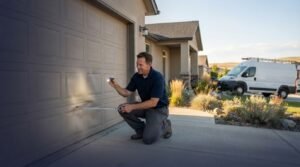
The safety sensor system consists of two “eyes” mounted near the floor on each side of the door tracks. One unit acts as the transmitter, sending an invisible infrared beam to the receiving unit on the opposite side. If this beam is broken while the door is closing, the motor reverses the door’s direction. It’s a simple but effective logic gate that keeps your household safe.
If you notice a blinking LED on one of the sensors, it’s a diagnostic signal you shouldn’t ignore. A steady light on both units indicates they’re powered and aligned. A flickering or dark light typically suggests a physical misalignment, a loose wire, or a total loss of power to that specific unit. Occasionally, direct sunlight at a low angle can “blind” the receiving eye. This happens most often during seasonal shifts in Washington, tricking the system into thinking the beam is blocked even when the path is perfectly clear.
Common Obstructions and Physical Blocks
While sensors are high-tech, simple physical items are often the culprit. Items like broom handles, trash cans, or even small pebbles lodged in the track can prevent the door from reaching its designated “close” limit. Even if the sensors don’t detect these items, the opener’s internal force settings will stop the motor to avoid burning it out. It’s a secondary safety layer that protects your equipment from damage.
Accumulated debris is another common factor that homeowners overlook. Over time, grease can dry out and mix with dust, creating a thick sludge that increases friction within the tracks. In older Washington homes, shifting foundations can lead to an uneven garage floor. This creates a gap or a slight tilt that prevents the door from sealing properly against the ground. The system may interpret this uneven contact as an obstruction, triggering a reversal just as the door is about to finish its cycle.
5 Troubleshooting Steps to Fix a Door That Won’t Close
If your garage door won’t close all the way, you can often resolve the issue by following a systematic checklist. First, inspect the physical path of the door and clear the tracks of debris like rocks, pebbles, or gardening tools. Even a small object can trigger the safety reversal system. Second, clean the photo-eye sensor lenses with a soft, dry cloth to ensure the beam isn’t blocked by dust or cobwebs. Third, check the sensor alignment and tighten any loose mounting brackets. Even a slight vibration from the door moving can shift these sensors enough to interrupt the signal and stop the door from closing.
The remaining steps involve the door’s mechanical integrity. Fourth, examine the lift cables for visible fraying or slack. If the cables look loose or have “bird-nested” around the drum, the door won’t sit level, which prevents a full seal. Fifth, test the manual release to check for door balance and binding. According to the International Door Association, a door that doesn’t stay in place when opened halfway is out of balance. This puts excessive strain on your motor and often causes the system to reverse as a protective measure. If the door feels heavy or sticks, it’s a sign that the internal components need attention.
Cleaning and Aligning Your Photo-Eyes
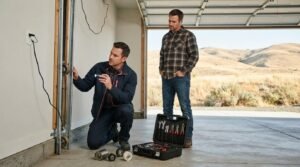
Sensor alignment is the precise 180-degree meeting of infrared beams between the sending and receiving units. To ensure yours are working correctly, use a soft microfiber cloth to wipe the lenses. Avoid using harsh chemicals or glass cleaners, as these can cloud the plastic lenses over time and permanently degrade the signal. If the LED lights on the sensors are blinking, use a string or a level to ensure both units are pointing directly at each other. Tightening the mounting brackets ensures that the alignment holds steady during the high-vibration cycle of the door opening and closing.
Adjusting Opener Travel and Force Limits
Sometimes the issue is digital rather than physical. Most units have “Limit” and “Force” screws on the motor casing that control exactly how far the door travels. If the door stops an inch above the floor, you may need to incrementally turn the “down” travel screw to extend the range. Be careful not to over-adjust, as this can cause the door to hit the floor too hard and reverse immediately. Modern systems often integrate with smart apps like myQ, which provide real-time diagnostic codes for specific closing errors. If these basic steps don’t fix the problem, a professional safety inspection can identify deeper mechanical issues before they lead to a total system failure.
When the Problem Is Mechanical (and Dangerous)
While electronic sensor errors are common, a garage door that won’t close all the way may also signal a significant mechanical failure. These issues often involve components under extreme tension, making them the most hazardous part of your home’s entry system. If you’ve ruled out obstructions and sensor misalignments, the problem likely lies in the heavy hardware that manages the door’s weight. Attempting to force a door closed when it has a mechanical blockage can lead to snapped cables or a burnt-out opener motor, turning a standard repair into a much more expensive project.
Collision damage is another frequent cause of closing failures. Even a minor bump from a vehicle can subtly shift the vertical track alignment. If the track is even slightly out of plumb, the rollers will bind as they attempt to descend, triggering the motor’s safety reversal. Similarly, if a lift cable has jumped the drum, the door will hang at an angle. This lopsided position prevents the door from reaching the floor and sitting flush. You should never attempt to adjust bottom brackets or cable drums yourself, as these parts are under enough force to cause severe injury if they release unexpectedly.
Broken Springs and Frayed Cables
Garage door springs are the heart of your door’s counterbalance system. They provide the torque necessary to offset the door’s weight, allowing the motor to move it with minimal effort. When a spring snaps, the door becomes a dead weight that the opener cannot safely push down. Many homeowners report hearing a loud bang like a gunshot coming from the garage, which is the sound of a high-tension coil failing. If you see a visible gap in your torsion spring, you need professional broken garage door spring repair to restore the system’s balance. Operating the door with a broken spring is dangerous and will quickly destroy your opener’s internal gears.
Bent Tracks and Off-Track Scenarios
The tracks act as the guide for your door’s journey. Over time, the vibration of daily use can loosen the bolts that secure the tracks to the garage walls. A single loose bolt can cause the track to flare outward, stopping the rollers mid-travel. You can perform a “gap test” by looking at the space between the rollers and the track on both sides. If the door looks tilted or the gap is wider on one side, it’s likely off-track. Do not attempt to hammer a track back into place while the door is under tension. The tracks must be professionally aligned and secured to ensure the door moves smoothly and closes completely every time.

Preventing Closing Issues in the Washington Climate
Washington’s unique climate poses specific challenges for residential garage systems. The persistent humidity found in coastal areas like Seattle and Everett often accelerates oxidation on metal tracks, rollers, and hinges. When rust develops, it increases friction and forces the opener to work harder. Eventually, this resistance can become so significant that your garage door won’t close all the way because the system interprets the drag as a physical obstruction. Regular attention to these environmental factors is the best way to ensure long-term reliability and avoid the anxiety of a door that stops short during a rainstorm.
Preventative maintenance is the biannual inspection of all moving garage parts to identify wear before it leads to a breakdown. Scheduling these check-ups in the spring and fall helps your door transition through Washington’s temperature swings. A key part of this process involves a professional garage door safety inspection. These evaluations catch “hidden” issues like hairline cracks in hinges or slightly misaligned tracks that a layperson might miss, ensuring the entire system remains dependable year-round.
Lubrication and Hardware Tightening
Proper lubrication is essential for smooth operation, but using the right product is just as important. You should always use silicone or lithium-based sprays for your rollers, hinges, and springs. Avoid using WD-40; while it’s a great degreaser, it actually attracts dust and grit that can gum up the tracks over time. While you’re lubricating, take a moment to check for vibration-loosened nuts on the tracks and hinges. The constant movement of a heavy door can slowly back out these fasteners, leading to a shaky system that might eventually bind or shift out of its proper alignment.
Weatherstripping and Bottom Seal Care
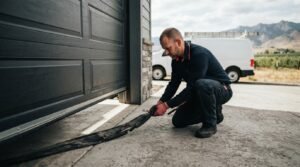
The bottom seal of your door does more than just keep out the wind. A U-shaped bottom gasket is specifically designed to create a tight seal against the concrete, which is vital for redirecting the heavy Washington rain away from your garage interior. Over time, this rubber can become brittle or cracked due to temperature fluctuations. When the seal loses its flexibility, it can bunch up or sit unevenly on the floor. This uneven surface often triggers the safety reverse mechanism, causing the door to pop back up just as it nears the ground.
In Eastern Washington cities like Yakima or Spokane, winter brings additional hurdles. Ice and snow build-up on the driveway can create a physical block that prevents a full seal. Clearing this debris daily ensures the door reaches its limit without resistance. If you’ve noticed your door struggling with the change in seasons, you can schedule a professional tune-up to ensure your hardware is ready for the Northwest weather.
Expert Garage Door Repair Services in Washington State
When local troubleshooting steps don’t resolve the issue, seeking professional assistance is the most efficient way to restore your home’s security. Affordable Garage Door Repair & Sales provides comprehensive support across the state, from Everett and Seattle to Spokane and Pasco. Our technicians specialize in pinpointing the specific mechanical or electronic failure that causes a door to malfunction. Affordable Garage Door Repair & Sales provides comprehensive support across the state, especially when a garage door won’t close all the way and leaves your home vulnerable. A professional diagnostic goes beyond surface-level fixes. We identify the root cause, such as a failing circuit board or a hairline fracture in a torsion spring, before it leads to a complete motor failure. We offer free on-site estimates to give you a clear understanding of the necessary repairs without any upfront financial commitment. This transparent approach helps you make an informed decision about the longevity of your garage system.
24/7 Emergency Assistance for Home Security
A garage door that won’t close all the way isn’t just a mechanical nuisance; it’s an urgent security vulnerability. An open garage provides direct access to your home, vehicles, and stored valuables, which is why we prioritize rapid response times. We offer emergency garage door repair 24 hours a day, 7 days a week, ensuring your family stays protected regardless of when a failure occurs. Our service teams are strategically located to reach homeowners in Puyallup, Tacoma, and Auburn quickly. Whether it’s a residential sectional door or a heavy-duty commercial roll-up, we arrive equipped with the necessary parts to perform on-site repairs and secure your property immediately. This commitment to availability helps lower the stress of unexpected mechanical failures during the night or over the weekend.
Upgrading to a Reliable Smart Opener
If your current unit is frequently failing or requires constant adjustments because your garage door won’t close all the way, it might be time to move beyond temporary repairs. Modern opener technology offers significant advantages in both reliability and diagnostic ease. Upgrading to a smart opener allows you to monitor your door’s status via smartphone alerts, notifying you instantly if the door encounters an obstruction or fails to reach its close limit. These units often feature battery backups, ensuring functionality during the power outages common in the Pacific Northwest. When you choose a new garage door installation or a motor upgrade, our experts handle the precise calibration of safety features and travel limits. This professional setup ensures your system operates quietly and stays perfectly aligned for years to come, providing a long-term solution to recurring closing problems.
Restore Your Home’s Security and Functionality
Resolving a garage door that stops short is often as simple as cleaning a sensor or clearing a pebble from the track. However, recognizing when the problem is mechanical, such as a broken torsion spring or a jumped cable, is essential for your safety. These high-tension components require specialized tools and training to handle correctly. For instance, the professional standards maintained by We Do Garage Doors showcase how expert intervention can resolve complex mechanical failures safely. Maintaining a regular lubrication schedule and inspecting your bottom seals will help prevent these issues from recurring in the damp Washington climate.
Dealing with a situation where your garage door won’t close all the way shouldn’t be a source of constant anxiety. Whether you need an urgent fix or a long-term upgrade, our highly trained professionals are ready to assist with all major brands. We provide 24/7 emergency service across the state and offer free on-site estimates for both repairs and new installations. Secure your home today with a free on-site repair estimate from Affordable Garage Door Repair & Sales! You can rest easy knowing your garage is secured and your family is safe.
Frequently Asked Questions
Why does my garage door start to close and then go back up?
This behavior is usually caused by the safety reversal system detecting an obstruction or a sensor misalignment. The opener reverses the door’s direction to prevent injury or property damage. You should check for small objects in the tracks or dirt on the photo-eye lenses. If the path is clear, the sensors may need a slight adjustment to point directly at each other again.
How do I bypass the sensors to close my garage door in an emergency?
You can bypass the sensors by pressing and holding the wall-mounted control button until the door reaches the floor. This manual override requires constant pressure to ensure you’re monitoring the path for safety. Note that standard remotes typically won’t work for this override. This method is a temporary solution intended only for securing your home until a professional repair is performed.
Is it safe to adjust the garage door travel limits myself?
Adjusting travel limits is generally safe for homeowners as it involves turning screws or digital settings on the motor head. However, you must move in small increments to avoid slamming the door into the concrete. Over-adjusting can force the door into the floor too hard, which might damage the motor or cause the system to reverse immediately as a protective measure.
What does it mean if my garage door opener light is flashing?
A flashing opener light is a diagnostic code indicating why the door reversed or stopped. For many major brands, ten flashes point specifically to a sensor issue, such as an obstructed beam or a power loss. You should consult your specific model’s manual to verify the diagnostic pattern. This feature helps you identify whether the problem is a simple obstruction or a more complex electrical fault.
How can I tell if my garage door sensors are out of alignment?
Check the small LED lights on the sensors located at the bottom of your tracks to see if they’re steady. Both lights should be solid; if one is flickering or dark, the sensors aren’t communicating correctly. This is a common reason why a garage door won’t close all the way, as the system assumes an object is blocking the path even if the floor is clear.
Why is there a gap at the bottom of my garage door even when it’s closed?
Gaps are often caused by a worn-out bottom weather seal or an uneven garage floor. As the rubber seal ages, it loses its flexibility and fails to compress against the concrete. If the floor has settled or shifted, you may need a thicker U-shaped gasket to fill the uneven space. A professional can also adjust the travel limits to ensure a tighter seal without triggering a reversal.
Can a cold climate affect how my garage door closes?
Cold weather can thicken lubricants or cause metal components to contract, increasing the resistance the motor feels. In Washington’s freezing temperatures, ice can also build up under the door or inside the tracks. If the motor detects this extra force, it may stop or reverse as a safety precaution. Regular application of silicone-based lubricant helps keep the hardware moving smoothly during the winter months.
When should I stop troubleshooting and call a professional for a door that won’t close?
You should call a professional if you see signs of mechanical failure like frayed cables or a visible gap in your torsion spring. If your garage door won’t close all the way after you’ve cleaned the sensors and checked the tracks, the issue is likely an internal mechanical or electrical fault. Attempting to repair high-tension components without the proper tools and training is extremely dangerous and can lead to severe injury.