Did you know that a garage door in Spokane faces a completely different set of survival challenges than one in Everett? While homeowners on the coast battle salt air corrosion and persistent humidity, those in the inland regions must contend with extreme temperature swings that drive up energy costs. Finding the best garage door material for Washington climate isn’t just about picking a style you like; it’s about selecting a technical solution that won’t warp, rot, or fail before its time.
We understand how frustrating it is to deal with moisture damage in Western Washington or high utility bills due to poor insulation in the East. You deserve a door that provides peace of mind and lasting value for 20 years or more. In this guide, we’ll explore the most durable and energy-efficient materials specifically tested for the Pacific Northwest’s unique weather patterns. You’ll learn which specialty finishes mimic the beauty of wood without the maintenance and how to choose R-values that meet the latest 2026 energy standards for your specific region.
Key Takeaways
- Understand how Washington’s distinct micro-climates, ranging from coastal salt spray to inland temperature extremes, directly impact your garage door’s mechanical lifespan.
- Identify the best garage door material for Washington climate by comparing the moisture resistance of aluminum with the heavy-duty thermal performance of modern steel.
- Learn how to navigate 2026 energy codes by selecting the right R-value and insulation type to maintain a stable temperature in your home.
- Identify regional-specific features, such as UV-resistant finishes for the Yakima Valley or rust-preventative coatings for homes in Everett and Tacoma.
- See how a professional on-site estimate helps you balance your budget with the long-term durability needed for the Pacific Northwest.
Understanding the Washington Climate Challenge for Garage Doors
Washington’s diverse geography creates a unique set of demands for home exteriors. In the “Evergreen State,” your garage door is the largest moving mechanical object on your property, and it bears the brunt of two distinct environmental pressures. Finding the best garage door material for Washington climate requires understanding whether your primary enemy is persistent moisture or extreme thermal shifts. Material selection stands as the single most important factor in determining how long your door lasts and how much you’ll spend on upkeep over the next two decades.
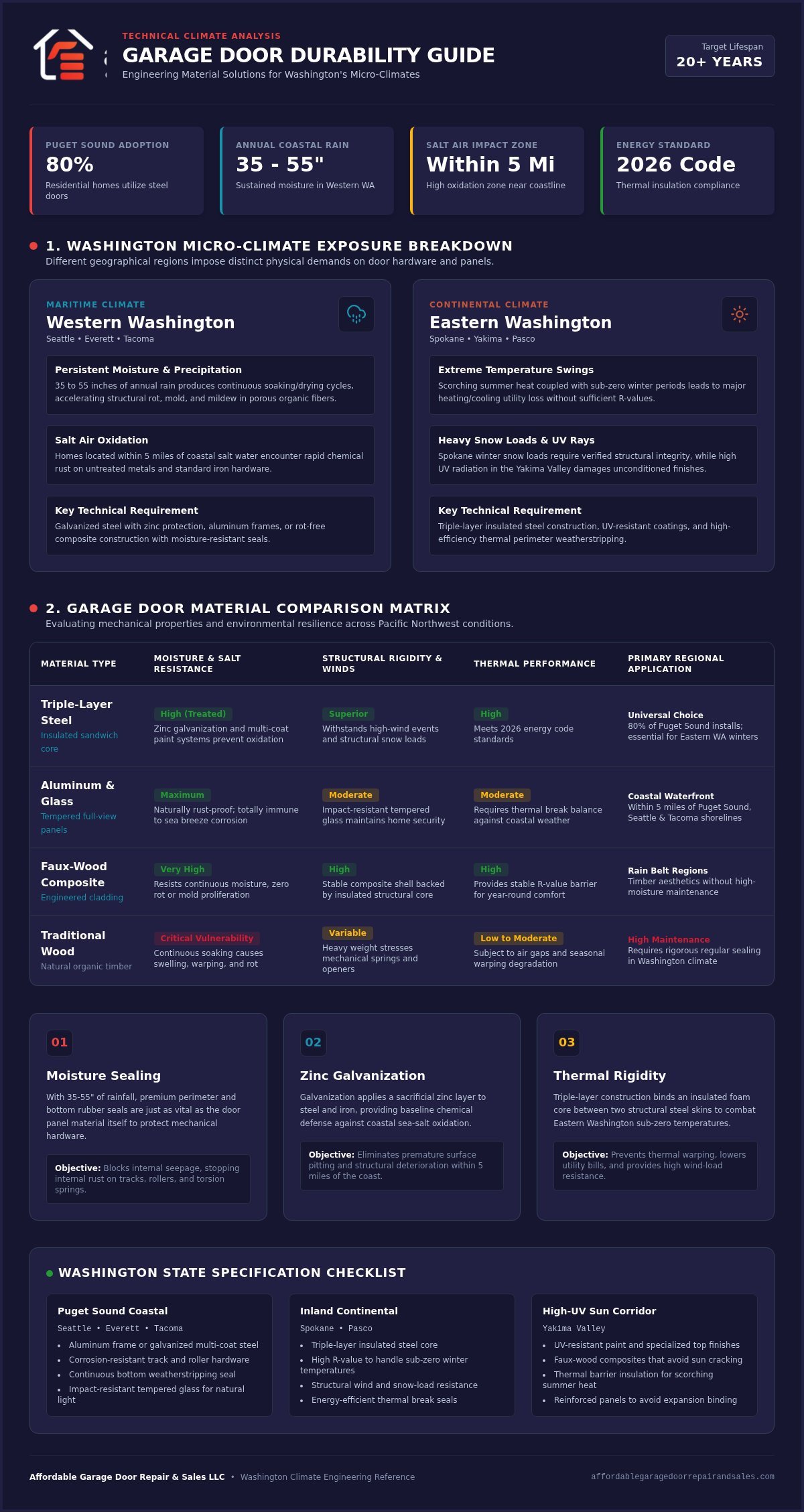
Western Washington cities like Seattle, Everett, and Tacoma deal with a maritime climate where rain and humidity are constant companions. Conversely, Eastern Washington communities such as Spokane, Yakima, and Pasco face a continental climate characterized by scorching summers and sub-zero winters. Choosing a door without considering these regional micro-climates often leads to premature mechanical failure or higher heating bills. Assessing your home’s specific exposure through a free on-site estimate is the most reliable way to ensure your chosen material can handle the local conditions.
Humidity and Moisture: The Silent Killer of Wood
Traditional wood doors offer undeniable aesthetic appeal, but they struggle significantly in the Pacific Northwest. With average annual rainfall between 35 and 55 inches, Western Washington homes subject wood panels to constant cycles of soaking and drying. This environment leads to swelling, warping, and eventually, structural rot. Beyond the physical breakdown of the fibers, high humidity levels foster the growth of mold and mildew on organic surfaces. To protect your investment, focusing on high-quality, moisture-resistant seals is just as critical as the door material itself. These seals prevent water from seeping into the garage and reaching the internal hardware, which is essential for long-term functional stability.
Salt Air Corrosion in Puget Sound Communities
For homeowners in coastal cities like Everett, salt air presents a specific chemical challenge. Standard steel doors can begin to show signs of rust within just a few years if they aren’t properly treated. Galvanization is the process of applying a protective zinc coating to steel or iron to prevent premature rusting and corrosion. While galvanized steel is a strong contender, many residents within five miles of the coast prefer aluminum or fiberglass. These materials are naturally resistant to salt-induced oxidation. When evaluating the R-value of these coastal options, it’s vital to balance thermal resistance with the material’s ability to withstand the corrosive sea breeze.
Comparing Garage Door Materials for PNW Durability
Selecting the best garage door material for Washington climate involves weighing initial investment against long-term resilience. While homeowners in Everett might prioritize salt air resistance, those in Spokane often focus on structural integrity under heavy snow loads. Modern materials have evolved to meet climate-resilient design and construction standards, offering better protection than traditional options from decades ago. Each material reacts differently to the Pacific Northwest’s specific blend of high humidity and temperature fluctuations.
Steel Doors: Strength Meets Customization
Steel is the most popular choice in the Puget Sound region, accounting for approximately 80% of residential installations. Single-layer steel is a functional budget option, but triple-layer construction, which features insulation sandwiched between two steel skins, provides the structural rigidity needed for Washington’s high-wind events. These doors are highly customizable and benefit from factory-applied, multi-coat paint systems that act as a primary barrier against oxidation. For a deeper look at specific models and features, consult our New Garage Door Installation in Washington: The 2026 Homeowner’s Buying Guide.
Aluminum and Full-View Glass Styles
Aluminum is naturally rust-proof, making it a superior choice for waterfront properties in Seattle or Tacoma where salt air is a constant factor. Modern full-view glass styles utilize impact-resistant tempered glass, which provides security while maximizing natural light during Washington’s notoriously grey winters. These doors require minimal structural maintenance, though the glass panels do need regular cleaning to prevent water spotting from frequent rainfall. They offer a sleek, contemporary look that won’t corrode, even in high-moisture environments.
The Wood Dilemma: Real Timber vs. Faux-Wood Composites
Real wood offers unmatched warmth and curb appeal, but it presents a significant maintenance challenge in the Pacific Northwest. To prevent warping and rot, real timber doors typically require staining or sealing every 2-3 years. For homeowners who want the “Everett craftsman” aesthetic without the labor, wood composite overlays are an excellent alternative. These doors use a durable steel core for strength and a moisture-resistant composite exterior that mimics real wood grain. If you’re looking for a balance of beauty and utility, exploring new door installation options with specialty finishes can give you the look of wood without the vulnerability to moisture.
Maximizing Energy Efficiency: R-Values and PNW Winters
Energy efficiency isn’t just a buzzword; it’s a financial necessity for homeowners in the Pacific Northwest. When you’re searching for the best garage door material for Washington climate, you must evaluate the R-value, which measures a material’s thermal resistance. A higher R-value means less heat escapes your home during a damp Seattle winter or a freezing Spokane night. Even in unheated garages, high-quality insulation protects your vehicles from moisture buildup and prevents exposed water pipes from bursting during sudden cold snaps.
Beyond thermal control, insulated doors provide a “Quiet Factor” that single-layer models lack. The dense core dampens vibrations and blocks outside noise. This is a significant benefit if you live in a dense neighborhood in Tacoma or near a busy arterial road in Everett. An insulated door feels more substantial because it is, providing a level of structural stability that budget-tier doors can’t match.
Polyurethane: The Gold Standard for Washington Winters
There are two primary types of insulation: Polystyrene and Polyurethane. While Polystyrene consists of rigid foam sheets inserted into the panels, Polyurethane is an injected liquid foam that expands to fill every crevice of the door’s interior. This process creates a dense, structural bond between the steel skins, resulting in a door that is significantly stronger and more dent-resistant. Polyurethane models often achieve R-values of R-18 or higher, which is essential for homes with bedrooms located directly above the garage. To maintain these thermal gains, you’ll also need high-quality bottom seals and perimeter weatherstripping to block air infiltration.
Energy Savings and ROI in the PNW
Investing in a well-insulated door reduces the thermal load on your home’s HVAC system, especially if the garage is attached. A high R-value door can prevent frozen broken garage door springs during a Yakima cold snap. This protection extends the life of your entire system, including the motor and tracks. If you’re upgrading your door for better efficiency, you might also consider a Garage Door Opener Replacement: The Complete 2026 Homeowner’s Buying Guide to ensure your motor is powerful enough to handle a heavier, triple-layer insulated door. Choosing the right material ensures your home stays comfortable regardless of the temperature swings outside.
Regional Recommendation: Choosing by Washington Zip Code
Washington’s geography creates a stark divide in home maintenance needs. Choosing the best garage door material for Washington climate isn’t a one-size-fits-all decision. The Cascade Mountains act as a barrier, separating the maritime humidity of the Puget Sound from the semi-arid, temperature-swinging plains of the East. Because of these distinct micro-climates, a door that thrives in the moderate temperatures of Tacoma might fail prematurely under the heavy snow and sun of Pasco.
In Central Washington, including Wenatchee and Ellensburg, doors must be rated for high wind loads and rapid seasonal shifts. Coastal properties on the Olympic Peninsula or directly on the Sound require fiberglass or specialized coastal-grade coatings to combat salt-induced oxidation. These regional factors dictate not just the panel material, but also the type of hardware and lubricants required for smooth, long-term operation.
The Seattle & Everett Moisture Strategy
For the “Rain City” and its neighbors, moisture management is the top priority. We recommend high-grade galvanized steel or vinyl for these areas because they won’t swell when the clouds settle in for weeks at a time. Vinyl is particularly resilient in high-humidity zones like the Snohomish River valley because it’s impervious to rot and never requires painting. Avoiding natural wood is wise for most homeowners here unless they’re prepared for a rigorous maintenance schedule. If your current door has already succumbed to the dampness and failed during a storm, you can find Emergency Garage Door Repair in Everett: 24/7 Fast & Reliable Service to secure your home quickly.
The Spokane & Yakima Thermal Strategy
East of the Cascades, the challenge shifts from water to heat and ice. Finding the best garage door material for Washington climate in the East means prioritizing thermal stability over simple moisture resistance. Doors in Spokane and Yakima need integrated thermal breaks to prevent heat transfer during 100°F summer afternoons. Intense sun exposure can also cause standard paints to fade or peel; therefore, selecting UV-resistant finishes is a practical way to maintain curb appeal for decades. Heavy-duty hardware, including reinforced tracks and high-cycle torsion springs, is essential here to support doors that may experience heavy snow accumulation or ice buildup. If you’re unsure which material fits your local micro-climate, you can request a consultation for a new door installation to get expert advice tailored to your specific zip code.
Expert Selection and Professional Installation in Washington
Selecting the best garage door material for Washington climate is a vital first step, but the long-term performance of your door relies heavily on how it’s integrated into your home’s specific environment. A high-quality material can still fail if it isn’t balanced correctly or if the seals aren’t airtight. To ensure your investment lasts for 20 years or more, follow a methodical approach to selection and installation. Professional oversight ensures that the technical specifications of the door match the physical demands of your property.
- Step 1: Schedule a free on-site estimate to assess your home’s exposure and orientation.
- Step 2: Choose a material that balances your budget with long-term PNW durability.
- Step 3: Ensure professional installation to guarantee airtight seals and proper mechanical balance.
- Step 4: Establish a maintenance routine to protect your investment from the elements.
Why Professional On-Site Estimates Matter
Phone quotes often miss critical details about your property’s micro-climate. A home situated in a wind tunnel between hills or one in a high-salt zone near the Sound requires different hardware than a sheltered suburban home. During an on-site visit, technicians check your existing tracks and springs to ensure they’re compatible with newer, heavier triple-layer insulated doors. Affordable Garage Door Repair & Sales LLC provides this localized expertise across the state, from Everett to Spokane. We focus on identifying the specific stressors your door will face so the recommendation is based on physical reality rather than guesswork.
Protecting Your Investment with Maintenance
Washington’s humidity is relentless and can affect even the most durable materials over time. Annual safety inspections allow you to catch moisture-related wear, such as rusting rollers or fraying cables, before they become a functional emergency. This proactive approach is just as important for local businesses as it is for homeowners. If you manage a facility, our Commercial Garage Door Repair: 24/7 Expert Service for Washington Businesses keeps your operations running smoothly regardless of the weather. For residential needs, finding the best garage door material for Washington climate starts with a professional evaluation. Book your free on-site estimate with our Washington experts today! to begin your upgrade with confidence.
Secure Your Home with a Climate-Resilient Garage Door
Selecting the best garage door material for Washington climate ensures your investment stands up to the maritime humidity of the West or the thermal extremes of the East. We’ve explored how modern steel, rust-proof aluminum, and wood composites provide specialized protection against rot and corrosion. By prioritizing high R-values and professional installation, you’ll improve your home’s energy efficiency while securing a door that functions reliably for decades.
Affordable Garage Door Repair & Sales LLC is your local partner for durable, high-performance solutions. Our licensed, bonded, and insured technicians are proud to serve communities in Everett, Seattle, Spokane, and beyond. Whether you need a new installation or 24/7 emergency service, we focus on providing stability and peace of mind for every homeowner. Don’t leave your home’s protection to chance when faced with unpredictable Pacific Northwest weather patterns.
Get a Free On-Site Estimate for Your New Garage Door. We’re here to help you build a more efficient, beautiful, and resilient home today.
Frequently Asked Questions
What is the best garage door material for the rainy Seattle climate?
Vinyl and high-grade galvanized steel are the top choices for managing the persistent rain and high humidity of the Seattle area. Vinyl is completely impervious to moisture damage and structural rot; it requires virtually no maintenance over its lifespan. Galvanized steel provides excellent structural strength and resists rust when treated with factory-applied, multi-coat paint systems, making it a highly dependable option for Western Washington homes.
Do I really need an insulated garage door in Washington?
Yes, choosing an insulated model is highly beneficial regardless of which side of the Cascade Mountains you live on. In Western Washington, insulation helps control humidity and prevents moisture from condensing on your vehicles and tools. In Eastern Washington cities like Spokane and Yakima, insulation is essential for blocking extreme summer heat and sub-zero winter temperatures, which directly lowers your household heating and cooling costs.
How long does a steel garage door last in coastal Washington cities?
A quality steel garage door typically lasts between 20 and 30 years in Pacific Northwest inland regions, but salt air exposure can reduce this lifespan in coastal communities like Everett and Tacoma. To maximize longevity near the water, homeowners must choose multi-layer galvanized steel with a durable factory finish. Regular freshwater rinsing of the door’s exterior panels also helps prevent salt crystals from accelerating surface corrosion.
Can I have a wood garage door in Western Washington without it rotting?
You can install a real wood door in Western Washington, but it requires a strict maintenance schedule to prevent structural rot and warping. Homeowners must apply a high-quality water-resistant sealant or paint every two to three years to protect the organic fibers from the region’s heavy annual rainfall. For a lower-maintenance alternative, wood composite overlays provide the exact appearance of traditional timber with a highly durable, moisture-resistant core.
Which garage door material requires the least maintenance in the PNW?
Vinyl is widely considered the lowest-maintenance option because it is completely unaffected by water, salt air, and common pests. Unlike wood or standard metal, vinyl panels do not require regular painting, staining, or rust-treatment coatings to maintain their structural integrity. To keep a vinyl door looking pristine in rainy climates, homeowners simply need to spray it down occasionally with a standard garden hose to remove dirt and surface debris.
What R-value is recommended for homes in Spokane or Eastern Washington?
An insulation rating of R-12 to R-18 is highly recommended for residential garage doors in Eastern Washington to manage the region’s severe seasonal temperature swings. This level of thermal resistance complies with modern building guidelines and prevents cold air from migrating into attached living spaces. Utilizing injected polyurethane foam provides the highest thermal efficiency and adds structural rigidity to help the door withstand heavy winter snow loads.
Are aluminum garage doors better than steel for rust prevention?
Aluminum is naturally rust-proof because it contains no iron, making it superior to standard steel for preventing corrosion in coastal environments. This characteristic makes aluminum full-view glass doors an exceptional choice for properties located directly on the Puget Sound waterfront. While steel offers greater impact resistance against heavy dents, aluminum provides peace of mind in high-moisture zones where metal oxidation is a constant threat.
How does salt air affect my garage door warranty?
Many manufacturers include specific geographic limitations in their standard warranties, often reducing or voiding finish coverage for doors installed within a few miles of salt water. When searching for the best garage door material for Washington climate, it is vital to review the manufacturer’s fine print regarding coastal exposure. Scheduling a professional on-site evaluation helps ensure you select a model specifically rated and warranted for coastal environments.