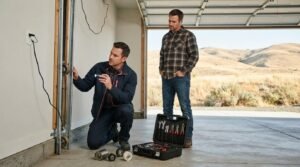
Imagine you’re rushing to get the kids to school when a loud, metallic bang echoes through your garage, leaving your 200 pound door frozen in place. This isn’t just a minor inconvenience; it’s a major safety risk that often stems from a component most homeowners ignore until it’s too late. Recognizing the early signs of a failing garage door spring can save you from the stress of a sudden breakdown and the danger of a heavy door falling unexpectedly. Your garage door springs act as the high tension muscles of the system, and they only have a finite lifespan before the metal fatigues.
We understand how frustrating it is to feel stuck behind a door that won’t open, especially when you’re worried about the safety of your family and the potential repair costs. That’s why we’ve put together this 2026 guide to help you regain peace of mind and maintain a functional home. By reading this, you’ll learn exactly how to identify critical wear and tear before a hazardous snap occurs. We’ll walk you through seven specific warning indicators, explain the vital safety risks involved with these components, and help you determine when it’s time to bring in a professional for a precision replacement.
Key Takeaways
- Learn to identify the seven most common audible and visual signs of a failing garage door spring to prevent a dangerous mechanical failure.
- Understand the 10,000-cycle lifespan of standard springs and how daily usage patterns dictate when you need a professional safety inspection.
- Discover the mechanical differences between torsion and extension springs and why professional replacement is the only safe way to handle high-tension components.
- Master the balance test to evaluate your garage door’s performance and determine if the springs are properly counterbalancing the door’s weight.
- Find out how to access 24/7 emergency repair services in Washington to ensure your home remains secure and functional after a spring snap.
Understanding the Lifecycle and Importance of Garage Door Springs
Every time you press your wall button or remote, a complex mechanical process begins. While many homeowners believe the electric motor does the heavy lifting, the real work is performed by garage door counterbalance systems. These springs act as the primary counterbalance for the door’s weight, which often ranges between 150 and 250 pounds. By neutralizing this weight, the springs allow the door to move smoothly and safely. Understanding how these components age helps you anticipate the physical signs of a failing garage door spring before they lead to a total system breakdown.
The industry measures the lifespan of a spring using a cycle system. A single cycle consists of one full opening and one full closing of the garage door. Standard residential springs are typically engineered to last for 10,000 cycles. For a typical family that uses the garage four times a day, this translates to roughly seven to ten years of reliable service. As a spring approaches the end of its rated cycle life, the steel becomes more susceptible to snapping under the immense pressure it holds.
Why Springs Are the Most Critical Component
Springs support approximately 90% of the door’s weight during its movement. This mechanical advantage allows the garage door opener to function as a guide rather than a heavy-duty hoist. When a spring begins to lose its tension, the opener must work much harder to compensate, which frequently leads to premature motor burnout and costly opener replacements. Metal fatigue is the leading cause of spring failure, occurring as the steel coils lose their elasticity and structural integrity over thousands of uses. Because these components are under extreme tension, they require professional handling to avoid serious injury or property damage.
Environmental Factors in Washington State
Homeowners in the Pacific Northwest face specific challenges regarding garage door longevity. In humid or coastal areas like Seattle and Everett, moisture in the air often leads to surface oxidation. Rust creates significant friction between the spring coils, which accelerates the wear process and weakens the metal. Conversely, in regions like Spokane and Yakima, dramatic temperature fluctuations cause the metal to expand and contract rapidly. This constant thermal stress can make the steel brittle and more prone to fracturing. We recommend applying a high-quality silicone-based lubricant annually to protect the metal from these regional environmental stressors. This proactive maintenance step can help you avoid the early signs of a failing garage door spring caused by avoidable corrosion.
7 Visible and Audible Signs Your Garage Door Spring is Failing
Identifying the early signs of a failing garage door spring can prevent a total system failure that leaves your vehicle trapped or creates a significant safety hazard. Because these components operate under extreme tension, they often provide distinct physical or auditory cues when they are nearing the end of their functional life. Recognizing these red flags allows you to address the issue before the metal fatigues to the point of a dangerous snap.
One of the most immediate indicators is a door that opens only a few inches before stopping or reversing. Most modern openers feature safety sensors and force-limit settings. When a spring fails, the door’s weight increases significantly, causing the opener to detect an overload and stop for safety. Similarly, if you notice jerky or crooked movement as the door travels along the tracks, it often suggests that one spring has more tension than the other, or that a single side of a two-spring system has already failed. If the door feels impossible to lift in manual mode after disconnecting the opener, the counterbalance system is no longer doing its job. Monitoring these signs of a failing garage door spring is the best way to avoid a sudden emergency.
Audible Warning Signals You Shouldn’t Ignore
The most dramatic sign of a break is a sudden, loud sound similar to a gunshot or a heavy metallic bang echoing from the garage. This occurs when a torsion spring snaps and instantly uncoils. However, not all sounds are so explosive. Persistent squeaking or a rhythmic grinding noise during operation often indicates that the metal has lost its elasticity or is suffering from significant internal friction. You should also listen for a strained whirring sound from the opener motor. This indicates the motor is overcompensating for a weak spring, which can lead to a secondary mechanical failure if you don’t address it quickly.
Visual Red Flags on the Spring and Cables
A simple visual inspection can often confirm your suspicions. For torsion systems, look for a clear two-inch gap in the coils. Since these springs are wound tight, a break creates a visible separation that is easy to spot from the ground. In extension systems, look for elongated or deformed coils that no longer return to their original tightly packed shape. Safety First: Why Failing Springs are a Hazard is a concept backed by federal safety standards, as broken springs often lead to “loose” or “slack” cables that can whip around or cause the door to fall. If you notice your cables hanging limply, the spring has likely lost its ability to hold tension. If you spot any of these indicators, scheduling a professional safety inspection is the most reliable way to ensure your system remains secure and operational.
Torsion vs. Extension: Identifying Failure in Different Spring Types
Every garage door system relies on one of two primary spring configurations to manage the door’s weight. Torsion springs are mounted on a metal shaft directly above the garage door opening, while extension springs are positioned on both sides, stretching along the horizontal tracks. In many older Washington homes, particularly in established neighborhoods in Seattle or Spokane, extension springs remain a common sight. However, torsion springs have become the modern professional standard because they offer more controlled and balanced movement. Understanding which system you have is the first step in recognizing the specific signs of a failing garage door spring for your home.
The failure modes of these two systems differ significantly in terms of safety and visibility. Torsion springs are engineered to fail “in place” because they are secured on a central shaft. When they snap, the spring remains on the bar, though it loses all lifting capacity instantly. Extension springs are more volatile during a failure. If an extension spring breaks and lacks a properly installed safety cable, the metal can fly off the track with enough force to cause property damage or serious injury. This difference in mechanical behavior makes regular inspections a necessity for every homeowner.
How Torsion Springs Fail
Torsion springs operate through a winding mechanism that stores energy as torque. As you use your door, the metal slowly loses its ability to maintain this torque, which is a natural part of the material’s lifecycle. The most definitive visual indicator of a failure is a clean split or shear in the metal coil, which typically leaves a two-inch gap between the broken pieces. Because these components require specialized tools and immense physical force to wind, homeowners should always prioritize professional torsion spring replacement to ensure the door is balanced with precision and safety.
Identifying Extension Spring Fatigue
Extension springs function by stretching and contracting. One of the primary signs of a failing garage door spring in this category is “gapping” between the coils when the door is closed. If the coils do not pull back tightly together, the steel has reached its elastic limit and can no longer support the door’s weight effectively. You should also check for frayed or worn safety cables running through the center of the spring. We recommend replacing extension springs in pairs even if only one side has failed. Since both springs usually share the same age and cycle history, the second spring is likely just as fatigued as the first and will fail shortly after.

Safety First: Why Failing Springs are a Hazard and How to Test Them
If you suspect your system is struggling, the most reliable way to confirm the signs of a failing garage door spring is through a manual balance test. This procedure allows you to evaluate the tension level without the electric opener’s mechanical assistance. To start, ensure the door is in the fully closed position. Pull the red emergency release cord to disconnect the door from the opener carriage, allowing you to move the door manually.
Carefully lift the door by hand until it is roughly halfway open, then let go. A healthy spring system should hold the door in place or allow it to drift only slightly. If the door slams shut or shoots upward with force, the springs are improperly tensioned or severely fatigued. This imbalance indicates that the springs can no longer counterbalance the door’s weight, which typically ranges from 150 to 250 pounds. This test is a vital diagnostic tool for any homeowner concerned about the long-term health of their garage system.
Operating a door with failed springs is physically dangerous. The high-tension steel used in these components can exert enough force to cause severe injury if it snaps while you are in the garage. Beyond human safety, an imbalanced door puts immense strain on the electric opener. If you continue using the system despite seeing signs of a failing garage door spring, you risk burning out the opener motor as it overworks to lift a dead weight the springs are designed to carry.
The Homeowner’s Safety Checklist
- Rule #1: Never touch the red emergency release cord if you already know a spring is broken, as the door could crash down instantly without the opener’s brake.
- Rule #2: Do not attempt to loosen any bolts on the bottom brackets or the spring winding cone, as these are the primary points of extreme tension.
- Rule #3: Keep children and pets away from the garage area until a professional technician has arrived to secure the system.
When a Failing Spring Becomes an Emergency
A broken spring often happens at the most inconvenient moment, leaving your vehicle trapped inside the garage or preventing you from securing your property. A door stuck halfway open is a major security risk, as it provides an easy entry point for intruders and exposes your belongings to the elements. In these high-stakes scenarios, you need a local partner who understands the urgency of the situation. We provide emergency garage door repair in Everett and surrounding areas to ensure your home remains safe and accessible. If your door is currently stuck or showing dangerous instability, contact Affordable Garage Door Repair & Sales LLC immediately for a professional safety inspection.
Reliable Spring Repair and Replacement Services in Washington
When you observe the clear signs of a failing garage door spring, the next step is finding a dependable partner to restore your home’s security. Affordable Garage Door Repair & Sales LLC serves as the expert choice for homeowners throughout Washington. We specialize in professional torsion spring replacement and broken spring repairs, prioritizing long-term functional results over temporary fixes. Because a snapped spring can leave you stranded, we offer same-day service and 24/7 emergency assistance in major hubs like Seattle and Spokane.
Our approach centers on a “Two-Spring” replacement philosophy. If your door uses a dual-spring system and one side fails, we recommend replacing both components simultaneously. Both springs have likely endured the same number of cycles and environmental stress. Replacing them as a pair ensures consistent tension across the door, prevents lopsided movement, and saves you from a second service call just weeks later. Every professional spring service we perform also includes a comprehensive safety inspection. This allows our technicians to identify worn cables, rollers, or hinges before they lead to further mechanical issues.
Our Professional Replacement Process
Precision is the foundation of a durable repair. Our highly trained professionals match the exact wire size and length to your door’s specific weight to ensure the counterbalance system operates exactly as engineered. These springs are under extreme tension and require specialized tools for safe installation. Once the new springs are installed, we lubricate and tune the entire door system to ensure quiet operation and reduce friction on the opener motor. We value transparency in our partnerships, which is why we provide a clear, upfront estimate on-site before any work begins.
Serving Your Local Washington Community
Our regional expertise extends across the state, from the coastal humidity of Puyallup and Everett to the temperature extremes of Yakima and Wenatchee. We understand the specific environmental factors that contribute to the signs of a failing garage door spring in different Washington climates. If our inspection reveals that your door is beyond a cost-effective repair, we encourage you to view our 2026 Buying Guide for modern replacement options. Whether you need an emergency fix or a full system upgrade, our team is ready to help. Contact us today for a free on-site estimate and experience the peace of mind that comes with professional garage door care.
Prioritizing Safety and Performance for Your Garage Door
Recognizing the early signs of a failing garage door spring is the most effective way to prevent a sudden mechanical emergency. By monitoring unusual sounds and performing regular balance tests, you protect your family from the hazards of a falling door and save your opener motor from premature burnout. These high-tension components require precise handling to ensure long-term durability. Acting on these warning signs early transforms a potential safety crisis into a simple, professional maintenance visit.
Affordable Garage Door Repair & Sales LLC is your local partner for dependable repairs across Washington. We provide 24/7 emergency service in Seattle and Everett, ensuring that a snapped spring never disrupts your schedule for long. Our expert technicians are highly trained in all major spring systems and offer free on-site estimates for both residential and commercial doors. Schedule your professional spring inspection with Affordable Garage Door Repair & Sales today! to regain confidence in your home’s security. We look forward to providing the high-quality, reliable results your property deserves.
Frequently Asked Questions
Can I open my garage door with a broken spring?
You should not attempt to operate your garage door if a spring is broken. Because the springs provide the necessary counterbalance to lift the heavy door, your electric opener will likely suffer motor burnout if forced to do the work alone. Additionally, the door could crash down unexpectedly or come off its tracks. If you are stuck in Seattle or Everett, our 24/7 emergency service is available to secure your home.
How much does it cost to replace garage door springs in Washington?
Costs for spring replacement in Washington vary based on the spring type, door weight, and your specific location. Factors like whether you have a standard torsion system or older extension springs will influence the final estimate. At Affordable Garage Door Repair & Sales LLC, we provide free on-site estimates across our service areas, including Spokane and Yakima. This ensures you receive a transparent price tailored to your home’s unique mechanical requirements.
Should I replace both garage door springs if only one is broken?
Yes, we strongly recommend replacing both springs simultaneously. Garage door springs are typically installed at the same time and endure the same number of cycles. If one has failed, the other is likely nearing the end of its functional lifespan. Replacing them as a pair ensures your door remains perfectly balanced and saves you the cost of a second service call in the near future. This proactive approach is a standard part of our safety inspections.
How long do garage door springs usually last before failing?
Most residential garage door springs are rated for approximately 10,000 cycles, which usually lasts between seven and twelve years for the average family. However, environmental factors in Washington, such as the humidity in Tacoma or temperature swings in Pasco, can accelerate metal fatigue. Noticing the early signs of a failing garage door spring can help you schedule a professional replacement before a total mechanical breakdown occurs.
Is it dangerous to replace garage door springs myself?
Yes, DIY spring replacement is extremely dangerous and not recommended. These components are under immense tension and can cause severe injury if they snap or if tools slip during the winding process. Our highly trained professionals have the specialized equipment and experience to handle these high-pressure parts safely. Homeowners in Auburn and Wenatchee should rely on expert technicians to ensure the door is balanced correctly without risking personal injury.
What is the difference between torsion and extension springs?
Torsion springs are mounted on a metal bar directly above the door opening and provide a more balanced, controlled lift. Extension springs are located on either side of the horizontal tracks and stretch as the door moves. Torsion springs are generally considered safer because they stay on the shaft if they break. Extension springs can fly off the track if a safety cable isn’t present. Our team services both types across the state, from Ellensburg to Puyallup.
Why does my garage door move in a jerky motion?
Jerky or uneven movement is often one of the primary signs of a failing garage door spring. This typically happens when one spring has lost more tension than the other, causing the door to pull to one side or struggle during its travel. It can also indicate that your rollers are sticking or the cables are beginning to fray. Scheduling a professional inspection is the best way to determine if you need a simple tune-up or a full spring replacement.