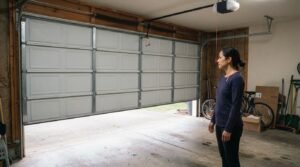
A slow garage door can signal a problem before it stops working. A typical residential door takes 12 to 15 seconds to complete an opening or closing cycle; one that takes closer to 20 seconds or longer should be checked. To understand how to fix a slow-moving garage door, start by noticing whether the delay is consistent or appears alongside noise, jerky movement, or other changes.
It’s frustrating when a garage door that once opened smoothly begins to creep along, especially when you’re trying to leave or get inside. The cause may be as simple as friction from dirty or dry moving parts, or it may involve the opener, worn components, or a door that isn’t moving freely.
This guide explains what can slow a garage door, which parts are appropriate to inspect and lubricate, and how often routine lubrication can help. You’ll also learn how typical speed and cycle time compare with a door that may need professional attention, so you can make a practical, safety-minded decision about what to do next.
Key Takeaways
- Compare the door’s movement with its usual operation and consider opener settings, power supply, and mechanical resistance as possible causes.
- Clean and lubricate the appropriate moving parts every six to twelve months, then observe whether the door moves more smoothly.
- Watch for worn rollers, track problems, or damaged cables and springs; leave high-tension repairs to trained professionals.
- Use typical opening and closing times as a guide, but don’t change opener speed or force settings without understanding the model’s instructions.
Why Is My Garage Door Opening Slowly?
A garage door that takes closer to 20 seconds or longer to open or close should be checked. If you’re learning how to fix a slow moving garage door, first note whether it slows in both directions or only while opening. Grinding, jerky movement, and pauses can help distinguish mechanical resistance from an opener running slowly but quietly. Battery backup can also reduce operating speed, so check whether the opener is using backup power.
Some garage door openers include adjustable speed settings, but controls vary by model. Consult the owner’s manual before considering an adjustment. Don’t change switch settings without professional expertise, since an improper adjustment can make the door slam down with excessive force. Some models intentionally move slowly for safety, so slower operation alone doesn’t always indicate a fault.
Horsepower can affect an opener’s ability to move a door, and a higher-horsepower model may be worth considering when faster operation is needed. But slow movement can also point to worn opener gears, motor trouble, power or wiring issues, or sensor problems. Check that the opener has power; testing its outlet with another device can help. To clear a possible opener issue, unplug it for 30 seconds, then plug it back in. Understanding how to fix a slow moving garage door means identifying the cause before changing settings or replacing equipment.
In the United States, repair cost depends on the cause, required parts, and scope of work. The price is given after a quote request. Springs and cables are unsafe to repair or replace yourself because they’re under high tension. Don’t use a door with broken springs or cables.
A professional can inspect the power supply, wiring, sensors, gears, and motor, then determine whether repair, resetting, or opener replacement is appropriate. Frequent malfunctions, excessive noise, or continued slow operation after other issues are addressed can indicate that the opener needs replacement.
Q: How often should I lubricate my garage door’s moving parts?
Lubricate garage door moving parts every six to twelve months, using a product made for garage door metal components. Regular lubrication reduces friction that can make opening and closing take longer.
Lubricating Moving Components
Lubrication is applying a suitable product to moving metal components so they can travel with less friction. Before applying it, clean grime and old grease from the tracks, roller brackets, and hinges. Use a suitable lubricant on the relevant parts, following the product instructions. Open and close the door several times to distribute the lubricant. Avoid coating the tracks heavily, since excess product can collect dirt and interfere with roller movement.
Cold Weather and Lubricant
Cold weather can make existing garage door problems more noticeable because metal parts may contract and old lubricant may thicken. If a door slows in cold conditions, inspect its movement and lubricant rather than adding product indiscriminately. A low-temperature lubricant may help. Use only a product suitable for garage door metal components, and follow its directions to avoid applying too much or lubricating the wrong surfaces.
Set a recurring maintenance reminder for every six to twelve months. During that inspection, look for dirt buildup on tracks, dry hinges, or grime around roller brackets. Clean these areas before lubrication, then test the door by opening and closing it several times. If movement remains slow, lubrication may not address the cause. Worn parts, a damaged track, or another mechanical issue can still restrict movement after maintenance.
WD-40 is a solvent, not a long-term garage door lubricant, and it can remove grease the system still needs. Choose a lubricant labeled for garage door metal components instead. If routine cleaning and lubrication don’t restore smooth movement, professional garage door repair can help identify a mechanical problem that needs attention.
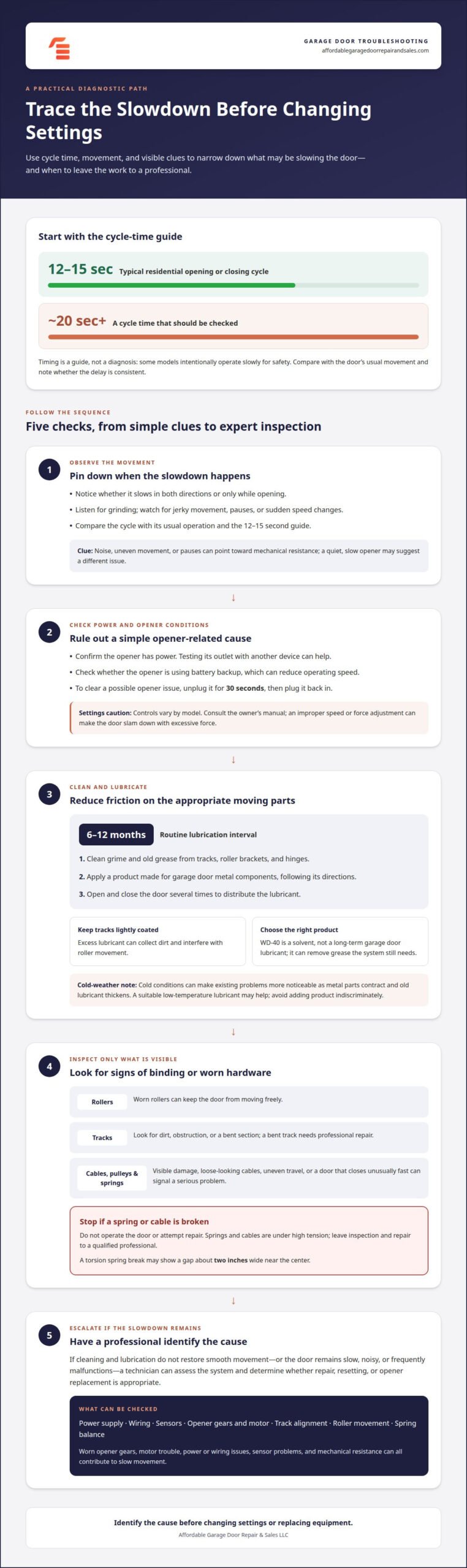
Worn rollers, tracks, cables, pulleys, and springs
Worn or misaligned hardware can make a garage door move slowly, unevenly, or with sudden changes in speed. Rollers, tracks, cables, pulleys, and springs all affect how smoothly the door travels.
Inspect visible components for worn rollers, a bent track, loose-looking cables, or uneven movement. A bent track needs professional repair, while worn rollers can prevent the door from moving freely. Dirt or an obstruction may also interfere with travel, but damaged hardware calls for more than routine cleaning. A technician can check track alignment and whether the springs are balanced.
Spring and Cable Problems
Springs and cables support the door’s movement under tension, so damage can affect both speed and control. Worn pulleys or springs that have lost tension may make operation slower, while a door that closes unusually fast can signal a spring or cable problem. A torsion spring with a break may show a gap about two inches wide near its center. Don’t operate a door with broken springs or cables; contact a qualified technician promptly.
Spring Balance and Track Alignment
Spring balance means the springs help counter the door’s weight, while aligned tracks guide its travel. If balance is off, the opener may struggle or the door may move unevenly. A technician can disconnect the opener and raise the door by hand until it is halfway open to assess balance. They can also inspect track alignment and check whether rollers travel freely, rather than binding against a bent section.
These components work together, so one worn part can place extra strain on others. Aging rollers, bent tracks, old cables, and torsion springs can all hamper smooth operation. Springs are under high tension, making repair or replacement hazardous without the right tools and training. Leave intensive work involving springs or pulleys to a professional. If the door looks crooked, moves unevenly, or shows visible cable damage, stop using it and arrange an inspection.
Typical residential garage door opening speed and cycle time
Residential garage doors are designed to move at around 7 inches per second. A typical opening or closing movement takes 12 to 15 seconds, while many doors fully open or close in about 10 to 15 seconds. These ranges describe one direction of travel, not the combined time for opening and closing.
To compare your door’s movement over time, observe one complete cycle from the moment it starts until it reaches its endpoint. Keep the starting position consistent. A partial opening naturally takes less time than travel from fully closed to fully open, so comparing different distances can give a misleading impression of speed.
Door size, opener model, and programmed settings affect how quickly the system travels. Some garage door models intentionally use slower speed settings for safety. Slower movement is not automatically a fault, especially if it is consistent and smooth. Check the owner’s manual for your opener’s speed settings, and don’t adjust switches without professional expertise. An incorrect adjustment can cause the door to close with excessive force.
A movement that takes closer to 20 seconds or longer should be checked, particularly if the door has become slower than its usual pace. Note whether opening and closing take different amounts of time. A delay in both directions may point to a different issue than a door that slows only while opening. Listen for new noise and watch for pauses, jerking, or uneven travel. These details help distinguish a programmed speed from a mechanical or opener problem.
Don’t try to compensate for slow travel by changing settings at random or choosing a replacement opener based only on speed. The door’s condition and the opener’s compatibility matter alongside its power. If timing remains well outside the typical range or operation has changed, request garage door repair for a focused diagnosis.
Affordable Garage Door Repair & Sales: Sectional & Roll-Up Doors
Affordable Garage Door Repair & Sales LLC can help when a slow door points to worn springs or an opener that no longer operates properly. Its technicians provide spring repair and opener replacement, addressing mechanical causes rather than changing speed settings without diagnosing the issue.
For sectional and roll-up doors, the right repair depends on the door’s condition and the component affecting its movement. If the door remains slow after routine cleaning and lubrication, or moves unevenly, a professional assessment can help identify whether spring repair or opener replacement is appropriate. Avoid using a door with a suspected broken spring.
Contact Affordable Garage Door Repair & Sales to discuss a slow-moving garage door and the repair it may need.
Choose a Clear Next Step for Your Garage Door
Use the door’s recent behavior to guide what happens next. Note when the slowdown began, whether it happens during opening, closing, or both, and any unusual sounds or uneven movement. These details can help focus an assessment on the right part of the system instead of relying on a speed adjustment alone.
Knowing how to fix a slow-moving garage door also means recognizing when a repair calls for professional tools and experience. Affordable Garage Door Repair & Sales LLC provides spring repair, including broken spring repair, and opener replacement for issues involving those components. If the door’s performance continues to change or you’re unsure what is causing the delay, describe the symptoms and discuss the appropriate repair.
Contact Affordable Garage Door Repair & Sales LLC to take the next step toward dependable door operation. A clear diagnosis can help you make a practical plan and move forward with confidence.
Frequently Asked Questions
Can I fix a slow garage door myself?
Yes, you can handle basic cleaning and lubrication if the door has no visible damage. Remove grime from accessible tracks and follow the lubricant label for suitable metal parts. Check the opener’s manual before changing any setting. Stop if the door moves unevenly or you see damaged hardware. Don’t attempt spring or cable repairs, which involve high tension and require proper training and tools.
How Long Should It Take for My Garage Door to Open and Close?
A residential garage door commonly takes about 10 to 15 seconds to travel fully in one direction. Time opening and closing separately, starting from a fully closed or fully open position. A partial opening is not a fair comparison. If the door’s timing changes noticeably, record whether the delay occurs during opening, closing, or both. That distinction can help narrow down the cause.
When Should You Call a Professional?
Call a professional when the door has a broken spring or cable, a bent track, uneven travel, or a slowdown that persists after basic maintenance. Affordable Garage Door Repair & Sales LLC serves Everett, Puyallup, Seattle, Tacoma, Auburn, Wenatchee, Yakima, Pasco, Ellensburg, and Spokane. Its licensed, insured, and experienced professionals can assess the affected components and determine whether repair or opener replacement is appropriate.
What causes a garage door to move slowly?
Common causes include friction from dirty or dry components, worn rollers, track obstructions, aging cables or pulleys, and springs that have lost tension. The opener may also be using battery backup, which can slow operation, or have a motor or gear issue. Notice whether the door slows in both directions and whether the change began after a power interruption or cold weather.
How to check garage door rollers, tracks, and hinges for binding
With the door stationary, look along the visible track for debris, bends, or areas where a roller appears to catch. Check rollers for visible wear and hinges for damage or looseness. During normal operation, observe from a safe position for jerking, scraping, or pauses at the same point. Don’t put your hands near moving parts or try to straighten a bent track yourself.
How to lubricate garage door rollers, hinges, and springs safely
Clean grime and old grease from accessible roller brackets and hinges, then apply a garage-door lubricant according to its label. Use only the amount directed, and run the door through several cycles to distribute it. Springs operate under high tension, so don’t adjust or repair them during lubrication. If a spring looks broken or damaged, leave the door unused and arrange professional service.