Nearly one in four home burglaries involve entry through secondary access points such as garages. Five practical garage door security reinforcement options can help strengthen this entry point: adjustable security bars, longer screws anchored into wall studs, door barricades, door guards, and reinforcement kits. Each addresses a different weak point, so the right choice depends on your door and its hardware.
A stronger door can support a broader security plan, but any reinforcement must suit how the door opens and where its vulnerable components are. This guide explains how each option works, what it can reinforce, and what to consider when choosing. It also covers when professional repairs and safety inspections can help address problems with the door’s condition or operation.
Key Takeaways
- Adjustable security bars can brace a closed door, with models that adjust by hand from 17 to 50 inches.
- Longer screws can anchor door hardware into the wall stud, helping reinforce the connection beyond the jamb.
- Choose a barricade that suits the door’s movement and can be disengaged when you need to use the garage.
- Door guards and shields can protect vulnerable areas, including the emergency release from outside access.
- Reinforcement kits vary by door size and design, so match the components to the door’s construction and hardware.
1. Adjustable security bars
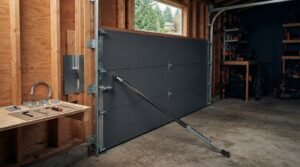
An adjustable security bar braces a closed garage door from inside. Its length changes by hand from 17 to 50 inches, accommodating different openings. For practical garage door security reinforcement, measure the intended contact points before selecting a bar. A model that cannot reach both surfaces securely won’t provide a stable brace.
For a sectional door, position the bar between a solid door section and a firm floor surface. Follow the manufacturer’s installation instructions and confirm the bar stays seated. Avoid thin panels, loose trim, or surfaces that shift under pressure. The setup depends on stable contact at both ends, not just on the bar itself.
Check how the bar interacts with the tracks, opener, and door’s travel path. Remove the brace before operating the door. Store it where household members can reach it without blocking the doorway or creating a trip hazard. If the garage has another entrance, keep that route clear for anyone leaving.
If you have an automatic opener, review its instructions before adding a lock or brace. The U.S. Consumer Product Safety Commission says opener installation instructions call for removing or disabling all locks connected to the garage door before installing the opener. A brace can conflict with opener operation if it prevents the door from moving. Keep added hardware compatible with normal operation and emergency procedures.
Building requirements and insurance conditions can vary. Check the rules that apply to your property and review your policy before changing door hardware. A removable interior brace may affect operation differently from a permanent lock. Consider that difference when planning garage door security reinforcement.
To prevent outside access to the emergency release, install a garage shield that blocks access to the release cord from outside. Choose a design that still lets occupants operate the release from inside in an emergency. Test that function with the door closed, following the opener’s instructions. Don’t secure the release in a way that prevents its emergency use.
Adjustable bars add a layer of protection, but they do not replace sound hardware or a properly operating door. Recheck the fit after replacing the door, changing the opener, or altering the floor surface. Any of these changes can affect the bar’s position and stability. Review the manufacturer’s instructions after making adjustments.
Treat that listing as a separate hardware option, not as proof that the bracket will fit a particular opener or door. Before choosing it, review the product’s compatibility information and the opener and door manufacturers’ guidance. Confirm that installation preserves normal door travel and access to emergency operation. Don’t assume a bracket replaces an interior brace or fixes a damaged or poorly balanced door. Compare the bracket’s stated purpose with the specific concern you’re addressing, and make sure installation won’t interfere with existing hardware. If compatibility or installation requirements are unclear, consult the manufacturer or a qualified garage door professional before making a change. Recheck door operation after an approved hardware change, and stop using the setup if movement becomes uneven or obstructed.
2. Long screws anchoring hardware into a wall stud
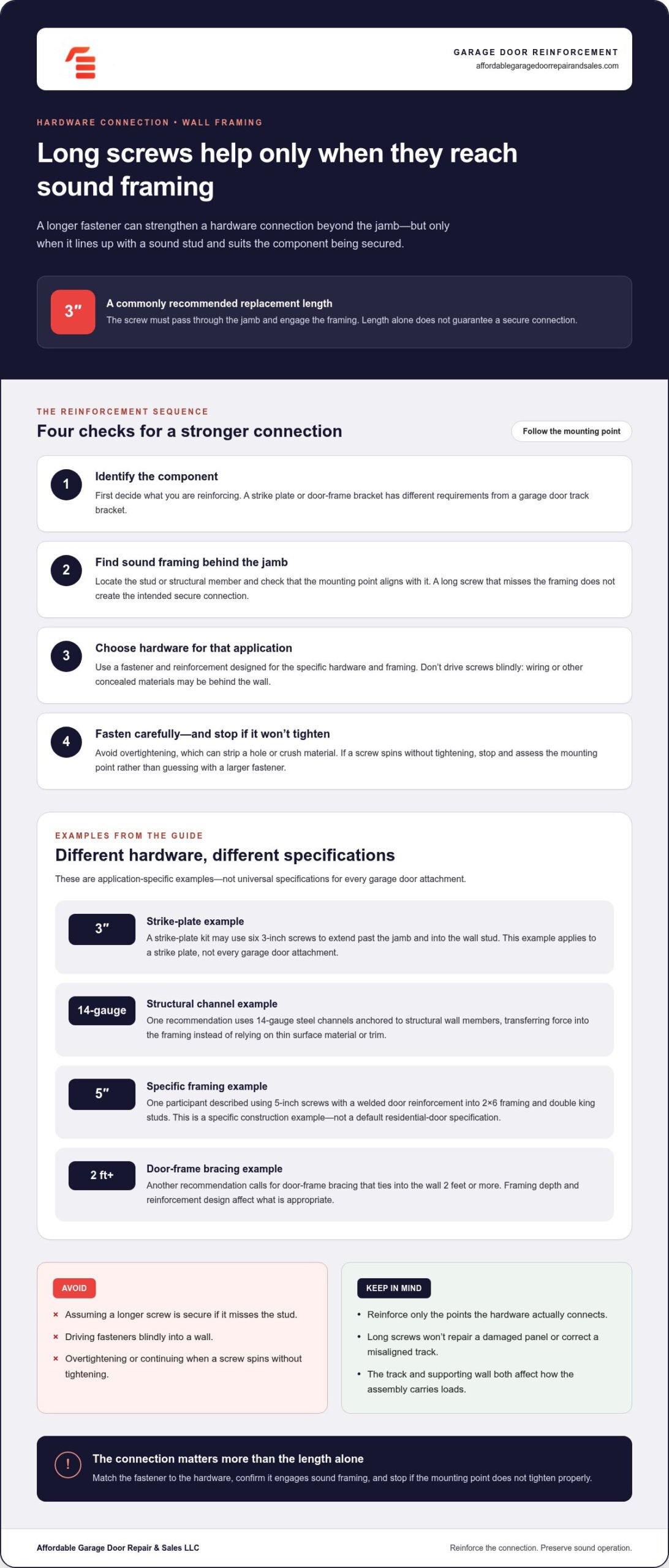
Longer screws can strengthen a hardware connection by reaching through the jamb and into wall framing. Short screws that stop inside the jamb rely on that material alone. A commonly recommended replacement is a 3-inch screw driven into the framing. The key is not simply choosing a longer fastener. It must line up with a sound stud and suit the hardware being secured.
Start by identifying the exact component you’re reinforcing. A strike plate or door-frame bracket has different requirements from a garage door track bracket. Locate the framing behind the jamb, then align the hardware’s screw holes with it. If the holes miss the stud, a longer screw won’t create a secure connection. Don’t drive fasteners blindly, since wiring or other concealed materials may be behind the wall.
A strike-plate kit may use six 3-inch screws to extend past the jamb and into the wall stud. This example applies to a strike plate, not every garage door attachment. For heavier reinforcement, one recommendation uses 14-gauge steel channels anchored to structural wall members. The channel transfers force into the framing, rather than leaving a thin surface or trim to carry it alone.
Some installations call for different dimensions. One participant described securing a welded door reinforcement with 5-inch screws into 2×6 framing and double king studs. That is a specific construction example, not a default specification for residential doors. Another recommendation calls for door-frame bracing that ties into the wall 2 feet or more. These examples show why framing depth and reinforcement design matter.
Work methodically: remove one existing fastener, inspect its length and condition, then identify the material behind the mounting point. Choose hardware designed for that application and make sure each screw engages the intended framing. Don’t overtighten, as a stripped hole or crushed material can weaken the connection. If a screw spins without tightening, stop and assess the mounting point instead of guessing with a larger fastener.
Long screws reinforce only the points they connect. They won’t strengthen a damaged panel, correct a misaligned track, or make unsuitable framing sound. On sectional and roll-up doors, the track and supporting wall both affect how the assembly carries loads. For help understanding the door type and hardware involved, review these sectional and roll-up door options.
3. Door barricades
A door barricade adds a physical stop to resist movement from outside. For a garage, the right type depends on the door’s design and opening direction. As part of garage door security reinforcement, the barricade must attach to a strong surface. Weak mounting points can fail before the bar does.
Garage door locks can add resistance by securing the door when it’s closed. Practical options include a secondary lock designed to engage in the closed position or slide latches fitted on both sides of a large garage door. These devices work differently from an opener’s automatic locking features, so identify existing hardware before adding another mechanism.
Placement affects how well a barricade works. First, identify the door’s movement path and where it meets the frame or track. Choose a device designed for that door type instead of adapting a barricade intended for another opening. A floor-mounted brace, for example, needs stable floor contact and must not obstruct the door’s travel.
For a large door, a slide latch on each side secures both edges instead of relying on one central point. Confirm that each latch enters its receiver fully when the door is closed. Check that both sides engage consistently, since a latch that misses its receiver cannot hold that edge in place. Keep both latches accessible from inside.
Consider how the barricade fits into daily use. One that’s awkward to disengage may go unused, while one left engaged can prevent the door from opening. Make a simple routine: release the lock before operating the opener, then engage it only after the door is fully closed. Keep the release path clear and show household members how the mechanism works.
During routine door checks, inspect mounting screws, brackets, and latch alignment. Look for looseness, bent hardware, or a latch that no longer enters its receiver cleanly. Make sure the barricade does not obstruct the door’s normal movement. If the door binds or shifts, address the mechanical issue before relying on the added lock.
Door barricades contribute to garage door security reinforcement when they’re securely attached, correctly aligned, and used consistently. Match the lock to the door’s construction, preserve normal operation, and keep emergency access practical. These steps help make the barricade a useful layer without making everyday entry an obstacle.
4. Door guards and shields
Door guards reinforce vulnerable points rather than strengthening the entire garage door. A guard can cover or support hardware around a lock, latch, or opening, helping protect the area where components meet. The right choice depends on the opening’s construction and the hardware already installed. For example, a guard over a vulnerable access point should attach securely to solid material, not loose trim.
To help prevent garage door fishing or lock-bypass attempts, install a garage shield that blocks outside access to the emergency release. The shield should still let someone inside operate the release in an emergency. Test both functions with the door closed and follow the opener’s instructions.
Position the shield to cover the release access point without interfering with the opener rail or door travel. Check the gap around the shield and make sure the release cord remains reachable from inside. A poorly positioned cover can obstruct normal operation or prevent emergency release. Recheck its position after adjusting opener hardware or replacing a component.
Guards can also strengthen a person-door opening within a garage. One garage owner described a welded frame made from 1/4-inch bar steel around a man-door opening. That example shows how a rigid frame can reinforce the surrounding structure, but it isn’t a universal specification. The door, jamb, wall material, and guard attachment all affect how a particular installation should be designed.
Before fitting a guard, inspect the lock area, strike, hinges, and surrounding frame. Look for movement, loose fasteners, damaged wood, or metal that has pulled away from its mounting point. A guard attached to compromised material may simply transfer force to the next weak spot. Secure the mounting points into sound structure, and keep the guard aligned with the latch or release it protects.
After installation, test the door manually and through its normal opener cycle. Confirm that the shield clears moving parts and that the guard doesn’t catch on the door or frame. Test the inside emergency release separately, then close and reopen the door. This sequence can reveal interference before the hardware becomes part of daily use.
Door guards and shields provide targeted garage door security reinforcement, but they don’t fix every mechanical fault. If a sectional door shifts, binds, or has damaged cables, don’t rely on an added shield to solve the underlying problem. A guard protects a specific point; correct alignment and sound moving hardware keep the larger door assembly operating properly.
5. Door reinforcement kits
Reinforcement kits strengthen selected parts of a garage door, such as panels, opener brackets, or horizontal supports. Match the kit to the door’s size, construction, and weak points. For example, one kit is described for a 16-foot door and uses 18-gauge galvanized steel. Another heavy-duty support kit is designed for an 8-foot door. Those sizes are examples, not interchangeable specifications.
How much does garage door security reinforcement cost? The total depends on the kit, door construction, installation work, and any repairs needed. A quote request is the next step for a project-specific price.
To reinforce a door against forced entry, begin by inspecting its panels, tracks, hinges, lock, and opener bracket. Then choose a kit that supports the weak area and fits the door’s dimensions. Steel-reinforced horizontal girts offer one approach; a 2×4 girt design is another. Some reinforcement systems use 3/8-inch-diameter bolts to anchor girts. Follow the kit instructions and use its specified attachment points.
How do you reinforce tracks, hinges, panels, and the center lock? Secure track supports to sound framing, reinforce vulnerable panels with compatible braces, and strengthen hinge or lock attachments with hardware designed for those points. A reinforcement plate can support the thin web beside a lock bore by turning 90 degrees, but its shape must fit the door. Avoid drilling into moving components or altering the track path.
Can reinforcement affect the opener, safety sensors, or warranty? Yes. Misplaced braces can interfere with opener travel or block sensor beams, and alterations may affect manufacturer warranty terms. Keep the sensor path clear, preserve the opener’s full movement, and follow the door and kit instructions. Test the door’s balance and automatic reversal after installation.
DIY work has limits. Torsion springs hold significant tension, so adjusting or removing them can cause severe injury. Keep hands and tools away from spring hardware, and leave spring adjustments to trained professionals. Get professional help if the door is off track, a cable is damaged, panels are distorted, or the kit requires changes near springs or lifting hardware.
For a sound installation, match reinforcement to the door rather than adding parts by guesswork. If the door’s structure or operation needs a professional assessment, request help with your garage door.
The strike plate kit takes about ten minutes to install with a drill.
Affordable Garage Door Repair & Sales: Spring Repair
Affordable Garage Door Repair & Sales LLC can help when a garage door’s mechanical condition affects safe, reliable operation. If a broken spring makes the door difficult to lift or prevents it from opening, Spring Repair and broken spring repair address the problem. Avoid forcing the door, since added strain can affect other components.
If a door has come off its track, off-track repair can address the alignment problem. If the opener isn’t operating the door properly, opener replacement may be appropriate. These repairs don’t replace a security device, but they can resolve mechanical problems that undermine normal door operation.
Contact Affordable Garage Door Repair & Sales to discuss the garage door repair you need.
Make Your Next Security Step Count
Before adding hardware, consider whether the door operates reliably. Reinforcement works best as part of a plan that accounts for the door’s condition, moving components, and how you use the garage. This keeps security improvements practical and helps avoid creating new operating problems.
Affordable Garage Door Repair & Sales LLC can address mechanical issues that may affect your security plans. Services include Spring Repair and broken spring repair when spring problems disrupt operation, as well as Opener Replacement when the opener needs attention. Resolve these issues before relying on added security hardware.
If your door needs mechanical attention, take the next step and contact Affordable Garage Door Repair & Sales LLC. A properly functioning door gives you a sound starting point for strengthening your garage’s entry.
Frequently Asked Questions
What Smart Security Technologies Can Reinforce Your Garage Door?
Smart lighting and compatible opener upgrades can add useful security layers alongside physical reinforcement. For example, dual-technology lighting sensors activate when they detect both heat and motion, while security lighting should provide at least 700 lumens. A connected opener’s functions depend on its model, so check its instructions before integrating it with other devices. Technology supports a garage door security reinforcement plan, but it doesn’t replace sound door hardware.
How Can Securing Your Garage Service Door Improve Overall Security?
A secure service door closes a separate entry route into the garage and home. A solid-core or metal door, an ANSI Grade 1 deadbolt, and hinges with non-removable pins can strengthen that opening. Make sure the deadbolt’s strike is firmly attached to the frame, not just surface trim. These measures address the walk-in door, which needs its own security assessment apart from the large garage door.
Why Is Your Garage Door a Common Target for Break-Ins?
Garages can offer a less visible route into a home, and nearly one in four home burglaries involve entry through secondary access points such as garages. A standard, unreinforced sectional door can be vulnerable to a determined intruder. Reduce exposure by keeping the door closed, securing the service entrance, and keeping valuables out of sight near windows. Check that the door closes fully without leaving a gap.
What Are the Best Garage Door Reinforcement Kits and Braces?
The best fit depends on the door’s dimensions, panel construction, and the weak point being addressed. A reinforcement strut kit described for a 16-foot door uses 18-gauge galvanized steel, while a heavy-duty support kit is designed for an 8-foot door. Steel-reinforced horizontal girts are another option. Compare the kit’s stated application with your actual door, since parts designed for one size may not suit another.
What Smart Garage Door Security Features Help Prevent Break-Ins?
Use security lighting with at least 700 lumens and dual-technology sensors that require both heat and motion to activate. A shield can also block outside access to the emergency release while preserving inside operation. For households in Everett, Puyallup, Seattle, Tacoma, Auburn, Wenatchee, Yakima, Pasco, Ellensburg, and Spokane, choose additions that remain compatible with the existing door and opener. Test normal operation after installation.
How much does garage door security reinforcement cost?
Costs vary by reinforcement type.