Is it safe to use a garage with a broken spring? No. Don’t operate the door with its opener or try to lift it alone. Without spring support, the door can become extremely heavy, unbalanced, and liable to fall.
If you’re asking whether it’s safe to use a garage with a broken spring just to get a vehicle in or out, avoid operating the door. A door that moves unevenly, has loose cables, or is partly open can pose an immediate risk. Keep clear until the problem is addressed.
This guide explains whether a broken-spring door can open, which warning signs to look for, and how to reduce risks if emergency access is unavoidable. You’ll also learn what to do next and why professional spring repair is the practical way to restore safe operation.
Key Takeaways
- Don’t rely on the opener to move a door when a spring may be broken; recognize when the safest step is to stop and keep clear.
- Look for uneven movement, loose cables, track or panel damage, and unusual sounds to spot signs that the door needs attention.
- Understand why spring replacement is best left to a professional, rather than attempting a tensioned repair as a DIY project.
- If access is unavoidable, learn the precautions that can reduce risk while manually moving the door or freeing a trapped vehicle.
- Find out when spring repair, opener replacement, or off-track repair can address the problem and help restore normal operation.
Will a Garage Door Open with a Broken Spring?
It may move, but a garage door with a broken spring won’t stay open safely without support. Torsion springs sit above the door and use stored tension to help lift it; extension springs stretch along the door’s sides. Spring replacement time depends on the spring setup, door condition, and any inspection or adjustment needed, so there isn’t one reliable duration for every repair.
- Stop operating the door. Don’t use the opener to test whether it can lift the door. Without spring assistance, the door becomes heavy and unbalanced, and the opener may strain against the added load. If the motor runs but the door stays still, stop using the opener rather than repeatedly pressing its control.
- Check for visible damage from a safe distance. Look at the door, tracks, and cables without touching the spring or hardware. A crooked door, loose cable, damaged track, or door stuck partly open can indicate a broader problem. If the door is uneven, don’t try to raise it. Keep the area clear and arrange professional help.
- Leave spring work to a professional. Torsion and extension springs both hold tension that helps counterbalance the door. If a spring snaps or shifts during adjustment, that tension can cause serious injury. The U.S. Consumer Product Safety Commission warns that weak or broken springs may let a door fall rapidly, causing injury or death. Don’t attempt a DIY replacement.
- Arrange an inspection before replacing parts. A professional can inspect the spring, door balance, cables, tracks, and opener to identify damage beyond the visible break. Depending on the door’s size, a torsion setup may use one or two springs. The inspection helps determine which spring needs replacement and whether related components also need repair.
- Call a professional when the door behaves abnormally. Contact a professional if the spring appears broken, the opener strains, cables hang loose, or the door is off-track or partly open. Don’t pull the emergency release on a partly open door. Keep people clear while arranging repair, and don’t try to hold the door up yourself.
Professional spring repair addresses the stored tension and checks how the door moves after replacement. A DIY attempt can leave the door unbalanced or damage the opener, cables, tracks, or panels. When a spring fails, stop operation and have the door inspected before using it again.
Risks of operating a door with a broken spring
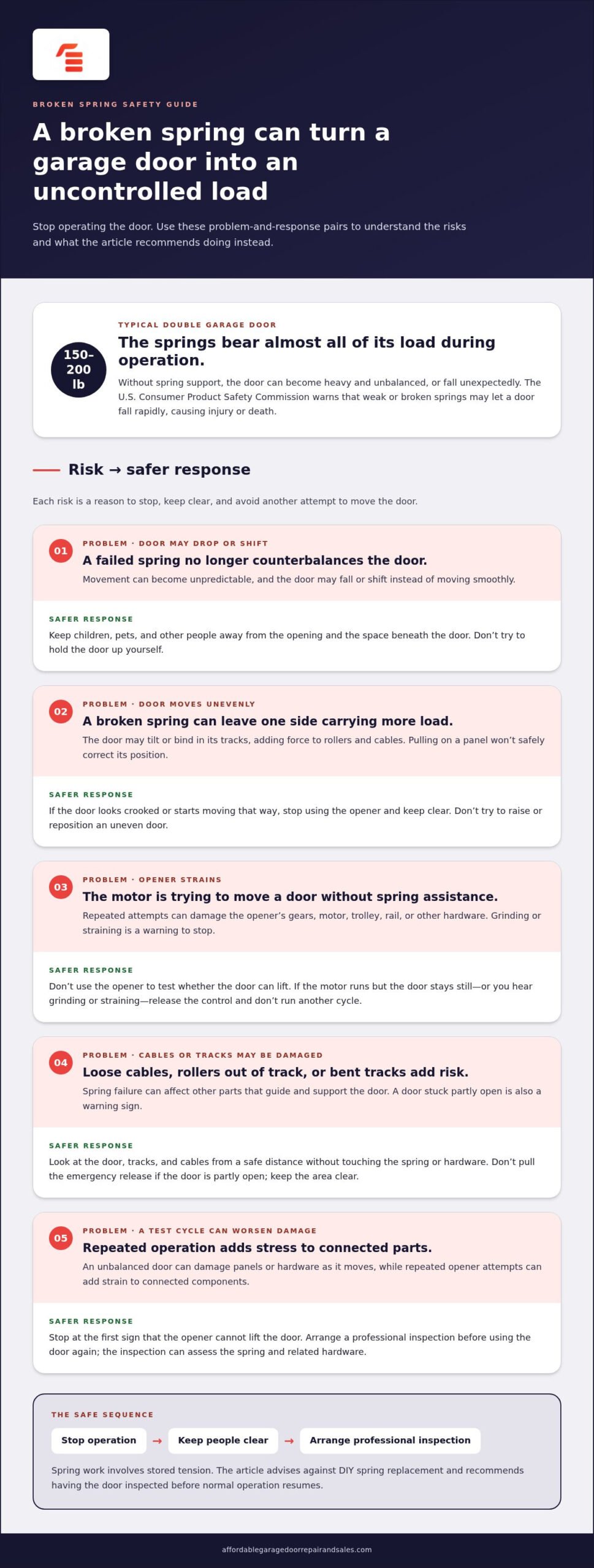
No. A garage door with a broken spring can become unbalanced, too heavy to control, or fall unexpectedly. The U.S. Consumer Product Safety Commission warns that weak or broken springs may allow a door to fall rapidly, causing injury or death.
- Keep people clear of the door’s path. A typical double garage door weighs 150 to 200 pounds, and its springs bear almost all that load during operation. Without spring support, the door may drop or shift instead of moving smoothly. Keep children, pets, and anyone entering or leaving away from the opening and the space beneath the door.
- Don’t try to operate a door that looks uneven. A broken spring can leave one side carrying more load than the other. The door may tilt, bind in its tracks, or place added force on rollers and cables. If it starts moving crookedly, stop using the opener and keep clear. Don’t try to correct its position by pulling a panel.
- Protect the opener from extra strain. A garage door opener is designed to move a balanced door. With a broken spring, the motor may strain without lifting the door, and continued attempts can damage the opener’s gears, motor, trolley, rail, or other hardware. If you hear grinding or straining, release the control and don’t run another cycle.
- Watch for cable or track damage. Spring failure can affect other parts that guide and support the door. Loose or hanging cables, rollers out of the tracks, or bent tracks make operation more hazardous. Don’t pull the emergency release if the door is partly open. Keep the area clear and arrange a professional inspection before any further movement.
- Avoid turning a spring problem into a larger repair. Repeated opener attempts can add stress to connected parts, while an unbalanced door may damage panels or hardware as it moves. Stop at the first sign that the opener cannot lift the door. Spring repair should address the failed spring and allow the door system to be assessed before normal operation resumes.
- Choose repair over another test cycle. Don’t operate the automatic opener to see whether the door will open, even if it moved earlier. A spring can no longer counterbalance the door, so its movement may be difficult to predict. A professional can inspect the spring and related hardware. Learn about professional spring repair as the next step toward restoring operation.
Signs of a broken garage door spring
Look for changes in how the door moves, sounds, and sits in its tracks. These clues can help you decide when to stop and arrange an inspection.
Notice Signs of a Weakening Spring
Watch the door during normal operation, but don’t run another test cycle if its movement looks wrong. A door that moves unevenly, gets stuck, or struggles to open may have a weakening spring or another damaged component. Listen for grinding or straining from the opener, which can signal that the system is working against extra resistance. Note what you observe for the technician, without touching the spring.
Check Manual-Operation Warning Signs
Before anyone attempts to move the door manually, check its position and visible hardware from a safe distance. A crooked or uneven door, loose or hanging cables, rollers outside the tracks, bent tracks, or damaged panels are warning signs. Don’t move a door that is partly open or stuck. Keep people clear and leave the emergency release alone if the door is partly open.
- Notice a loud pop. A sudden pop from the garage can happen when a spring breaks. If the door then refuses to open, or the opener runs without moving it, treat the sound and change in movement as related warning signs. Don’t keep pressing the opener control to see whether the door responds. Note what happened and arrange a professional inspection.
- Look for a visible gap without touching the spring. Torsion springs sit above the door, while extension springs stretch along its sides. A gap in a torsion spring may be visible from the ground. Don’t reach toward either type of spring, pull a cable, or attempt to adjust connected components. A technician can inspect the spring and determine whether other hardware is involved.
- Compare movement across the door. Watch for one side rising ahead of the other, a door that hangs unevenly, or rollers that shift out of their tracks. These signs suggest the door may not be balanced. Stop operation if you notice them. Don’t use the opener or push against a panel, since movement can worsen existing track, cable, or panel damage.
- Describe each symptom clearly. Note whether there was a loud pop, whether the opener motor ran, and whether the door is open, closed, or stuck. Include visible signs such as loose cables or bent tracks. This information helps a technician assess the problem and inspect the relevant components. If the door is partly open, keep clear and don’t pull the release.
Precautions for manually opening a broken-spring door
Manual opening is a last resort, not a way to keep using the garage. If the door is crooked, partly open, off-track, or too heavy to move, stay clear and get professional help.
Respond When the Spring Breaks
Stop the opener and keep children and pets away from the doorway. If the door is closed, leave it closed while arranging help. For a trapped vehicle, attempt access only if absolutely necessary, and get assistance. Disconnect the opener only while the door is closed, and don’t pull the emergency release when it is partly open. A broken spring can’t counterbalance the door’s weight.
Follow Door-Lifting Precautions
Before lifting, check from a safe distance for loose cables, bent tracks, damaged panels, or rollers outside the tracks. Don’t attempt to move the door if any of these signs are present. If access is unavoidable and the door appears stable, have another adult assist. For a two-car door, use two people, lift evenly from the center, and keep the door level. Wear sturdy footwear, gloves, and safety goggles.
- Move the door only if it can be controlled. A broken spring leaves the door heavy, so don’t force it or push or pull on its panels. Stop immediately if it binds, tilts, or feels too heavy to lift. Keep hands clear of hinges, rollers, cables, and track edges. Never stand beneath a raised door unless it has been secured against falling.
Take Precautions When Closing the Door
Guide an opened door down slowly, keeping it level and under control. Don’t let it crash shut; the impact can damage panels and connected hardware. Keep other people clear of the doorway while lowering it. Once the vehicle is out, close the door rather than leaving it open, but don’t attempt this if the door is unstable or difficult to control.
- Arrange spring replacement before normal use resumes. Manual movement does not repair the broken spring or restore the door’s balance. Leave the opener disconnected and avoid further operation until the spring and door system have been inspected. If the door shifts during lifting or lowering, stop and move away. A spring failure can turn routine opening into a dangerous effort, especially when one person tries to manage the door alone.
Emergency access precautions
Keep a broken-spring door closed and avoid operating it. If emergency access is unavoidable, get help, keep clear, and don’t go underneath until the raised door is secured.
- Decide whether access is truly necessary. If a vehicle is trapped, attempt to open the door only when absolutely necessary. A broken spring no longer counterbalances the door’s weight, so it may move suddenly. If the door is crooked, off its tracks, or partly open, stay clear and arrange professional assistance rather than attempting to move it.
- Disconnect the opener only while the door is closed. For a trapped vehicle, disconnecting the opener while the door is closed helps prevent someone from activating it during manual access. Don’t pull the emergency release if the door is partly open. Keep children, pets, and bystanders away from the doorway before anyone approaches the door.
- Get enough help before lifting. If opening is unavoidable, have at least two strong adults lift the door evenly. Lift from the center and keep the door level. Don’t attempt this if it feels too heavy, shifts, or starts moving unevenly. An unbalanced door can fall, creating a serious risk of injury to anyone nearby.
- Keep clear of the door’s path. Never stand or reach beneath a raised door unless it has been secured against falling. Don’t rely on the opener, spring tension, or another person’s grip to hold it in place. If you can’t secure the door, don’t go underneath it or attempt to pass through the opening.
- Close the door after access. Once the vehicle is out, guide the door down slowly if it can be controlled safely. Don’t let it crash closed, and stop if it tilts, binds, or becomes too heavy. Leaving a broken-spring door open can expose the opening and leave the unstable door in a position where it may fall.
- Keep the door out of service afterward. Don’t reconnect or use the opener to test the door. A broken spring has lost the energy needed to counterbalance the door, and emergency movement doesn’t restore that balance. Keep people away while arranging repair. If the door is off its tracks or its cables are loose, stay clear and don’t attempt emergency lifting.
After emergency access, arrange broken spring repair before using the door again.
Only go beneath a raised door if it has been secured against falling. Don’t rely on the opener, spring tension, or someone’s grip to hold it. If you can’t secure it, stay out from underneath and arrange professional assistance.
Affordable Garage Door Repair & Sales: Spring Repair
Affordable Garage Door Repair & Sales provides spring repair when a broken spring leaves a garage door unsafe or unable to operate. Its broken spring repair addresses the failed spring, while an inspection can help identify related issues affecting door movement. If the opener has been strained or the door has moved off-track, opener replacement or off-track repair can address those specific problems.
Keep the door out of use until the spring problem is addressed. Share what you observed, such as a loud pop, an uneven door, or an opener that runs without lifting it. Those details help direct attention to the relevant repair need.
For help with a broken spring or related door issue, contact Affordable Garage Door Repair & Sales.
Make the Next Move Toward a Working Door
If you’re still asking whether it’s safe to use a garage with a broken spring, keep the door out of service and focus on arranging repair. Note what the door is doing, whether it’s open or closed, and any changes you’ve seen. Share those details when you contact a repair professional. Clear information helps direct attention to the problem without another risky test.
Affordable Garage Door Repair & Sales LLC offers Spring Repair and broken spring repair for a failed spring, plus Opener Replacement when the opener needs attention. The right repair path starts with the door’s condition and the symptoms you’ve observed. Avoid adjusting spring hardware yourself; leave the repair to a professional.
For help moving forward, contact Affordable Garage Door Repair & Sales LLC. Taking the door out of use and arranging the appropriate repair is a practical step toward restoring dependable access.
Frequently Asked Questions
How can you visually tell if the spring is broken?
Look for a visible break or separation in the spring, without touching it. Torsion springs sit above the garage door, while extension springs run along its sides, so check the appropriate area from a safe distance. A sudden loud pop followed by a door that won’t move can also point to spring failure. Don’t climb, reach over the door, or move hardware to get a closer look.
What are the signs of a broken garage door spring?
A broken spring may leave the door crooked, stuck, or unable to open, even while the opener motor runs. You might also hear grinding or straining from the opener, or notice loose cables and rollers out of their tracks. These clues can overlap with other door problems, so treat them as reasons to stop operation, not as proof of which component failed.
What injuries or property damage can a broken garage door spring cause?
A door that loses spring support can fall rapidly and cause serious injury or death, according to the U.S. Consumer Product Safety Commission. Its uncontrolled movement can also damage panels, cables, tracks, rollers, or opener parts. For example, running an opener against a door it cannot lift may strain its motor and gears. Keep people clear, and don’t use the door to test what still works.
Can you manually open a garage door with a broken spring, and how?
Manual opening is possible in some circumstances, but it remains risky because the spring no longer helps counterbalance the door’s weight. If access is essential, first rule out a crooked, partly open, off-track, or visibly damaged door. Get another adult to help lift evenly from the center. Stop if the door shifts or feels too heavy, and never go beneath it unless it’s secured.
What should you do if a garage door spring breaks?
Stop using the opener, keep everyone clear, and leave the door in its current position if it’s stable. Note whether it’s open or closed and what changed, such as a loud pop, uneven movement, or hanging cable. Don’t touch the spring or pull the release on a partly open door. Arrange professional spring repair, especially if the door is tilted or its cables have shifted.
Should you use the garage door opener when a spring is broken?
No. The opener may strain against the door’s weight, and repeated attempts can damage its motor, gears, trolley, rail, or connected hardware. If the motor runs but the door stays put, stop pressing the control rather than testing it again. Keep the opener disconnected while the door remains out of service, and don’t reconnect it until the spring problem has been repaired.
Can you replace a garage door spring yourself, or should you hire a professional?
Have a professional replace the spring. Torsion and extension springs hold tension, and adjusting or removing them can cause severe injury if a spring or tool slips. Affordable Garage Door Repair & Sales LLC provides spring repair, broken spring repair, and opener replacement. Homeowners in Everett, Puyallup, Seattle, Tacoma, Auburn, Wenatchee, Yakima, Pasco, Ellensburg, and Spokane can turn to the company for these garage door services.
How can you secure a garage door with a broken spring?
If access is unavoidable, have another adult help lift the door evenly from the center and secure it before going underneath. Close it immediately after getting the vehicle out, and don’t leave it open.