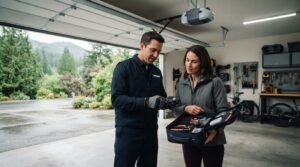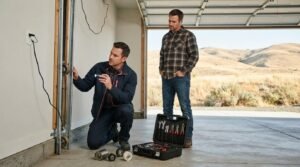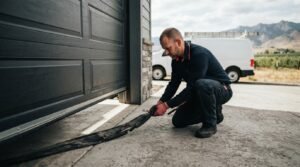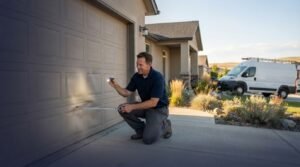
There’s no universal way to open a locked garage door manually from outside. If you’re searching for how to manually open garage door from outside, the key question is whether your door has an exterior emergency release, not whether you can reach the red release cord inside.
A power outage, failed remote, or broken opener can leave you stuck outside, so it’s understandable to look for a quick way in. But an exterior keyed release helps only if one has been installed on your door. Without that hardware, prying at the door or trying to lift it can cause damage or injury, especially if the door is jammed, unbalanced, or has a broken spring.
This guide explains how an exterior release works, what to do if your garage has one, and when to stop and get professional help. You’ll also learn why the interior emergency cord isn’t an outside access solution, how to spot signs of door damage, and what safer next steps to take if the door won’t open.
Key Takeaways
- To learn how to manually open garage door from outside, first look for purpose-built exterior release hardware and its matching key.
- Follow the instructions for your specific release. Don’t pry the door or try to reach the interior emergency cord from outside.
- If there’s no exterior release, there’s no universal safe way to enter through the garage door manually.
- A power or opener issue is different from a broken spring, damaged cable, off-track door, or imbalance. Stop if the door looks damaged or won’t move normally.
- After access, keep the door stable and avoid operating the opener if you suspect damage. Professional repair is the safer next step. Garage door and safety inspections are free before work begins.
How to Manually Open a Garage Door from Outside: What Actually Works?
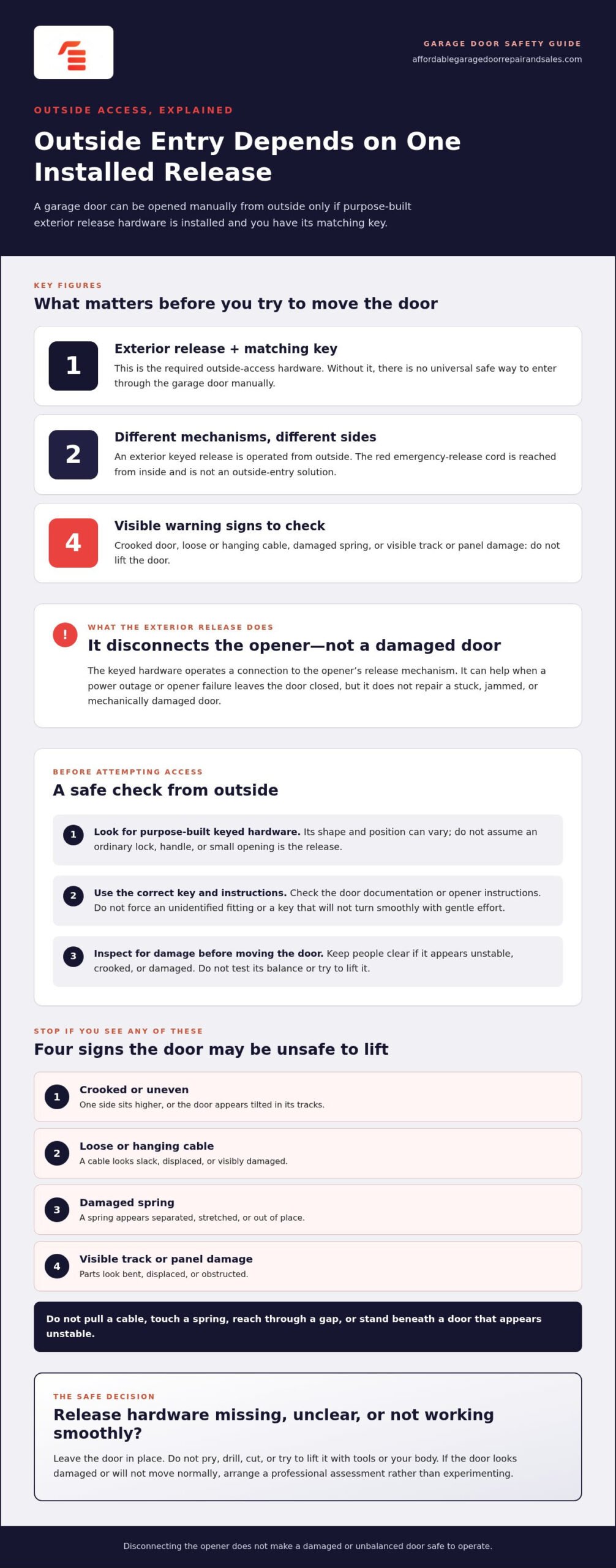
Outside access depends on purpose-built exterior emergency-release hardware installed on the garage door. The interior emergency-release cord is generally reached from inside the garage, so it won’t unlock the door while you’re standing outside. If you’re researching how to manually open garage door from outside, first determine whether the door has a keyed exterior release. Without one, there’s no universal manual-entry method that’s safe for every door.
An exterior garage door emergency release is keyed hardware that lets an authorized user disengage the opener from outside so the door can be operated manually. It disconnects the opener, but it does not repair a stuck or damaged door. The door must still be in safe working condition to move. If it feels unusually heavy, sits crooked, or appears damaged, don’t try to force it.
What is an exterior garage door emergency release?
This release is typically a key cylinder or related fitting installed on the outside of a garage door. Turning its matching key operates a connection to the opener’s release mechanism. It can help when a power outage or opener failure leaves the door closed and there’s no other way into the garage. A general explanation of the quick-release mechanism on a garage door opener can help clarify how the opener disconnects from the door.
Not every garage door has exterior release hardware. The fitting’s appearance, placement, and operating steps can vary with the door and opener, so don’t assume a small lock or opening is an emergency release. Use only the key and hardware designed for that system, and follow the manufacturer’s instructions. If you can’t identify the fitting or the key doesn’t operate it smoothly, stop rather than forcing the mechanism.
Exterior release versus the inside emergency-release cord
The two mechanisms serve related purposes, but they’re accessed from different sides. The interior emergency-release cord, often recognizable by its red handle, is attached to the opener’s trolley. Pulling it from inside disconnects the door from the powered opener, allowing manual operation when the opener can’t run. It does not unlock the garage from outside. If you’re locked out, don’t try to reach through a gap to pull it.
For example, if the power goes out while you’re inside the garage, the interior cord may let you disconnect the opener and raise a door that’s otherwise operating normally. If you’re outside during the same outage, you need installed exterior release hardware and its correct key to disengage the opener. If the door itself is jammed, off-track, or affected by a broken spring or cable, disconnecting the opener won’t solve the mechanical problem. The door may be unsafe to lift, so leave it in place and arrange a professional assessment.
Check for an Exterior Release Before Trying to Lift the Door
Before attempting to move the door, make a visual check from outside. Look across the door surface for a keyed cylinder or fitting designed to operate an exterior emergency release. Its shape and position can vary, so don’t assume every lock, handle, or small opening serves this purpose. If you’re figuring out how to manually open garage door from outside, identifying the correct hardware is the first safety check, not a reason to force a mechanism.
How to identify an installed exterior emergency release
Inspect the door without prying, drilling, cutting, or reaching through a gap. A purpose-built release should be recognizable as keyed hardware, but its appearance alone may not tell you how it works. Check the door documentation or opener instructions for the correct procedure and matching key. Chamberlain’s guidance on how to manually open a garage door from outside also explains why the exterior release must be used as intended.
If you can’t identify a dedicated release, treat the door as having no usable outside release. Don’t try a nearby handle or ordinary lock as a substitute. Use only the key and release hardware designed for that door, and stop if the key won’t turn with normal, gentle effort. Forcing the cylinder can damage the hardware without making the door safer to operate.
When manual lifting is unsafe
A release only disconnects the opener. It doesn’t correct a mechanical fault or make a damaged door safe to lift. From a safe distance, look for obvious problems before doing anything further. If the door looks damaged or unbalanced, do not lift it. A compromised spring system can leave a heavy door difficult to control, with a risk of sudden movement or a fall.
- Crooked or uneven door: One side sits higher, or the door appears tilted in its tracks.
- Loose or hanging cable: A cable looks slack, displaced, or visibly damaged.
- Damaged spring: A spring appears separated, stretched, or out of place.
- Visible track or panel damage: Parts look bent, displaced, or obstructed.
Don’t pull a cable, touch a spring, test the door’s balance, or stand beneath a door that appears unstable. Keep children, pets, and other people clear of the opening. If the door is closed and won’t move, leave it in place rather than using your body or tools to test whether it will lift.
If you see any warning sign, or the release hardware is missing or unclear, a professional assessment is safer than experimenting. Garage door repair and safety inspections can help identify whether the issue involves a spring, cable, track, or another part of the system before anyone attempts to operate the door.
How to Use an Exterior Emergency Release Safely
Use the steps below only if your garage door has installed exterior emergency-release hardware and you have the key designed for it. The mechanism’s operation can vary, so the door or opener manufacturer’s instructions take priority over general guidance. The release disconnects the opener; it doesn’t fix a jam, damaged spring, loose cable, or door that’s off its track.
A cautious sequence for keyed exterior access
Before using the release, check that the door appears intact and isn’t tilted or obstructed. Keep people, pets, and objects away from both sides of the door and its path. If you spot damage, don’t proceed. If the door looks sound, use only its designated key and follow the instructions for that exact release. Don’t guess which way to turn it or force it if it resists.
- Clear the area. Make sure no one is standing beneath the door or near its tracks, and move loose items out of the opening.
- Use the correct key. Insert it into the identified exterior release and operate the mechanism exactly as the manufacturer directs.
- Pause after disengaging. Confirm that the release has operated as intended before attempting to move the door. If it doesn’t work smoothly, stop rather than trying tools or extra force.
This cautious approach matters because there isn’t one turn direction, force level, or release sequence that applies to every design. If you’re unsure how to manually open garage door from outside with your specific fitting, don’t experiment. A key that won’t turn or a release that doesn’t respond is a reason to stop and get help, not to force the cylinder or door.
Lifting and securing the door
Once disengaged, lift only a visibly intact door that moves smoothly and evenly. Use the door’s intended handle, keep your stance clear of its path, and don’t jerk or pull from one side. Stop immediately if it binds, tilts, feels unusually heavy, or drops. Those changes can point to a mechanical problem that makes continued lifting unsafe.
A door that won’t stay in position should not be left open or held up by standing beneath it. Don’t use improvised props or try to secure it by interfering with its locks, cables, tracks, or safety systems. Keep others away and arrange professional help if the door moves unpredictably or cannot remain stable.
Leave the opener disconnected while the door is being moved manually. Don’t reconnect or operate the opener if the door appears damaged, unbalanced, or difficult to lift. Follow the manufacturer’s instructions for returning the door and opener to normal operation, and only do so when the door is safe to use. If there’s any doubt, leave the system alone until it can be assessed.
No Exterior Release or the Door Still Will Not Open? Choose a Safe Next Step
If there’s no installed exterior release, there’s no universal safe way to enter through the garage door manually. Don’t pry it open, fish for the inside release, or try to force the bottom panel upward. If another authorized entrance is available, use that instead. Otherwise, the safest next step depends on whether the problem seems limited to power or the opener, or whether the door itself may be damaged.
If the opener or power is the suspected problem
A power interruption or opener fault doesn’t automatically mean the door is safe to lift. If you can check safely without opening the garage, look for an obvious household power issue, such as a tripped breaker. If you’re already inside, check that the opener is plugged in and that the wall control or remote has power. Replacing remote batteries may also help. Don’t open the opener housing, remove covers, or dismantle any part of the system.
If power returns but the door still doesn’t respond, avoid repeated attempts to operate it. A failed opener can occur alongside a jammed or damaged door, and hearing the motor without seeing the door move isn’t a reason to pull or push it. Keep the door closed and undisturbed if it binds or moves unevenly. For broader urgent-repair guidance, review the emergency garage door repair information available on this site.
If the door may have a mechanical failure
Visible damage is a stop signal. A broken spring, loose cable, door sitting crooked in its tracks, or impact damage can make the door unstable or unexpectedly heavy. Don’t adjust springs, cables, tracks, or opener components as a lockout workaround. Keep people clear of the door and don’t test whether it will lift. A technician can assess the fault and determine what repair is needed.
For Washington homeowners facing a door that won’t open or appears damaged, Affordable Garage Door Repair & Sales LLC provides 24/7 emergency garage door repair. Its licensed, insured, and experienced technicians repair all makes and models. Garage door and safety inspections are free before work begins, and pricing is upfront and honest with no hidden fees. Repairs and sales are backed by a warranty and satisfaction guarantee.
If the door is jammed, damaged, or still shut after a safe power check, arrange emergency garage door repair rather than trying to force access. This avoids risking further damage and gives a professional the chance to inspect the door before it is operated.
After Gaining Access: Secure the Garage Door and Arrange Repair
Getting inside doesn’t necessarily mean the problem is resolved. If you used an exterior release, the opener may still be disconnected, and a door that looked normal at first may still have a fault. Don’t reconnect or operate the opener if the door is crooked, unusually heavy, damaged, or difficult to move. Understanding how to manually open garage door from outside is only part of the process. The next priority is leaving the door and garage in a stable, secure condition.
Keep the door and garage secure
If the door is fully closed and appears stable, leave it closed while you arrange an inspection. Use only the door’s normal locking method if it operates as intended. Don’t defeat a lock, bypass a safety feature, or improvise a way to hold the door in place. If it can’t remain safely open or closed, keep people away from the opening and don’t stand beneath it or attempt to prop it up.
A compromised door can create both a safety concern and an access concern. Avoid leaving the garage unattended if the door is partly open, won’t stay in position, or can’t be secured normally. If you must step away, keep others clear and take reasonable steps to monitor the area without touching or restraining the door. Don’t repeatedly press the remote or wall control to test it. Repeated cycles can move a faulty door unexpectedly and won’t identify the underlying cause.
Make a note of what happened before the door stopped working. For example, record whether the opener made a sound, whether the door moved unevenly, or whether you noticed visible damage. This information can help a technician assess the issue. Leave repairs to the opener, springs, cables, tracks, and door panels to trained professionals rather than attempting adjustments as a temporary security measure.
When professional garage door repair is the safer choice
A stuck or damaged garage door needs professional attention, especially if it won’t remain stable or secure. Affordable Garage Door Repair & Sales LLC provides service for residential and commercial properties, with licensed, insured, and experienced technicians who repair all makes and models. While residential units typically use standard overhead doors, commercial and retail properties often utilize specialized security barriers—such as transparent rolling shutters for shops—which have their own dedicated operation and locking hardware. Garage door and safety inspections are free before work begins, so the door and its operating system can be assessed before repair work proceeds.
Service covers Seattle, Everett, Tacoma, Spokane, Pasco, Ellensburg, and surrounding Washington communities, including Puyallup, Auburn, Wenatchee, and Yakima. For Washington homeowners who need emergency assistance, the company provides 24/7 emergency garage door repair. Pricing is upfront and honest with no hidden fees, and repairs are backed by a warranty and satisfaction guarantee.
If your door remains stuck, looks damaged, or can’t be secured safely, call 360-454-9402 for emergency garage door assistance. Leave the door undisturbed and keep people clear until it can be assessed.
Take the Safe Next Step for Your Garage Door
Knowing how to manually open garage door from outside can help you recognize when the right hardware is available, but it can’t make a damaged or unstable door safe to move. If the door remains stuck, won’t stay in position, or shows signs of a mechanical problem, leave it undisturbed and arrange a professional assessment.
For Washington homeowners and businesses, Affordable Garage Door Repair & Sales LLC provides 24/7 emergency service with licensed, insured, and experienced technicians. Garage door and safety inspections are free before work begins, so the condition of the system can be assessed before repairs proceed.
Take the next step toward a secure, dependable door: request emergency garage door repair or call 360-454-9402. A careful assessment can help you move forward with confidence.
Frequently Asked Questions
Can you open every garage door from outside without a key?
No. Outside entry depends on whether the door has an exterior emergency release, and some releases need their designated key. The interior emergency cord serves a different purpose and won’t provide outside access. If there’s no exterior release or you don’t have its key, avoid improvised entry attempts. A garage door technician can assess the door and recommend repair options without risking damage.
Does a power outage mean I can open my garage door from outside?
Not necessarily. A power outage can stop an automatic opener, but it doesn’t add exterior access hardware to the door. If a keyed release is installed, use it only as its instructions describe. Otherwise, don’t force the panels or reach through the weather seal, which could damage the door or expose you to moving parts. Check for another authorized entrance, then arrange assistance if the garage remains inaccessible.
Can I manually lift a garage door if its spring is broken?
No. A broken or suspected broken spring can leave a door dangerously heavy or unstable because the spring system helps counterbalance its weight. Don’t test-lift it, even if it’s only partly open, or run the opener to see whether it can move the door. Keep people clear and leave the spring untouched. A licensed, insured garage door technician can inspect the system and advise on a safe repair.
What should I do if my garage door is crooked or comes off its track?
Stop using the opener and don’t push or pull the door back into place. A crooked door may have a damaged cable, roller, or track and could shift unexpectedly. Keep children, people, and vehicles away from its path. Affordable Garage Door Repair & Sales LLC provides 24/7 emergency service in its listed Washington coverage areas, with technicians who can assess off-track and damaged doors.
Can I use the emergency release cord from outside the garage?
No. The interior emergency cord disconnects the opener from the door so it can be moved manually from inside when appropriate. It isn’t an outside entry method. Don’t thread tools through the top or sides of the door to reach the cord; the door or release parts may move unexpectedly. Outside manual access requires purpose-built exterior release hardware and, for some systems, its designated key.
Who can help if I am locked out of my garage in Seattle or nearby?
Affordable Garage Door Repair & Sales LLC provides 24/7 emergency garage door service in Seattle, Renton, Shoreline, Burien, Kent, Bellevue, Everett, Puyallup, Tacoma, Auburn, Wenatchee, Yakima, Pasco, Ellensburg, Spokane, and surrounding communities. If there’s no exterior release or the door appears damaged, don’t pry or lift it. Call 360-454-9402 for assistance. Arrival timing depends on your location.