
The best-looking or heaviest garage door may not be the best garage door for high wind areas. Wind resilience depends on a documented door system that suits your property, its structure, and applicable requirements, not appearance or material alone. A miles-per-hour figure doesn’t tell the whole story: wind pressure is also affected by factors such as building height, location, and exposure.
Before comparing door styles, reinforcement, or glazing, it helps to know what wind-load ratings describe and how to compare complete door systems. This guide explains what to look for, why local requirements matter, and what details to gather before requesting an installation estimate. Affordable Garage Door Repair & Sales LLC installs residential and commercial doors and provides free on-site estimates in Everett, Puyallup, Seattle, Tacoma, Auburn, Wenatchee, Yakima, Pasco, Ellensburg, and Spokane. An on-site assessment can help you consider your opening, installation needs, and door options together.
Key Takeaways
- Wind-load ratings describe how a door system performs under pressure; they don’t automatically indicate resistance to flying debris.
- Compare the full documented assembly, including reinforcement, attachments, glazing, and the surrounding opening, rather than judging by material or style alone.
- The best garage door for high wind areas depends on your property’s location, building details, and applicable local requirements.
- Gather your address, opening dimensions, building information, and existing door documentation to make comparisons and estimate planning more useful.
- An on-site estimate can help assess the opening and installation considerations before you choose a new door.
Why the Right High-Wind Garage Door Matters
A garage door covers a wide opening, so wind can place considerable force on it and the structure around it. The goal isn’t to find a door that promises to withstand every storm. It’s to understand the demands at your property and select a system with documented performance suited to those demands.
A wind-load-rated garage door system is a door and supporting components tested or engineered to resist specified wind pressures when installed as designed. The system matters: the panel alone doesn’t determine how the opening performs.
How wind pressure affects a garage door opening
Wind can push against the outside of a door, creating pressure, while air movement around the building can create suction that pulls outward. The direction and amount of force can vary with the property’s setting and building characteristics. In either case, the door needs to transfer force through its tracks and connections into the surrounding framing.
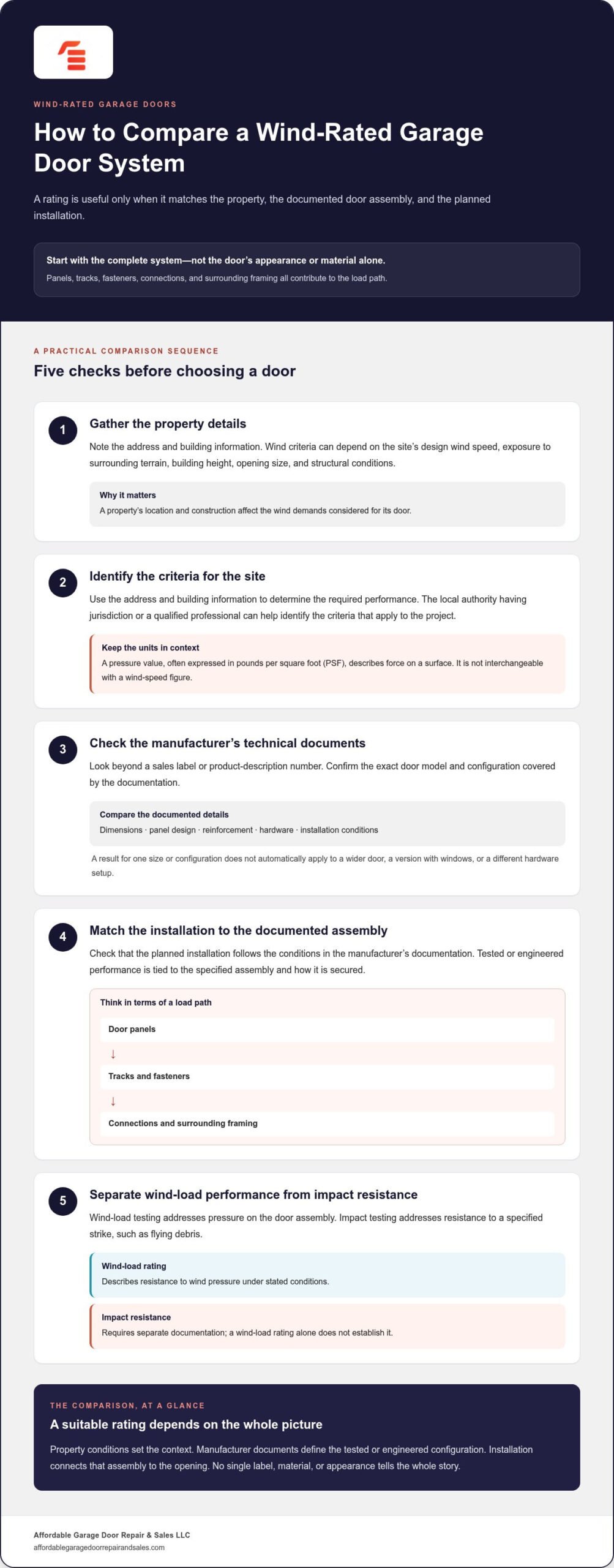
Think of the panels, tracks, fasteners, connections, and framing as parts of one load path. If one part isn’t suited to the forces involved, a strong-looking panel alone may not provide the intended system performance. Installation matters too, because tested performance is tied to the specified assembly and how it is secured.
Reinforcement and a suitable installation can reduce the risk of wind-related failure, but they can’t guarantee protection in every storm or under every condition. The aim is a properly selected system, not an absolute promise.
Why a standard-looking door may need different specifications
Two doors can have a similar finish, panel pattern, and overall appearance yet differ in reinforcement, attachment details, glazing, or documented test performance. Insulation can help with temperature control, and a heavier door may feel substantial, but neither quality alone establishes wind-load performance. A material isn’t automatically the strongest choice in every configuration.
That’s why choosing the best garage door for high wind areas starts with the property, not a style photo. A home’s location, height, exposure, opening size, and surrounding construction can affect the wind demands considered for its door. A configuration suitable for one address may not be the right match for another.
For general background on how garage doors are built and used, Garage door offers a broad overview. For a wind-resistance decision, focus on documentation for the specific door assembly and installation requirements. Compare the panels, tracks, connections, and framing interface as a complete system, rather than relying on appearance or a single feature. This gives you a clearer basis for discussing door options and installation needs for your property.
What a Wind-Load Rating Means, and What It Does Not
A wind-load rating describes how a garage door assembly is designed or tested to resist wind pressure under stated conditions. It helps homeowners compare documented performance, but a label by itself may not explain the test, the approved configuration, or whether it suits a particular property.
The required wind-load performance depends on the site and building, so a rating that suits one home may not suit another. A pressure value, often expressed in pounds per square foot (PSF), describes force on a surface. It isn’t interchangeable with a wind-speed figure, and neither number is a complete answer without supporting documentation.
Which property details influence the required performance?
Wind criteria can depend on the site’s design wind speed, exposure to surrounding terrain, building height, and structural conditions. Exposure describes how open or sheltered the area around a building is. The opening’s size and the way the garage is framed can also affect which door assembly and installation details are appropriate.
These factors work together. A home in a more exposed setting may face different wind pressures than a similar home surrounded by buildings or trees. A broad regional label or the door’s appearance isn’t enough to identify a rating. The local authority having jurisdiction or a qualified professional can help identify the criteria that apply to a specific project. The address and building information are needed to determine the required rating.
How to read manufacturer rating documents
Use the manufacturer’s technical documents, not just a sales label or a number in a product description. Look for the exact door model and configuration covered, including its dimensions, panel design, reinforcement, hardware, and installation conditions. Check whether the stated performance applies to the complete assembly and whether the planned installation matches those conditions.
A result for one size or configuration doesn’t automatically transfer to a wider door, a version with windows, or a different hardware setup. Even products that look alike may have different test documentation. Record the model and configuration details when comparing options, and note any conditions the documentation places on installation.
Separate wind-load performance from impact resistance. Wind-load testing addresses pressure on the door assembly. Impact testing addresses resistance to a specified strike, such as flying debris. A wind-load rating alone doesn’t establish impact resistance. Where debris protection is relevant, look for separate documentation and determine whether local criteria call for it.
Manufacturers may use their own branded terms or rating scales. Don’t assume a term or number means the same thing across brands unless the documentation defines a common test basis. For the best garage door for high wind areas, compare the stated test conditions and complete assembly, not the label alone. An on-site estimate from Affordable Garage Door Repair & Sales LLC can help assess the opening and installation considerations as you evaluate options. Arrange a free on-site estimate to discuss your project.
Compare Wind-Resistant Garage Door Construction and Options
Compare complete door assemblies, not materials in isolation. A panel, track, or window can look sturdy, but that appearance doesn’t establish how the full system performs. Use manufacturer documentation to compare the exact configuration, including reinforcement, glazing, hardware, dimensions, and installation conditions.
The table below is a comparison framework, not a ranking. Fill in the documented rating using the technical documents for the specific model. If details differ from the configuration tested, don’t assume the same performance applies.
| Construction or option | Reinforcement | Glazing | Documented rating | Suitability considerations |
|---|---|---|---|---|
| Sectional door | Review panel support, struts, tracks, hinges, rollers, and attachment points as a matched assembly. | Confirm whether the tested configuration includes windows and their placement. | Record the model, size, and configuration covered by the documentation. | Compare with the opening dimensions, operation, and property requirements. |
| Roll-up door | Review the documented curtain, guides, hardware, and mounting details together. | Check whether glazing is part of the available tested configuration. | Use documentation for the specific door and installation conditions. | Consider the opening and intended use alongside documented performance. |
| Door with glazing | Check reinforcement and hardware for the version with the selected window layout. | Separate evidence of wind-load performance from evidence of impact resistance. | Look for documentation that applies to the exact glazing and door configuration. | Balance visibility and appearance with applicable performance requirements. |
Reinforced panels, tracks, and attachment hardware
Look beyond panel thickness. A documented assembly may specify panel support or struts, track construction, hinges, rollers, and how the system attaches to the building. Each part helps transfer force through the door and into its supporting structure. A heavy-duty track or added strut alone doesn’t establish that the whole door meets a particular wind-load requirement.
Compare the installation instructions with the proposed configuration. Hardware and attachment points need to match the assembly’s documentation. Substituting a component or changing how it’s installed may affect whether that documentation applies.
Glazing, door style, and intended use
Windows can affect the assembly, so check whether the manufacturer’s performance documentation covers the selected glazing type, size, and placement. Impact-rated glazing addresses resistance to specified debris impacts; it doesn’t by itself demonstrate the door’s wind-load performance. Keep those claims distinct.
Sectional and roll-up formats differ in how they operate and fit an opening. Neither format is automatically the better wind-resistant choice. Compare the specific documented configuration for your project. Insulation may support comfort, but it doesn’t prove wind-load strength. Style and finish can help narrow choices after you understand performance requirements.
For the best garage door for high wind areas, prioritize applicable requirements and model-specific documentation, then weigh appearance and comfort features. An on-site estimate can help assess the opening and installation considerations for a new door. Arrange a free on-site estimate to discuss your project.
How Washington Homeowners Can Choose the Right Wind-Rated Door
In Washington, choosing a door is a site-specific decision. Start with the rules that apply to your property, then use your opening and building details to compare documented door configurations. A familiar style or a rating that suited another home isn’t enough to establish the right fit for yours.
A step-by-step path from location to door specifications
- Identify your local jurisdiction. Use your property address to determine which city or county building department has authority over the project. Ask the department what current state and local requirements apply to a replacement or new installation, including whether a permit is needed and what documentation may be required. Requirements can vary by location and project, so verify them before settling on a model.
- Gather property and door details. Record the opening’s width and height, the building’s height and structure, and details about the framing around the opening. Find existing door paperwork, labels, receipts, or manufacturer documents if available. Clear photos of the opening and current hardware can also help prepare for an on-site assessment.
- Compare documented configurations. Review manufacturer documents for the exact model, dimensions, glazing, reinforcement, hardware, and installation conditions under consideration. Compare that information with the criteria identified for your property. Don’t transfer a rating from a similar-looking model or a different size without documentation showing it applies.
This sequence keeps the decision grounded in local criteria instead of broad regional assumptions. For more context on planning a replacement, the Washington garage door installation buying guide covers considerations for homeowners preparing for a new door.
Questions to resolve before selecting a model
Before choosing, establish whether the local building department requires a permit, particular submittals, or other project documentation. If you have insurance documentation requirements, identify those too. Keep these separate from product performance claims: a permit or insurance document doesn’t replace the manufacturer’s test records for the door assembly.
Then compare the complete proposed installation with the applicable design criteria. Does the documentation cover the intended door size and window layout? Do the specified tracks, reinforcement, attachments, and installation conditions match the project? Are any conditions or limitations stated in the product documents? Resolving these details helps avoid choosing by a headline rating or appearance alone.
An on-site estimate gives the opening and its dimensions a practical review and creates an opportunity to discuss suitable installation options. Affordable Garage Door Repair & Sales LLC provides free on-site estimates for residential and commercial door projects across Washington. If you’re weighing the best garage door for high wind areas, schedule a free on-site estimate to review your opening and discuss your project.
Plan a High-Wind Garage Door Installation with Local Support
Once you’ve identified the criteria for your property, connect them to a door configuration and a practical installation plan. An on-site estimate helps assess the opening, confirm its dimensions, and discuss installation considerations in context. It’s also a useful time to review how the proposed door’s documentation relates to the configuration being considered, without assuming a rating that hasn’t been established for that specific door.
What to prepare for an on-site estimate
A little preparation can make the assessment more focused. Gather the property address, approximate opening dimensions, and any existing door records or permit documents. Share relevant information about the building and how the garage is used so door options can be discussed in context.
- Note concerns about exposure, visibility, glazing, or the way the door operates.
- Bring manufacturer paperwork, previous installation records, or other available product details.
- Describe the intended use, such as regular residential access or a business property’s operating needs.
The installer can assess the opening and discuss suitable options, including sectional and roll-up doors. The goal is to connect your priorities and site details to a practical choice, rather than select by appearance alone.
What to expect during selection and installation planning
Review the proposed door configuration alongside the performance documents available for that exact setup. Dimensions, glazing, reinforcement, hardware, and installation conditions should stay aligned with the documentation. If the configuration changes, for example, if you select a different window layout or door size, the related information may need to be reviewed as well.
Discuss the installation scope and project-specific considerations before work begins. This can include how the door fits the opening and what details need coordination with local requirements or permit records. A clear plan helps keep the selected assembly and its installation details connected.
For a business property, intended use and operating demands can shape the discussion. Affordable Garage Door Repair & Sales LLC works with residential and commercial door projects across Washington. Business owners can also learn about commercial garage door repair in Washington.
The best garage door for high wind areas is a choice grounded in the property’s requirements and the documented configuration, not a broad promise about a door style. Affordable Garage Door Repair & Sales LLC provides free on-site estimates to assess the opening and discuss installation options. Request your free on-site estimate to plan your Washington garage door project.
Make Your Next Door Decision with Confidence
Turn what you’ve learned into a clear project brief. Keep your property details, local requirements, and preferred door features together, then use them to guide the conversation about the opening and installation plan. This keeps the decision focused on a configuration that suits your home, rather than a single product label or visual feature.
The best garage door for high wind areas is a considered choice, not a guess. Affordable Garage Door Repair & Sales LLC offers garage door sales and installation across Washington, with expert guidance for residential and commercial door selection. Take the next step with a free on-site garage door estimate and discuss the options for your property.
With the right details in hand, you can move forward with a practical plan and greater confidence in your decision.
Frequently Asked Questions
How can I tell whether my existing garage door is wind-rated?
Look for a manufacturer label, model number, or installation paperwork, then use those details to locate the door’s technical documents. Check whether they identify wind-load performance for your door’s specific size and configuration. A label or heavy-duty appearance alone isn’t proof of a rating. If records are missing, photos of the door, its hardware, and any visible labels can help an installer identify what’s in place.
Can an existing garage door be reinforced for high winds?
Sometimes, but reinforcement isn’t a universal fix. The door, tracks, hardware, connections, and surrounding framing all affect the result, so adding a brace or replacing one component doesn’t establish that the full assembly meets a particular requirement. A safety inspection can help assess the door’s condition and identify concerns. If the existing configuration can’t meet the property’s needs, replacement may be more appropriate.
Can I open or close my garage door during high winds?
Avoid operating the door while strong winds are already affecting it. Wind pressure can make a moving door harder to control and increase stress on its parts. If high winds are forecast, close the door beforehand if conditions are safe, then leave it closed during the event. Don’t force a door that’s binding, shaking, or behaving unusually. Wait until conditions settle before arranging an inspection if you notice damage.
Does a wind-rated garage door protect a home from every storm?
No door rating promises protection in every storm or circumstance. Documented performance applies to stated test conditions and a defined configuration, while actual conditions can differ. A properly selected and installed door is one part of a building’s overall preparedness, not a guarantee against damage. Follow local emergency guidance during severe weather, and don’t treat a wind-load rating as a substitute for broader home-safety planning.
Does a wind-load rating include the garage door windows?
Only if the manufacturer’s documentation applies to the door configuration with those windows. Window size, placement, and glazing type can differ between configurations, so a rating for a solid-panel version shouldn’t automatically be applied to a glazed one. Also distinguish wind-load performance from impact resistance: documentation for pressure performance doesn’t, on its own, establish that glazing resists flying debris.
What information do I need to get an estimate for a wind-resistant garage door?
Have the property address, approximate opening width and height, and any existing door paperwork or permit records ready. Photos of the opening and current door can also be useful. Note whether you want glazing, have concerns about door operation, or use the garage for a business. Affordable Garage Door Repair & Sales LLC provides free on-site estimates in Everett, Puyallup, Seattle, Tacoma, Auburn, Wenatchee, Yakima, Pasco, Ellensburg, and Spokane.
How much does a high-wind garage door cost to install?
There isn’t one price that applies to every project. The total depends on details such as the opening dimensions, selected door configuration, glazing, installation requirements, and any work needed around the opening. The best garage door for high wind areas should be selected against the property’s requirements, not by price alone. An on-site estimate can assess the project and provide pricing for the proposed installation.