
The garage door with the highest insulation rating won’t necessarily make your home more comfortable if air slips in around its edges. When comparing energy efficient garage doors Puyallup options, look at the door’s construction, seals, fit, and installation together. A gap around the perimeter can undermine the benefits of insulation.
R-value is useful when comparing doors, but it doesn’t tell the whole story. The garage’s connection to your home, how you use the space, and your priorities for appearance and budget all help determine which features make sense.
This guide explains how insulation and air leakage affect performance, what to look for in a door’s construction and seals, and how to compare options for your home. You’ll also find practical considerations for Puyallup homeowners, from attached-garage layouts to balancing efficiency with appearance and cost. Use the complete installed assembly, not a single rating, to make a more informed choice.
Key Takeaways
- Compare a garage door as a complete installed assembly, not by insulation rating alone.
- When comparing energy efficient garage doors Puyallup homeowners can choose from, consider how the garage connects to living spaces and how you use it.
- Door construction, glazing, perimeter seals, and fit all affect comfort and draft control.
- Use a step-by-step selection process to balance documented specifications, appearance, and budget.
- Local door selection guidance and professional installation can help match a new door to your home.
What Makes an Energy-Efficient Garage Door in Puyallup?
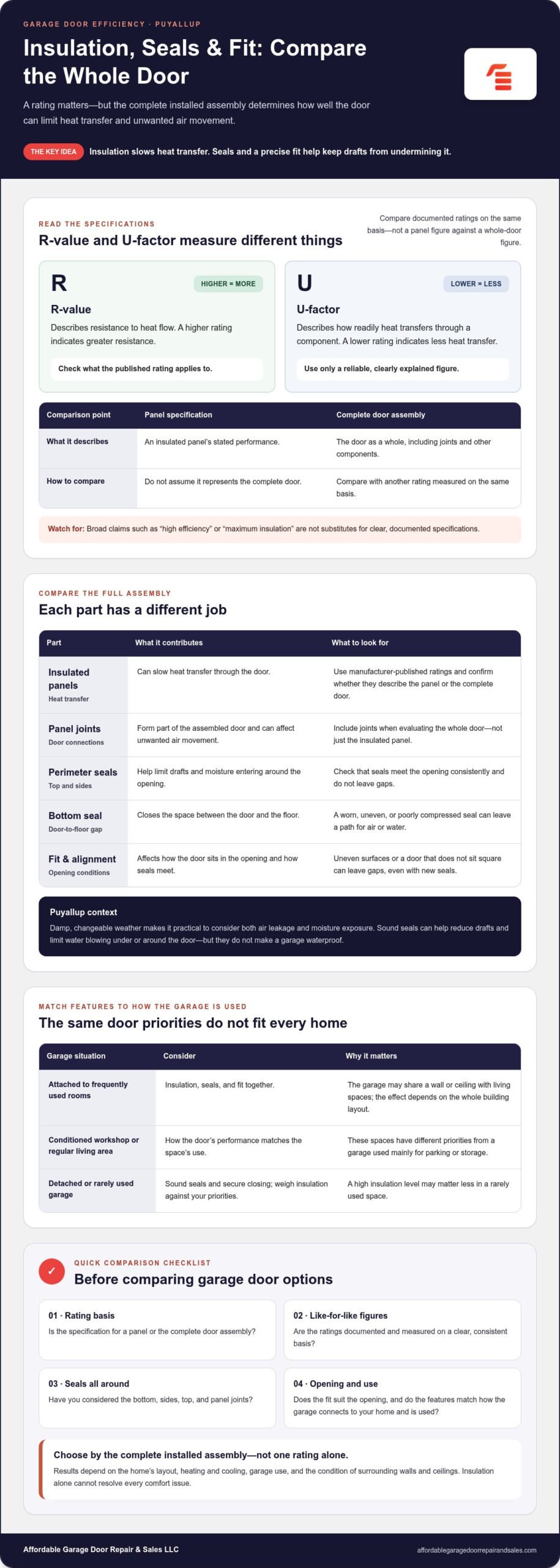
An energy-efficient garage door is more than an insulated panel. It’s a complete assembly designed to limit heat transfer and unwanted air movement. That includes the door, its joints, perimeter weather seals, bottom seal, and fit within the opening. Even a well-insulated door can allow drafts if it closes unevenly or its seals leave gaps.
That whole-assembly view is useful in Puyallup, where damp, changeable weather makes it practical to consider both air leakage and moisture exposure. Sound seals help reduce drafts and can limit water blowing under or around the door. They don’t make a garage waterproof, but they are an important part of how the door meets the opening. A general overview of insulation and materials for energy-efficient garage doors can also help explain how door construction varies.
Efficiency doesn’t guarantee a particular change in household energy use. Results depend on the home’s layout, heating and cooling, how the garage is used, and the condition of surrounding walls and ceilings. When comparing energy efficient garage doors Puyallup options, match the door’s features to the home rather than assuming insulation alone will solve a comfort problem.
Does an insulated garage door make a home more comfortable?
It can help, especially when an attached garage shares a wall or ceiling with frequently used rooms. Reducing heat transfer through the door may help moderate conditions in the garage and lessen temperature swings near connected spaces. The effect depends on the full building layout, including insulation in shared walls and ceilings, and whether the door fits and seals properly.
A conditioned garage used as a workshop or regular living area has different priorities from a detached garage or one used mainly for parking and storage. In a rarely used space, a high insulation level may matter less than sound seals and a door that closes securely. Start by considering how the space functions.
What do R-value and U-factor tell you?
R-value describes resistance to heat flow: a higher rating indicates greater resistance. U-factor describes how readily heat transfers through a component, so a lower rating indicates less heat transfer. Either figure is useful only when it’s a reliable rating for the door being considered.
Compare documented ratings on the same basis. A figure for an individual panel may not represent the performance of the complete door assembly, including its joints and other components. Treat broad phrases such as “high efficiency” as descriptions, not substitutes for clear specifications. Then consider the rating alongside the seals, fit, garage use, and the home’s connection to the space.
How Insulation, Seals, and Fit Affect Garage Door Efficiency
Insulated panels can slow heat transfer through the door, but they’re only one part of its performance. Section joints, the perimeter weather seal, the bottom seal, and the way the door sits in the opening all affect how readily outside air moves into the garage. A higher insulation rating can’t compensate for gaps that let drafts pass around the door.
Insulation can slow heat transfer, while effective sealing and a precise fit help prevent drafts from undermining that performance. Evaluate the panel and its surrounding fit together instead of choosing by a single number when comparing energy efficient garage doors Puyallup options.
How should homeowners compare insulation ratings?
Start with manufacturer-published specifications and check what each value measures. A rating for an insulated panel may differ from a rating for the complete door. Those figures aren’t directly comparable unless the measurement basis is clear and consistent. If a listing uses broad claims such as “maximum insulation” without a supporting value or explanation, treat it as marketing language rather than a measured comparison.
Don’t estimate missing specifications from a door’s material or appearance. Compare documented ratings for the same type of assembly, and set unclear figures aside until their basis is clear. This keeps the decision grounded in comparable information instead of assumptions.
Why do weather seals and installation matter?
The bottom seal closes the space between the door and the floor, while perimeter seals help cover the sides and top of the opening. Together, they can limit drafts and help reduce moisture entering around the door. Seals need to meet the opening consistently: a worn, uneven, or poorly compressed seal can leave a path for air or water.
Alignment matters, too. If the opening is uneven or the door doesn’t sit square, gaps may remain even with new seals. During a professional on-site estimate, the opening and its fit can be assessed alongside the door choice. This helps match the selected features to the conditions the door must work within.
- Check the rating basis: distinguish panel specifications from whole-door ratings.
- Look at the full perimeter: consider the bottom, sides, top, and panel joints.
- Account for the opening: uneven surfaces or alignment issues can affect how seals meet.
For an assessment of the opening and guidance on matching door features to your home, request a free on-site estimate from Affordable Garage Door Repair & Sales LLC. The estimate can help bring insulation, seals, and fit into the same conversation before installation.
Compare Garage Door Materials, Panels, and Windows for Efficiency
Material is a useful starting point, not a performance rating. Steel, wood, and aluminum differ in appearance, upkeep, and construction options, but the finished door’s documented specifications and installation matter more than the material name alone. Use this comparison to narrow your priorities, then compare specific door information on the same basis.
| Door category | Construction and upkeep | Insulation documentation | Sealing and glazing | May suit |
|---|---|---|---|---|
| Steel | Often selected for a clean, versatile appearance and practical upkeep. Panel construction varies. | Look for documentation for the complete door, not an assumed value based on steel construction. | Review panel joints and included perimeter and bottom seals. Window options vary by design. | Homeowners seeking a range of appearances and construction options. |
| Wood | Offers a natural appearance; its finish and maintenance needs should fit the homeowner’s routine. | Compare documented specifications for the particular door and construction. | Check how the door’s edges meet the opening and whether glazing is included. | Homes where a traditional material and appearance are priorities. |
| Aluminum | Can support a modern look, including designs with broad glass areas. | Don’t infer thermal performance from the frame material; review the finished door’s documentation. | Consider the glazing area and the quality of the door’s seals as part of the whole assembly. | Spaces where daylight and a contemporary appearance are important. |
Which door construction should you compare first?
Start with how the garage is used, then compare construction, upkeep, and appearance against that need. Material characteristics don’t establish the performance of a specific finished door. Panel design, insulation, joints, and seals all contribute. For energy efficient garage doors Puyallup homeowners are weighing, use manufacturer specifications for direct comparisons. If a rating or its measurement basis is missing, mark it for verification rather than estimating.
The highest advertised insulation rating isn’t automatically the best fit. A rating matters alongside the opening’s condition, seals, windows, and the garage’s connection to the home. A door with clear specifications and a suitable design may make more sense than choosing a number without considering the complete assembly.
Do garage door windows reduce efficiency?
Glazing replaces part of the insulated door area, so the window configuration can affect heat transfer. That doesn’t make windows the wrong choice. Consider how much daylight you want, where it will enter, and whether privacy matters. Smaller or higher-set windows may meet a daylight goal without covering as much of the door as a large glazed area.
Full-view impact-glass models are an option when a bright, contemporary appearance is a priority. Don’t assume a particular thermal rating from the glass style or frame alone. Compare documented specifications for the specific configuration, including the glazing, and balance those details with how you use the space. Affordable Garage Door Repair & Sales LLC offers raised short-panel designs, custom specialty finishes, and full-view impact-glass models, with selection guidance to help match appearance and function to your home.
Choose an Energy-Efficient Garage Door for Your Puyallup Home
A good selection starts with the garage itself, not a particular material or the highest rating on a product sheet. Use these five steps to connect your comfort goals, the condition of the opening, and the door’s documented features.
- Assess how you use the garage. If it’s attached to the home, shares walls with frequently used rooms, or serves as a workshop, give insulation and sealing closer attention. For a detached garage used mainly for storage, durability, appearance, and your desired level of comfort may take priority.
- Inspect the opening and its exposure. Note visible gaps, uneven surfaces, and where rain tends to reach the door. Consider drafts, the garage’s orientation, and how often the door operates. These details help identify priorities for fit and sealing without assuming every home has the same needs.
- Compare documented specifications. Review the measurement basis for published insulation ratings and distinguish a panel value from a whole-door rating. Don’t treat a broad efficiency claim as a substitute for clear information about the door you’re considering.
- Review the seals and fit. Consider how the bottom and perimeter seals meet the opening when the door closes. Match the door to the opening so gaps or alignment issues don’t undermine the features you selected.
- Choose the appearance and features. Balance panel style, windows, finishes, daylight, privacy, and budget. A design should suit the home while meeting the functional priorities you identified.
Which features matter most for your garage?
For an attached garage or a workshop, prioritize documented insulation information and a well-sealed fit, especially where the space connects to frequently used living areas. A detached garage may call for a different balance, with storage needs, durability, appearance, and desired comfort guiding the choice. Window placement can bring in daylight, while the amount of glazing and its position affect privacy and the door’s insulated area. Specialty finishes can also help align the door’s appearance with the home.
For more context on planning a door project in the state, use this Washington garage door installation buying guide alongside your home-specific priorities.
What should a door estimate help you understand?
An on-site estimate brings the opening and your priorities into the same discussion. It helps account for the door’s fit, sealing needs, selected features, and installation scope, rather than treating the product rating as the only decision. Affordable Garage Door Repair & Sales LLC provides selection guidance and new-door installation for Puyallup homeowners.
If you’re also deciding whether the opener should be part of the project, review the separate garage door opener replacement buying guide. To match energy efficient garage doors Puyallup homeowners can choose to their home, request a free on-site estimate.
Get an Energy-Efficient Garage Door in Puyallup: Selection and Installation
Choosing a new door is a practical decision about the home as a whole. Insulation, documented specifications, seals, fit, and how you use the garage should all inform the selection. A door’s rating alone can’t tell you how it will perform in an opening with drafts or how useful added insulation may be for a detached space.
Affordable Garage Door Repair & Sales LLC helps Puyallup homeowners compare options with their home and priorities in mind. Door choices include standard raised short-panel designs, custom specialty finishes, and full-view impact-glass models. These options offer different appearances, so the right fit depends on the home’s design and the features that matter to you. Compare efficiency using documented specifications for the specific door, not assumptions based on its style.
What happens during an on-site door estimate?
An on-site estimate is an opportunity to discuss the opening, the existing setup, the look you want, and your reasons for considering a replacement. You might want to address noticeable drafts, choose a door for an attached garage, or bring in more daylight. Sharing these priorities helps focus the discussion on relevant door features.
The estimate also helps tailor the selection and installation scope to the project. The opening and how the door fits are part of the assessment, along with sealing needs and chosen features such as windows or a specialty finish. This gives you a clearer basis for comparing options and understanding how the planned installation relates to your priorities.
If an opener decision is part of your plans, consider it separately from the door’s insulation and fit. The garage door opener replacement buying guide covers that choice in more detail.
What is the next step for Puyallup homeowners?
Before an estimate, note how often you use the garage, whether it shares walls with living spaces, and where you notice drafts or moisture. Write down your preferred appearance and whether daylight or privacy matters. If you’ve found insulation figures for doors you’re considering, bring those details into the discussion and compare them only when their measurement basis is clear.
That preparation helps keep the selection process focused without requiring you to decide every detail first. If you’re exploring energy efficient garage doors Puyallup homeowners can match to their home, request a free on-site estimate from Affordable Garage Door Repair & Sales LLC to discuss the opening, door options, and installation needs.
Make Your Next Garage Door Decision With Confidence
A new garage door is an opportunity to make the entrance work better for the way your household uses the space, not just to change its appearance. Before deciding, think about which everyday issue matters most: drafts, comfort in an attached room, the need for more daylight, or a design that fits your home. That priority can help keep the choices manageable and make the estimate conversation more useful.
For homeowners considering energy efficient garage doors Puyallup, Affordable Garage Door Repair & Sales LLC provides new-door sales, installation, and selection guidance. A free on-site estimate gives you an opportunity to discuss your home and project needs while considering suitable door options. You don’t have to settle every detail before taking that step.
Request a free on-site garage door estimate in Puyallup to discuss a door that fits your home, priorities, and style.
Frequently Asked Questions
Are insulated garage doors worth it in Puyallup?
They may be worthwhile if your garage is attached, used regularly, or affects the comfort of a nearby room. For example, if a bedroom above the garage feels colder than the rest of the home, a better-insulated door may be one part of addressing the issue. The value of energy efficient garage doors Puyallup homeowners consider depends on the home’s layout and how the space is used, not insulation alone.
What R-value should an energy-efficient garage door have?
There isn’t one R-value that suits every garage. Start by considering whether the garage is attached, heated, or used as a workshop, then compare documented figures for the doors you’re considering. Check whether a listed value applies to a panel or the complete door. If the manufacturer doesn’t explain what the number measures, don’t use it as a direct comparison until its basis is clear.
Do garage door seals make a difference to energy efficiency?
Yes. A seal that’s split, flattened, or too short can leave a path for air beneath or around the door. Look for daylight at the edges when the door is closed, and pay attention to drafts near the floor. These signs don’t identify every source of heat loss, but they can show where the door’s contact with the opening may need attention.
Are windows in a garage door less energy efficient?
Windows can change the door’s overall thermal performance because they replace part of its insulated surface with glazing. The effect depends on the specific door and window configuration, so compare documented information rather than assuming all glass performs alike. Consider the purpose, too: a window may be useful if you work in the garage during the day, while a smaller or higher placement may better suit privacy needs.
Can a new garage door lower my energy bills?
It may help reduce unwanted heat transfer or drafts, but a new door can’t guarantee lower household energy bills. Results depend on factors beyond the door, such as the home’s insulation, heating habits, and whether the garage shares walls with living areas. If your main concern is a high bill, note when and where the home feels uncomfortable so you can weigh the door as one part of the picture. For broader renovations that address whole-home insulation and energy efficiency, partnering with professional builders such as home remodeling contractors Saugus MA can help tackle issues beyond the garage.
How do I choose a garage door for an attached garage?
Start by identifying which rooms share a wall or ceiling with the garage and whether temperature changes there are a concern. Consider how often the garage door opens, whether the space is heated, and whether anyone uses it as a workspace. Then compare complete-door specifications and features against those needs. A door for a frequently used workshop may call for different priorities than one used mainly for parking.
Does garage door installation affect efficiency?
Yes. A door that’s poorly aligned or doesn’t fit the opening evenly can leave gaps, regardless of its insulation features. Installation should account for how the door closes, how its seals meet the opening, and whether it operates smoothly. Affordable Garage Door Repair & Sales LLC provides new-door installation in Puyallup and other Washington communities, including Everett, Seattle, Tacoma, Auburn, Wenatchee, Yakima, Pasco, Ellensburg, and Spokane.