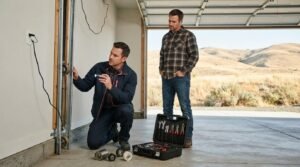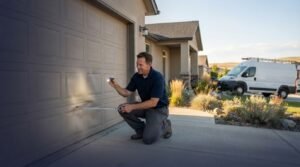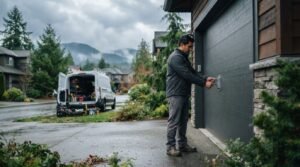
What if securing a commercial garage door takes more than adding another lock? For Washington businesses, knowing how to secure garage door access means looking at the full entry point: the door, opener, locking hardware, and the people who can operate them. A faulty component can undermine the setup, while poorly managed access controls can make daily work harder than it needs to be.
Businesses need practical protection for loading bays and parking areas without slowing staff or blocking safe exit. A layered routine can help: control access, check that the door closes reliably, and respond promptly to signs of damage or malfunction.
This guide covers practical steps for managing keys, remotes, and access codes, checking the door and opener, and recognizing when a problem needs professional attention. Affordable Garage Door Repair & Sales LLC provides commercial garage door repairs and safety inspections across Washington, helping businesses address mechanical concerns as part of a security plan.
Key Takeaways
- Secure garage door access by considering the door, opener, locks, and staff procedures as one system.
- Compare security measures by how they protect the opening and affect everyday staff access.
- Use a clear closing routine to check door operation, access credentials, and visible signs of damage.
- Recognize when a door that will not close or shows mechanical damage needs professional attention.
- Leave broken springs, damaged cables, and off-track doors to trained service professionals.
Why securing a commercial garage door takes more than a lock
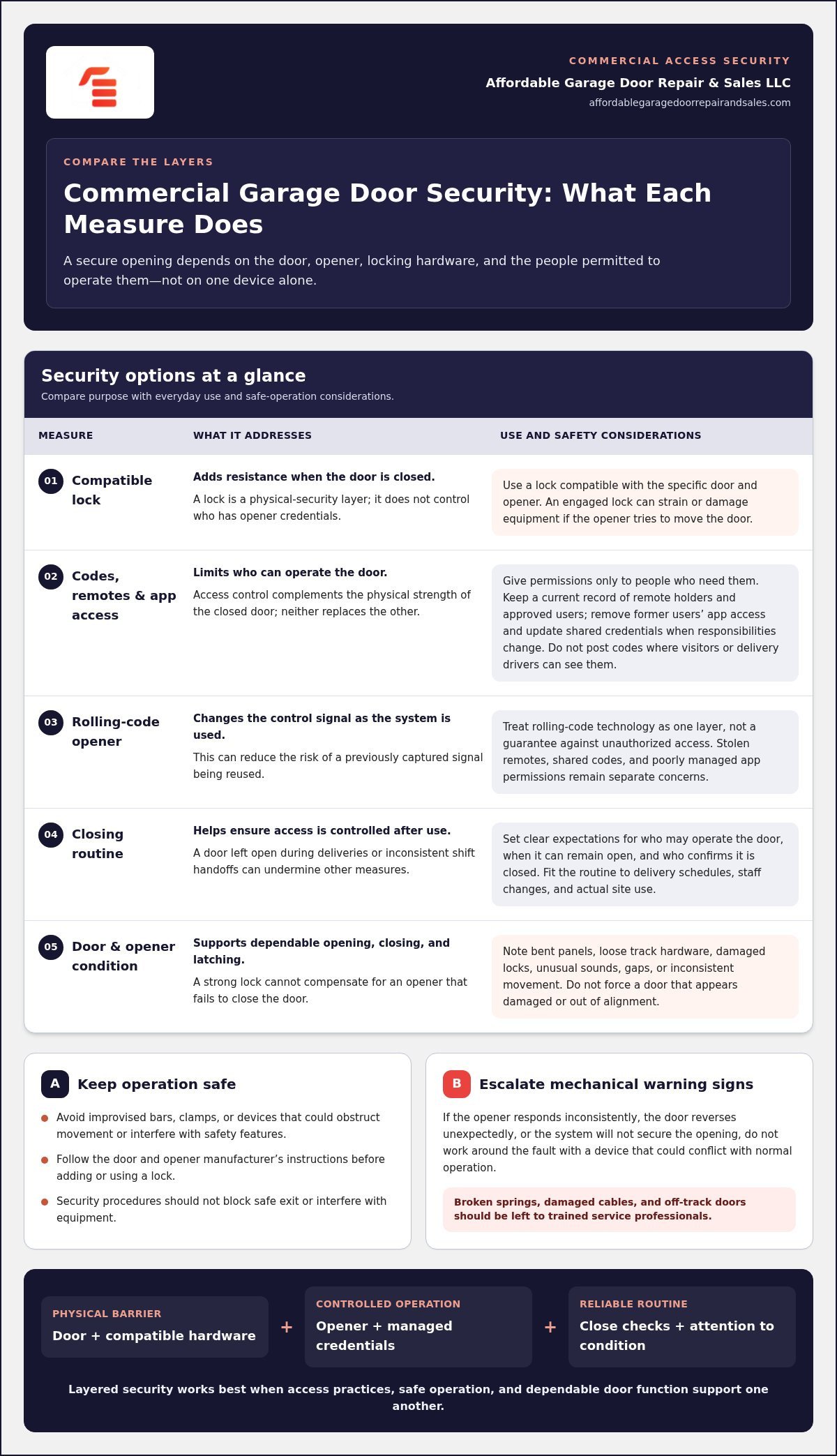
A commercial garage door is an entry point, moving equipment, and part of a building’s daily workflow. A strong lock can help deter unauthorized entry, but it cannot compensate for an opener that fails to close the door, access codes shared too widely, or a door left open during deliveries. A layered plan brings together physical barriers, staff procedures, and regular attention to the door’s condition. These physical security measures work together while allowing employees to enter and exit safely.
Each layer has a different purpose. Deterrence makes an entry point less inviting. Access control limits who can operate it. Reliable operation helps the door open, close, and respond as intended. Security measures should support normal work and emergency egress, not create hazards or interfere with equipment. A security device can strengthen a garage door, but a complete plan also depends on consistent access routines and reliable operation.
Common commercial garage door security weak points
Look first for gaps in everyday practice. A remote left in an unlocked vehicle, a shared code that remains active after staff changes, or a door propped open between deliveries can leave access less controlled. Inconsistent closing routines create another weak point: one shift may check the door while another assumes someone else has secured it.
The door’s condition matters, too. A bent panel, loose track hardware, damaged lock, or opener that struggles to complete a cycle can affect reliable closure. Note visible issues and report unusual sounds, gaps, or inconsistent movement. These signs indicate a problem that needs attention, but they do not establish how damage occurred or whether anyone attempted entry. Do not force a door that appears damaged or out of alignment.
Security needs vary by commercial property
A warehouse loading bay may need procedures that account for frequent deliveries, multiple operators, and times when vehicles must pass through. A shop or service facility may have fewer scheduled openings but rely on staff entering at different times. Shared parking areas bring another consideration: tenants, visitors, and building personnel may have different access needs.
For Washington businesses, start with the site’s actual workflow rather than applying one policy to every property. Consider delivery schedules, staff changes, who holds remotes or knows codes, and whether the door is used outside standard business hours. Then set clear expectations: who may operate the door, when it can remain open, and who confirms it is closed. A routine that fits the work is easier to follow consistently and helps maintain controlled access and safe operations.
How the garage door, opener, and access controls work together
Commercial garage security depends on several parts working together. The door and its hardware form the physical barrier. The opener moves the door and responds to authorized controls. A compatible lock may add resistance when the door is closed, while access procedures determine who can use remotes, keypads, or app-based controls. The purpose of physical security safeguards is to protect people and property through practical layers, not to rely on a single device.
Some openers use rolling-code technology, which changes the control signal as the system is used. This can reduce the risk of a previously captured signal being reused, but it does not make unauthorized access impossible. Stolen remotes, shared codes, and poorly managed app permissions remain separate concerns. Treat the technology as one layer, not a substitute for good credential practices.
Physical barriers and compatible locking measures
A suitable lock can add a layer of protection when a door is closed and not in powered use. It must be compatible with the specific door and opener. If a lock remains engaged while the opener tries to move the door, it can strain or damage equipment. Avoid improvised bars, clamps, or devices that could obstruct movement, interfere with safety features, or prevent intended exit. Follow the door and opener manufacturer’s instructions before adding or using a lock.
Opener access, credentials, and staff permissions
Make access practical and accountable. Give keypad codes, remotes, and app permissions only to people who need them for their work. When staffing or responsibilities change, remove former users’ app access and update shared credentials where possible. Keep a current record of who holds a remote or has approved access, and do not post codes where visitors or delivery drivers can see them.
These steps matter for a warehouse with several shifts and for a service facility with a small team. If the opener responds inconsistently, the door reverses unexpectedly, or the system will not secure the opening, do not work around the fault with a device that could conflict with normal operation. A commercial garage door repair service can address door and opener concerns that affect dependable access. For a mechanical issue, professional garage door repair can help restore reliable operation.
Compare security options by risk, workflow, and safe operation
The right choice depends on the door, how often it operates, and who needs access. A measure suited to a restricted warehouse opening may slow access at a shared parking entrance. Use this comparison to weigh each option’s purpose and day-to-day effect rather than treating any single measure as a complete solution.
Physical lock: Adds a barrier when the door is closed and the lock is compatible with the door and opener. Staff may need to engage and disengage it, so it is better suited to openings that do not need frequent powered use while locked.
Controlled credentials: Keypads, remotes, or app access help limit operation to authorized users. They support regular staff entry, but someone needs to manage permissions and update access when roles change.
Lighting: Exterior or motion-activated lighting can improve visibility around an entry and make activity easier to notice. It supports security rather than physically stopping access, and should not interfere with door operation.
Routine checks: A consistent close-and-check process helps staff catch a door left open or an obvious operating problem. It depends on clear responsibility and follow-through, especially when shifts overlap.
Cameras and alarms can help staff notice or receive alerts about activity, but they do not replace a securely closed, properly functioning door. For organizations reviewing broader facility protection and electrical systems, electrical and security specialists like elvion-group.nl offer equipment and clearance hardware suited for comprehensive building safeguards. The right combination depends on the opening and how it is used. When deciding how to secure garage door access, match each measure to a specific concern without adding controls that conflict with manufacturer instructions or safe operation.
Choose measures for the building’s access pattern
Map when deliveries arrive, when employees use the opening, and whether access is needed outside normal business hours. A loading bay with frequent vehicle traffic may benefit from managed credentials and a clear closing handoff. A shared-use door needs rules that account for different users, while a restricted warehouse or service-area opening may call for tighter permission management. Assign someone to manage credentials and a specific shift or team to confirm closure.
Balance added security with safe daily use
Security upgrades and safety equipment serve different purposes. Locks and credentials help control access; safety features help the door operate as intended and protect people while it moves. Keep manufacturer-approved sensors and other safety features unobstructed and functioning. Do not bypass sensors or attempt to modify springs, cables, or other high-tension components. If the door’s operation or safety features seem unreliable, pause use where safe and arrange a professional inspection before adding security hardware.
Compare options against the actual door, opener, and workflow before putting them in place. A measure that works for one opening may be unsuitable for another. Regular maintenance also supports reliable operation.
A practical daily and periodic garage door security checklist
A short, assigned routine helps turn security measures into consistent practice. Set a clear handoff for each shift or closing period, and keep a simple log where staff can note unusual operation or visible damage. For a Washington warehouse, shop, or shared facility, adapt the steps to the door’s use and the people responsible for it. Staff should observe and report, not attempt mechanical adjustments.
At closing: confirm the door and access are controlled
Choose a responsible person for each closing period, including days when staff or deliveries follow an unusual schedule. A written check makes clear who confirms closure and who reports a concern. Staff can check the opening from a safe position, but should not force a door that appears jammed, off-track, or damaged.
- Clear people, vehicles, and stored items from the door’s path before operating it.
- Close the door using its normal controls, then visually confirm it has reached the fully closed position.
- Look for visible damage, obstructions, unusual movement, or noise. Do not reach into moving parts or try to correct a mechanical fault.
- Secure authorized access points according to the site’s procedure. Report a door that will not close or appears damaged to the designated person.
These are observation and access checks, not repair tasks. Staff should not adjust springs, cables, tracks, or opener force settings. If the door’s movement looks unsafe, stop using it where safe to do so and arrange trained service.
During regular reviews: check equipment and permissions
Review the routine as well as the equipment. After a staffing or role change, check who holds remotes and who can use keypad codes or app access. Assign someone to update permissions and someone to review the closing log so access changes and recurring faults do not get overlooked.
- Record repeated delays, reversals, incomplete closing, unusual sounds, or inconsistent responses to controls.
- Note visible wear or damage and when it was first observed. Do not assume its cause.
- Arrange a professional inspection when a fault recurs or the door or opener shows wear that affects dependable operation.
Recurring access or performance problems may point to an opener that needs attention. This garage door opener replacement guide explains one possible next step when an opener continues to perform poorly.
Use the checklist as a practical starting point for securing garage door access, then tailor responsibilities to the building’s traffic and hours. If a door or opener issue keeps returning, arrange professional garage door service to address the mechanical concern.
When a Washington business should call for garage door service
A commercial garage door that will not close securely can disrupt operations and leave an opening exposed. Call for professional attention if it reverses unexpectedly, stops short of the floor, will not remain closed, or behaves differently from its normal cycle. The issue may involve the opener, door alignment, or another mechanical fault. Do not rely on repeated attempts to force a malfunctioning door to work.
Visible mechanical damage also needs prompt attention. Frayed or separated cables, a door sitting off its track, or a suspected broken spring are not safe do-it-yourself repairs. Springs and cables are under tension, and handling them without the right training can cause serious injury or further damage. Keep employees and vehicles clear of the affected area, avoid operating the door, and arrange professional service.
Security-related faults that should not be ignored
Pay attention to recurring patterns as well as obvious damage. An opener that repeatedly fails to respond, a door that closes only partway, or a door that reopens without a clear cause can undermine reliable access control. Note what happened, including whether the issue occurs when opening, closing, or both. Do not bypass safety features or continue using a door that appears unstable. An inspection can help identify whether repair, opener service, or another adjustment is needed.
If you notice any of these signs, arrange an inspection to assess the fault before it further affects daily operations.
Get commercial garage door help across Washington
Affordable Garage Door Repair & Sales LLC provides commercial garage door repairs and safety inspections for businesses across Washington, including Everett, Puyallup, Seattle, Tacoma, Auburn, Wenatchee, Yakima, Pasco, Ellensburg, and Spokane. The company can inspect a door that will not close reliably, visible damage, or an opener affecting secure operation. The appropriate repair or opener service depends on the condition of the equipment.
A damaged panel, broken spring, cable issue, or off-track door needs attention suited to that specific fault, rather than an added lock or improvised fix. If the opener is involved, service can address its performance so the door can operate as intended. When arranging service, describe the symptoms and any recurring pattern to help focus attention on the concern.
For more detail on commercial door repair needs, see the Washington commercial garage door repair guide. If you are unsure how to secure garage door access after a mechanical problem, prioritize safe operation and professional assessment over forcing the door or attempting a high-tension repair.
Schedule commercial garage door service to address a door or opener concern at your Washington business.
Make garage door security part of everyday operations
A security routine works best when it keeps pace with changes at your business. New staff, altered delivery hours, or a different use for a loading area can affect who needs access and who is responsible for closing up. Review those responsibilities regularly and update the routine when the building’s needs change.
That ongoing attention is a practical way to secure garage door access without making daily work harder. If a mechanical concern affects dependable closure, an inspection can identify the appropriate repair and help keep the door operating safely. For urgent door problems, Affordable Garage Door Repair & Sales LLC also provides emergency 24/7 garage door service.
Schedule commercial garage door service to address a door or opener issue and keep your business moving with confidence.
Frequently Asked Questions
Can a garage door opener keep a commercial garage secure during a power outage?
Not necessarily. Unless the opener has a backup power source, it may not operate during an outage, and security then depends on the door’s physical condition and compatible locking provisions. Check the opener’s instructions for outage procedures and know how staff should access the building safely. Planning how to secure garage door access means deciding what employees should do if power fails, rather than assuming the opener will continue working.
Does unplugging a garage door opener make the door more secure?
No. Unplugging an opener disconnects its power; it does not add a physical barrier or ensure the door cannot be moved. Depending on the setup, unplugging the opener may also prevent powered operation without securing the door itself. Use only a lock designed to work with the door and opener, following their instructions. To prevent unauthorized operation, manage remotes and access permissions rather than relying on an unplugged unit.
How can I secure the door between my garage and business interior?
Are garage door safety sensors the same as security sensors?
No. Garage door safety sensors are designed to help prevent the moving door from closing when an obstruction is detected in its path. Security sensors, such as an alarm contact or motion detector, are intended to signal or report activity. They serve different purposes. Keep the door’s safety features in working order, and do not treat an alarm or monitoring device as a replacement for a closed, functioning door.
Should a commercial garage door be secured differently when the business is closed for several days?
Yes. Before a planned closure, make sure the door is fully shut, follow the manufacturer’s instructions for any compatible lock, and confirm access is limited to designated personnel. Arrange a check by an authorized person if the site needs one during the closure. Avoid leaving a remote in a vehicle that will remain on site, and preserve safe exit routes for anyone who may need access.
What should employees do if a commercial garage door will not close?
Employees should keep people and vehicles clear of the door, avoid repeatedly operating it, and notify the person responsible for the site. Do not force the door, bypass its safety features, or try to adjust its mechanical parts. If another entrance is available, use the building’s established procedure to control access while the issue is assessed. Record what happened, such as whether the door stopped, reversed, or failed to respond to its controls.
How often should a business review garage door access codes and remotes?
Review access whenever an employee leaves, changes roles, or no longer needs to operate the door, and set a recurring review interval that fits your staffing and access practices. Check who holds remotes and who knows each active code; update or remove access that is no longer needed. Businesses in Everett, Puyallup, Seattle, Tacoma, Auburn, Wenatchee, Yakima, Pasco, Ellensburg, and Spokane can base review timing on their site routines and staff changes.