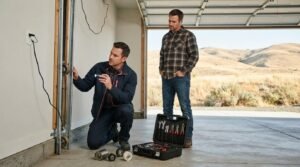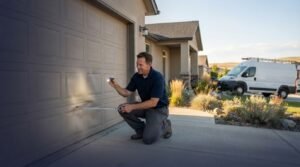
A quieter opener may not solve a noisy garage door. If opening or closing the door wakes someone in the house or carries noise into nearby rooms, choosing a quiet garage door opener is a sensible place to start. But the door’s rollers, hinges, balance, and installation can matter just as much. The right upgrade depends on the whole system.
Drive-type descriptions can make the choice less clear. This guide explains why belt-drive models with DC motors are quiet options for ceiling-mounted setups, while wall-mount openers can reduce vibration by removing the overhead rail. It also covers noise from worn hardware or an unbalanced door, so you can better identify whether the opener is the main source of disruption.
You’ll learn what to consider when matching an opener to your garage and household needs, and what professional installation involves. Affordable Garage Door Repair & Sales LLC provides opener replacement and safety inspections, helping homeowners assess the opener alongside the condition of the complete door system.
Key Takeaways
- Start by identifying whether the sound comes from the opener motor and drive or from rattling, scraping, squeaking, or vibration elsewhere in the system.
- When choosing a quiet garage door opener, compare drive type, motor characteristics, door compatibility, controls, and installation needs rather than relying on one feature alone.
- A higher-capacity motor doesn’t automatically mean quieter operation. The opener’s specifications need to suit the door.
- Observe the door’s movement and sounds, but leave spring, cable, and other high-tension adjustments to trained professionals.
- Plan an upgrade around the complete door system so the new opener can be fitted and set up appropriately.
Choosing a Quiet Garage Door Opener Starts With Finding the Noise Source
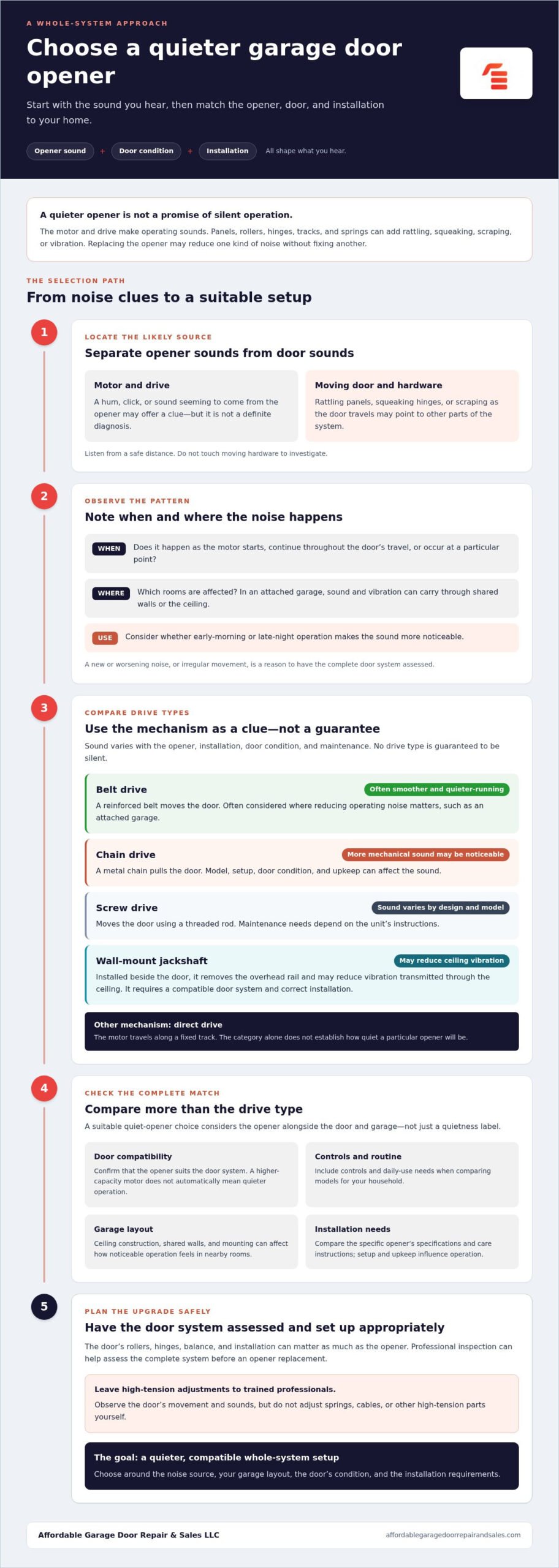
A quiet opener is one part of a quieter garage door system, not a promise of silent operation. The motor and drive make operating sounds, while the door’s panels, rollers, hinges, tracks, and springs can add rattling, squeaking, scraping, or vibration. Replacing the opener may reduce one kind of noise without addressing another.
Opener noise comes from the motor and drive; door-hardware noise comes from the moving door and its components. That distinction is a useful starting point when choosing a quiet garage door opener. General explanations of the types of garage door openers can help you understand how different mechanisms work, but the sounds you notice in your own garage matter, too.
Which sounds point to the opener, and which point to the door?
A hum, click, or sound that seems to come from the opener may offer a clue, but it isn’t a definite diagnosis. Rattling panels, squeaking hinges, or scraping as the door travels may point to other parts of the system. Listen from a safe distance and note whether the sound happens as the motor starts, continues throughout the door’s travel, or occurs at a particular point. Don’t touch moving hardware to investigate.
Timing and sound quality can help you describe the problem without identifying a faulty part yourself. If the noise is new, worsening, or accompanied by irregular movement, a professional inspection can assess the complete door system before you choose an opener replacement.
Why the garage layout changes what quiet means
In an attached garage, sound and vibration can carry through shared walls or the ceiling into nearby rooms. Ceiling construction, shared-wall layout, and how the opener is mounted can all affect how noticeable operation feels inside the home. A sound that seems minor in the garage may be disruptive beside a bedroom or living area.
Define your needs by considering where and when the noise causes a problem. Note which rooms are affected and whether early-morning or late-night use makes the sound more noticeable. These details help guide an opener choice and installation plan that fit your home, rather than relying on a quietness label alone.
Belt, Chain, or Other Drives: How Quiet Garage Door Openers Differ
The drive mechanism affects an opener’s sound, but it doesn’t determine the full noise level on its own. Belt drives are a common choice for noise-conscious homeowners because the belt generally runs with less mechanical clatter than a metal chain. Chain drives can be louder, though sound varies with the opener, installation, door condition, and maintenance. Neither type is guaranteed to be silent.
| Drive type | General sound character | Maintenance considerations | Likely use case |
|---|---|---|---|
| Belt drive | Often a smoother, quieter-running choice | Follow the manufacturer’s guidance and keep the door system in good working order | Attached garages or homes where reducing operating noise matters |
| Chain drive | More mechanical sound may be noticeable | Check the opener’s care instructions; chain setup and condition can affect operation | Garages where noise is less of a concern |
| Screw drive | Sound varies by design and model | Maintenance needs depend on the unit’s instructions | A possible alternative when its mechanism and compatibility suit the setup |
| Wall-mount jackshaft | Can reduce vibration transmitted by an overhead rail | Requires a compatible door system and correct installation | Some garages where overhead space or reduced ceiling vibration is a priority |
How belt-drive and chain-drive openers compare
A belt drive uses a reinforced belt to move the door, while a chain drive pulls it with a metal chain. That difference can make a belt-drive opener appealing in a garage beside bedrooms or shared living areas. Chain-drive systems may produce more mechanical sound, but the result depends on the model, door, mounting, and upkeep. Compare specifications and care instructions for the specific opener instead of assuming every unit performs alike.
Do screw-drive and direct-drive openers make less noise?
Screw-drive openers move the door using a threaded rod. Direct-drive designs use a motor that travels along a fixed track. These mechanisms offer alternatives to belt and chain systems, but the category alone doesn’t establish how quiet a particular opener will be. Product design, installation, and door condition all influence what you hear during operation.
Wall-mount, or jackshaft, openers are another option. Installed beside the door, they eliminate the overhead rail and may reduce vibration transmitted through the ceiling. They still require a compatible door system, so suitability depends on the garage as well as your noise priorities.
As you compare options, consider the drive alongside the door’s condition and the installation. Affordable Garage Door Repair & Sales LLC provides opener replacement and assesses the door system to help match the setup to the garage and its use.
Compare Quiet Garage Door Opener Features That Matter in Daily Use
Once you know what kind of noise you want to reduce, compare openers by more than their drive type. The motor, door compatibility, controls, and installation requirements all affect whether a model fits your garage and routine. Choosing a quiet garage door opener means weighing these details together, not relying on one feature or a broad “quiet” label.
Which opener specifications should homeowners compare?
Use this checklist to keep comparisons focused:
- Drive type: Compare belt, chain, and other mechanisms in light of the garage layout and how much operating sound matters.
- Motor characteristics: A DC motor with soft-start and soft-stop operation can reduce abrupt starts and stops. It may help limit noise, but it won’t eliminate sounds from the door or guarantee a silent cycle.
- Door compatibility and capacity: Check the manufacturer’s guidance for your door’s type, size, and weight before comparing horsepower or other capacity ratings. Higher capacity doesn’t automatically mean quieter operation.
- Operating speed: Consider how quickly the door opens as a convenience factor. Speed alone isn’t a reliable measure of sound.
- Controls and installation: Review the access options you’ll use and any installation requirements that affect fit, mounting, or setup.
Treat any model-specific decibel figure or sound claim as a specification to verify against reliable product information. Measurements can depend on how and where sound is recorded, while real-world results also vary with the door and installation.
Which features help match an opener to your household?
Separate features that affect mechanical operation from those that make access easier. Remote controls and smart access can help household members operate the door conveniently. App controls may provide remote operation or status information, depending on the model. These features don’t, by themselves, reduce the motor’s or door’s operating noise.
Your schedule matters, too. If someone sleeps near the garage or household members use the door early or late, prioritize operating sound and vibration alongside access features. A soft-start motor may suit that need better than a feature-rich control system alone, but the complete door setup still matters.
For broader purchase considerations, consult the garage door opener replacement buying guide alongside this quietness checklist. A professional assessment can help match an opener’s capacity, controls, and mounting requirements to the existing door system and your household’s use.
A Quiet Opener May Not Fix a Noisy Garage Door
Replacing an opener can reduce motor or drive noise, but it may not address sounds coming from the door itself. Rollers, hinges, panels, tracks, mounting points, and other parts can contribute to rattling, squeaking, scraping, or vibration. Lubrication needs, loose hardware, worn rollers, or a door that isn’t moving evenly may be factors, though the sound alone can’t confirm the cause.
Assess the door’s condition before selecting an opener, because a quieter motor won’t correct noise caused by worn or misaligned door components. This is an important step in choosing a quiet garage door opener that suits the complete system, rather than replacing one part and expecting every sound to disappear.
What can homeowners observe without handling dangerous components?
Observe a normal operating cycle from a safe distance and note when the noise occurs: as the opener starts, while the door travels, or when it stops. Watch for visible obstructions, unusual vibration, or uneven movement. Don’t touch moving parts or attempt to test the door’s balance yourself. If the door looks unstable or its operation seems unsafe, stop using it and arrange professional service.
These observations can help you describe the issue without going near springs, cables, or other moving hardware. A professional can assess whether the noise may involve rollers, tracks, mounting, lubrication, or another part of the system.
When does the door need service before an opener upgrade?
A door that appears unbalanced, has a damaged cable, or may have a spring problem needs professional attention before an opener is selected or installed. Springs and cables operate under high tension. Don’t try to adjust, repair, or remove them yourself. The door’s condition affects how the system moves, so addressing a mechanical issue first helps ensure the replacement opener is matched to a door that can operate properly.
Regular professional checks can also help identify wear before it becomes a more disruptive problem. Learn more about garage door maintenance and safety inspections as part of keeping the complete system in sound working condition.
If noisy or uneven operation has you considering an upgrade, Affordable Garage Door Repair & Sales LLC can assess the door system as part of professional opener replacement.
Choose and Install a Quiet Garage Door Opener With the Whole System in Mind
A quieter upgrade starts with a clear picture of how the door operates, not just a shortlist of opener features. Use this sequence to move from observation to a suitable installation:
- Identify the sound. Note when it occurs and whether it seems to come from the opener, the moving door, or vibration through the garage structure.
- Assess the door. Consider its condition and movement before settling on a new opener. An opener upgrade should account for the system it will operate.
- Compare compatible options. Weigh drive type, motor characteristics, capacity, controls, and the household’s noise priorities. Follow the manufacturer’s compatibility guidance.
- Plan the installation. Account for mounting, available space, and how the setup may transmit vibration into nearby rooms.
This process makes choosing a quiet garage door opener a system-level decision. It also keeps convenience features, such as smart access, in perspective: they can improve everyday use, but don’t necessarily reduce mechanical sound.
What should the installation assessment account for?
Professional installation involves more than attaching an opener. The door type and condition, opener compatibility, mounting arrangement, and nearby shared walls or ceiling all help shape the appropriate fitting and setup. A technician can assess the existing system and recommend an installation approach suited to the garage and its use. Results depend on the particular door and setup, so don’t assume a specific level of noise reduction or installation time.
How to move from comparison to an informed upgrade
Before making a decision, summarize what matters most: the sounds you want to reduce, the door’s compatibility needs, the times your household uses it, and the controls you’ll rely on. For broader replacement considerations, use a garage door opener replacement buying guide alongside this quiet-operation framework.
Affordable Garage Door Repair & Sales LLC installs garage door openers and provides smart upgrades for residential and commercial properties across Washington. Trained professionals can assess the existing door system, discuss an appropriate setup, and provide a free on-site estimate. Service locations include Everett, Puyallup, Seattle, Tacoma, Auburn, Wenatchee, Yakima, Pasco, Ellensburg, and Spokane, where homeowners can plan an upgrade around their garage and household needs.
Make Your Next Opener Upgrade a Quieter Fit
Choosing a quiet garage door opener starts with identifying where the noise comes from. Drive type and motor features affect opener sound, but door condition, mounting, and the way vibration travels through your home also shape what you hear. Compare models for compatibility, controls, and household routines, and assess the complete door system before deciding that an opener alone will solve the problem.
A thoughtful upgrade can balance quieter operation with dependable everyday access. Affordable Garage Door Repair & Sales LLC installs garage door openers and smart upgrades for residential and commercial customers across Washington. Trained professionals can assess your existing setup and help match an opener to your garage and usage needs. Free on-site estimates are available.
Ready to plan an upgrade? Request a free on-site estimate for a garage door opener upgrade. With the door system considered alongside the opener, you can move forward with a clearer plan for a quieter home.
Frequently Asked Questions
Are belt-drive garage door openers quieter than chain-drive openers?
Generally, belt-drive openers are quieter than chain-drive models because a belt tends to create less mechanical clatter than a metal chain. A belt drive paired with a DC motor and soft-start and soft-stop operation can further reduce abrupt movement sounds. Actual noise varies by model, installation, mounting, maintenance, and door condition, so a belt drive can’t guarantee silent operation or eliminate rattling from other parts.
Can a quiet garage door opener fix a noisy garage door?
No, not if the noise comes from the door system rather than the opener. A quieter model may reduce motor or drive sounds, but worn rollers, loose hinges, track issues, or an unbalanced door can still cause noise or uneven movement. Have the complete setup assessed before replacing the opener. Don’t adjust springs or cables yourself; these high-tension components need professional attention.
Which type of garage door opener is quietest for an attached garage?
A wall-mount, or jackshaft, opener is generally the quietest arrangement because it eliminates the overhead rail that can transmit vibration through the ceiling. For a traditional ceiling-mounted setup, a belt-drive opener with a DC motor and soft-start and soft-stop features is a quieter option. The best fit depends on door compatibility, mounting, and how sound travels into nearby rooms.
How can I tell whether the opener or the garage door is making the noise?
Listen from a safe distance and note when the sound occurs. A hum or click near the opener may be related to its motor or controls, while squeaking, scraping, or rattling during travel may involve door components. These are clues, not a diagnosis. Watch for visible vibration, obstructions, or uneven movement without touching the hardware. Stop using the system if it appears unstable or unsafe.
Will a quiet garage door opener work with my existing garage door?
It may, provided the opener is compatible with the door’s type, size, weight, condition, and mounting arrangement. Check the manufacturer’s specifications rather than assuming that an opener will suit every door. A professional assessment can review the existing setup and identify installation needs. If the door has mechanical problems, those may need attention as part of planning an opener replacement.
Do smart garage door openers operate more quietly?
Smart features don’t inherently make an opener quieter. App access, remote operation, and status alerts can make everyday use more convenient, but mechanical sound depends more on the drive, motor, installation, and condition of the door. If quieter operation is the goal, compare those factors separately from connectivity. Consider smart controls as an added convenience, not a substitute for a noise-focused opener setup.
When should I replace a noisy garage door opener instead of repairing it?
Consider replacement when the opener has recurring problems, no longer suits the door, or you want a different drive, motor, or control setup. Repair may make sense when an assessment identifies a specific issue that can be addressed. Affordable Garage Door Repair & Sales LLC provides opener replacement and safety inspections across Washington, including Everett, Puyallup, Seattle, Tacoma, Auburn, Wenatchee, Yakima, Pasco, Ellensburg, and Spokane.