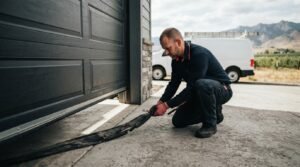
What if the safest first step when your garage door won’t open is to leave it alone? A garage door stuck closed can block access to your vehicle and leave you wondering whether the opener, power supply, or door hardware is at fault. It’s tempting to pull harder or keep pressing the remote, but forcing the door can worsen damage or create a risk of injury.
Start with a few low-risk checks that don’t involve moving the door or handling its hardware. This guide explains what to look for, what a closed door may be signaling, and when to stop troubleshooting. You’ll learn how to check the opener’s power and remote, spot warning signs such as a loose cable or uneven door, and understand why springs, cables, and off-track doors need professional attention. If basic checks don’t resolve the issue, a technician can assess the door and opener and recommend a safe repair.
Key Takeaways
- Check the opener’s power, remote batteries, wall control, and manual lock before assuming the door has a mechanical fault.
- A garage door stuck closed may point to an opener or sensor issue, or a problem with the door hardware.
- Look for warning signs, but don’t attempt repairs involving springs, cables, tracks, or the door’s weight.
- A technician can inspect the opener and door components, explain the findings, and carry out the appropriate repair.
- When arranging service in Washington, describe what the door is doing and mention any unusual sounds or visible changes.
Garage Door Stuck Closed? Start With These Safe Checks
A closed garage door can leave your vehicle trapped, but forcing it upward or repeatedly activating the opener may worsen damage. Begin with checks that don’t require lifting the door, removing covers, or handling hardware. If anything looks unstable, stop and leave the door in place.
Which checks can I try before calling for garage door repair?
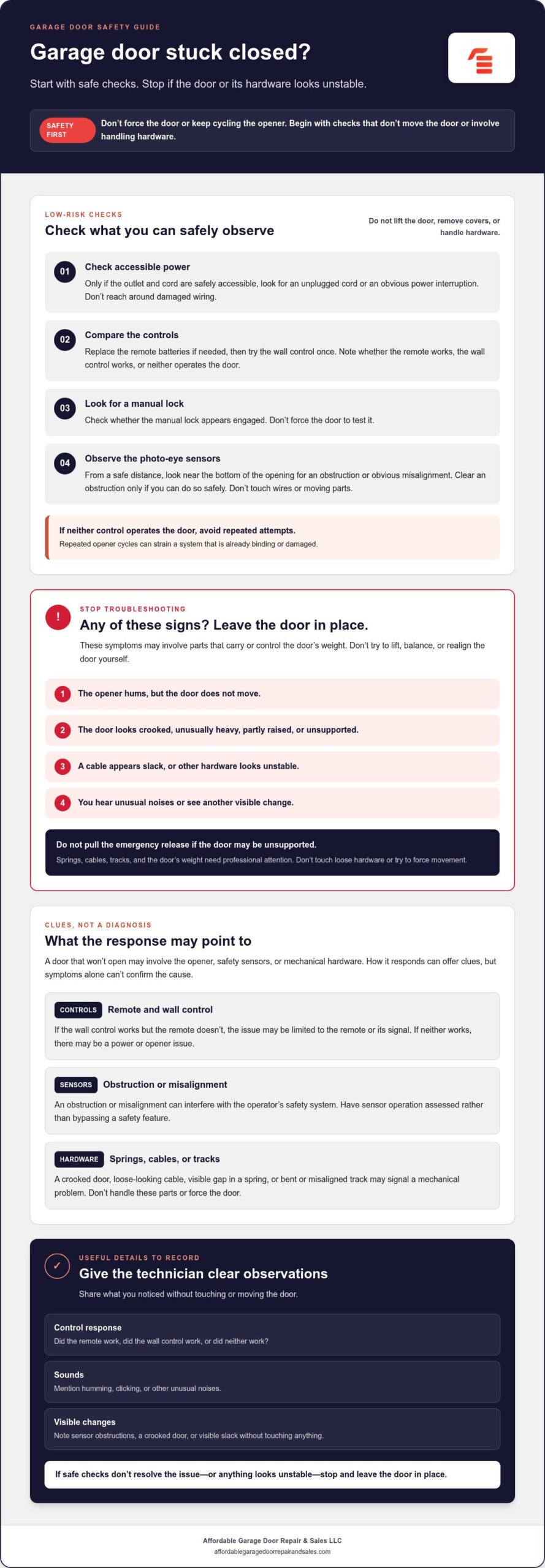
Check the opener’s power supply only if the outlet and cord are safely accessible. Look for an unplugged cord or an obvious power interruption, but don’t reach around damaged wiring. Replace the remote’s batteries if needed, then try the wall control once. If the wall control works but the remote doesn’t, note that difference. If neither control operates the door, avoid repeated attempts.
Next, look to see whether the manual lock appears engaged. Don’t force the door to test it. From a safe distance, check near the photo-eye sensors at the bottom of the opening for an obstruction or obvious misalignment. Clear an obstruction from the area if you can do so safely, but don’t touch wires or moving parts. An overview of garage door components can help explain how the opener, sensors, and counterbalance hardware work together.
When should I stop troubleshooting a stuck garage door?
Stop if you hear the opener humming without movement, or if the door looks crooked, unusually heavy, partly raised, or unsupported. Visible slack in a cable or other hardware is also a warning sign. These symptoms can involve components that carry or control the door’s weight. Don’t pull the emergency release if the door may be unsupported, and don’t try to lift, balance, or realign it yourself.
- Note the response: Record whether the remote, wall control, or neither one worked.
- Describe sounds: Mention humming, clicking, or other unusual noises.
- Report what you see: Note sensor obstructions, a crooked door, or visible slack without touching anything.
What Causes a Garage Door to Get Stuck in the Closed Position?
A garage door that won’t open may have a problem with its opener, safety sensors, or mechanical hardware. Checking how the door responds can offer clues, but it won’t confirm the cause. The opener and door work as one system, so both should be inspected before a repair is recommended.
An opener or control fault can prevent the system from operating, while a door-hardware fault can prevent safe movement even when the opener responds. That’s why a motor making noise doesn’t necessarily mean the opener is the only issue.
Could the garage door opener be preventing the door from opening?
Power interruptions, depleted remote batteries, or a problem with the wall control can leave the opener unresponsive. If the wall control works but the remote doesn’t, the issue may be limited to the remote or its signal rather than the door hardware. If neither control works, there may be a power or opener issue, but symptoms alone can’t identify which. For background on opener options and replacement, see this garage door opener replacement guide.
A safety sensor issue is another possibility. An obstruction or misalignment can interfere with the operator’s safety system, though the exact response depends on the system and circumstances. Federal requirements for covered operators are described in the federal safety standards for garage door operators. A technician can assess sensor operation alongside the opener rather than bypassing a safety feature.
Could a spring, cable, or track problem be holding the door down?
Mechanical problems may show up as a door that appears uneven, a cable that looks loose, or a visible gap in a spring. Springs counterbalance much of the door’s weight, while cables help support and guide its movement. If either component is damaged, the door may bind, sit crooked, or remain closed even when the opener activates.
Tracks can also be bent or misaligned, making the door difficult or unsafe to move. Don’t handle spring or cable repairs, pull on loose hardware, or try to force the door. These parts can be under tension, and the door can shift unexpectedly. Affordable Garage Door Repair & Sales LLC inspects the opener, sensors, springs, cables, and track together to identify the appropriate repair. A humming motor with no movement, unusual noises, or a crooked door are useful details to share when arranging an assessment.
Can You Fix a Garage Door Stuck Closed Yourself? Know the Safety Limits
A garage door can seem like a simple problem if it won’t respond to a button press. But the door is heavy, and its springs and cables help control that weight. If a loaded part shifts or fails, the door may move suddenly. Safe troubleshooting means observing and checking controls, not trying to lift, balance, or dismantle the system.
Which garage door troubleshooting steps are low risk?
Limit checks to the opener’s accessible power supply, remote batteries, wall control, visible obstructions, and sensor lenses. Keep children, pets, and vehicles away from the door while you observe it. You can gently clear an obstruction near a sensor, but don’t adjust damaged wiring or touch moving parts.
- Try the wall control and remote, noting whether either gets a response.
- Check for an obvious obstruction near the sensors and gently clean accessible sensor lenses.
- Stop if these basic checks don’t help. Repeated opener cycles can strain a system that’s already binding or damaged.
Don’t force the door or try to lift it to see whether it will move. If it’s out of balance or obstructed, added force may worsen damage or cause the door to shift.
Why are garage door springs and cables not DIY repairs?
Springs hold substantial tension to help counterbalance the door’s weight. Cables work with that system to support and guide movement. A loose or broken cable can leave the door uneven or unstable, while a spring failure can make it unsafe to move. The Door & Access Systems Manufacturers Association (DASMA) provides industry information on garage door and access systems, but diagnosing or repairing loaded hardware requires hands-on expertise.
Don’t loosen, cut, reconnect, or adjust springs and cables. Avoid repairs to tracks or any attempt to support an unsupported door, too. If the door looks crooked, partly raised, or unstable, keep clear and leave it as it is. Trained technicians handle spring, cable, and off-track repairs by assessing the door and its hardware together.
If a garage door stuck closed doesn’t respond to basic control and sensor checks, the safer next step is a professional assessment rather than another attempt to operate it. Arrange garage door repair and share what you observed, including control responses, sounds, and visible changes.
What to Expect When a Technician Repairs a Garage Door Stuck Closed
A professional assessment follows a clear sequence: you describe what happened, the technician inspects the door and opener, explains the findings, and completes the appropriate repair. This helps distinguish a control or opener issue from a problem with the door’s springs, cables, or track. A symptom can guide the inspection, but it doesn’t confirm the cause by itself.
How does a technician diagnose a garage door that will not open?
The technician considers the door and opener as connected parts of one system. They may check how the opener responds, inspect spring and cable condition, look for track misalignment, and assess safety sensor operation. Tell them whether the door is crooked, completely silent, humming without moving, or showing visible damage. Whether the remote or wall control produced a response can also help focus the assessment.
Inspection findings, rather than one sound or symptom alone, guide the next step. A humming opener, for example, doesn’t automatically prove that the motor is the source of the problem. The door may be binding or have a hardware issue that prevents safe movement.
What happens after the cause of the stuck door is identified?
After the inspection, the technician explains what they found and outlines the appropriate repair before work proceeds. Depending on the issue, this may involve spring repair, cable replacement, opener repair or replacement, or off-track repair. The recommended work depends on the condition of the full system, not just the first symptom you noticed.
Once the repair is complete, the technician can check the door’s operation and relevant safety functions. This final assessment helps show how the repaired system is responding and whether further attention is needed. It’s a practical step after addressing a garage door stuck closed, especially when the original issue involved the door’s movement or safety operation.
If your door won’t open and you’re in the Everett area, Affordable Garage Door Repair & Sales LLC provides emergency garage door repair in Everett. For a door that remains stuck, request garage door repair and share the symptoms you observed so the assessment can begin with useful information.
Get Help With a Garage Door Stuck Closed in Washington
If your garage door won’t open, don’t continue checks that feel unsafe. Leave the door in place and share what you observed when arranging repair. Affordable Garage Door Repair & Sales LLC provides 24/7 emergency garage door repair for doors that will not open, serving Washington communities including Everett, Seattle, Tacoma, Spokane, Yakima, Pasco, Ellensburg, Puyallup, Auburn, and Wenatchee.
What information helps arrange garage door repair efficiently?
A brief description gives the technician useful context without requiring you to test or dismantle anything. Be ready to share:
- Whether the door is completely closed, crooked, or partly raised.
- What happened when you used the remote or wall control, including whether the opener was silent or humming.
- Any visible damage or unusual change you noticed from a safe distance.
- The property location and whether the door is at a home or commercial site.
Don’t pull on cables, remove covers, or try to move a damaged door to gather more information. What you can safely observe is enough to describe the issue.
When is emergency garage door service appropriate?
Prompt repair may be important if a closed door is blocking access to a vehicle or if the garage is left unsecured. A garage door stuck closed can disrupt normal access, but forcing it or continuing to operate a door that appears damaged can add risk. Stop troubleshooting if the door looks unstable and explain the situation when arranging service. Emergency repair is available 24/7 for garage doors that will not open, so there’s no need to keep testing the system while you wait.
For residential and commercial garage door repair across Washington, share the door’s symptoms and location so the issue can be assessed. Request garage door repair for a safe next step.
Take the Safe Next Step for Your Garage Door
A garage door stuck closed can have a simple control issue or a problem with the opener, springs, cables, or track. Check only what’s safe and accessible, then stop if the door is crooked, unusually heavy, humming without moving, or showing loose hardware. Forcing it or attempting a repair on loaded components can increase the risk of damage or injury.
When basic checks don’t resolve the issue, a technician can assess the door and opener together, explain the findings, and recommend an appropriate repair. Affordable Garage Door Repair & Sales LLC provides 24/7 emergency service for doors that will not open, with repair for springs, cables, openers, and off-track doors across Washington.
Share what the door is doing and where service is needed, then request garage door repair. With safe troubleshooting and a professional assessment, you can take a clear next step toward restoring normal access.
Frequently Asked Questions
Why is my garage door stuck closed?
A garage door stuck closed may be caused by an opener or power issue, a blocked safety sensor, or a mechanical problem with the springs, cables, or track. A silent opener, a humming motor, or a crooked door can offer clues, but none confirms the cause by itself. Avoid forcing the door. Note what you observe and have the opener and door hardware assessed together if basic control checks don’t help.
Can I open a garage door manually if it is stuck closed?
Only consider manual operation if the door appears fully closed, level, and undamaged, and you can follow the manufacturer’s instructions safely. Don’t pull the emergency release if the door is partly raised, crooked, unusually heavy, or may have a broken spring or cable. The opener may no longer support the door after release, so it could move suddenly. If you’re unsure, leave it closed and arrange professional assessment.
Is it safe to keep pressing the garage door opener when the door will not open?
No. Repeatedly activating an opener that hums, strains, or produces no movement may put additional stress on the system without resolving the cause. Try a control check once, then stop if the door doesn’t respond. Don’t keep cycling the opener if the door looks uneven or you notice damaged or slack hardware. Describe the opener’s response and any unusual sounds when arranging a repair assessment.
What should I do if my garage door spring breaks while the door is closed?
Leave the door closed and keep people, pets, and vehicles clear of the opening. Don’t operate the opener, pull the emergency release, or attempt to adjust or replace the spring. A spring helps counterbalance the door’s weight, and a damaged spring can make movement unsafe. Arrange professional spring repair and share any signs you noticed, such as a loud bang or a visible gap in the spring.
Can a blocked safety sensor keep a garage door from opening?
A blocked or misaligned photo-eye sensor can interfere with the opener’s safety operation, though sensors more commonly affect closing than prevent an opening cycle. The response can vary by system. From a safe distance, look for an obstruction near the sensors and check for visible damage, but don’t touch wiring or bypass the sensors. If clearing an obvious obstruction doesn’t help, have the opener and safety system inspected.
How do I know if my garage door opener or the door itself is the problem?
Control responses can help narrow the possibilities, but they don’t confirm a diagnosis. If the wall control works while the remote doesn’t, the issue may involve the remote or its signal. If neither control works, power or the opener may be involved. If the motor responds but the door stays still, or the door is crooked, hardware may be binding. A technician can inspect the opener, springs, cables, track, and sensors as a system.
Can I get emergency garage door repair in Washington if my door will not open?
Yes. Affordable Garage Door Repair & Sales LLC provides 24/7 emergency garage door repair for doors that will not open. Service locations include Everett, Puyallup, Seattle, Tacoma, Auburn, Wenatchee, Yakima, Pasco, Ellensburg, and Spokane. Share the property location, whether it’s residential or commercial, and what the door and opener are doing. Don’t dismantle parts or test a visibly damaged door before arranging service.