That violent vibration you feel when hitting the wall button isn’t just a nuisance; it’s a mechanical tremor signaling that your system is on the verge of a critical failure. It is unsettling to watch a heavy steel door shudder above your vehicle, and for many homeowners in Seattle or Spokane, the noise alone is enough to cause significant stress. If your garage door shakes when opening, you are likely dealing with hardware fatigue that could lead to a dangerous collapse if left unaddressed.
We understand the frustration of an unreliable door and the uncertainty of whether you need a minor adjustment or a complete replacement. This guide identifies the specific mechanical issues causing these tremors and explains how to restore smooth, quiet operation to your home. You’ll learn to spot the difference between simple maintenance needs and high-tension risks that require expert intervention to keep your property secure.
In the following sections, we break down common culprits like worn rollers, loose hardware, and misaligned tracks. We also provide a clear path toward finding a dependable local technician for a same-day safety inspection. By the end of this article, you will have a professional perspective on how to protect your investment and ensure your garage remains a safe, functional part of your Washington home in 2026.
Key Takeaways
- Learn to distinguish between minor hardware rattling and structural tremors that signal a potential mechanical failure.
- Identify the root cause of why your garage door shakes when opening by isolating motor noise from track and roller resistance.
- Recognize critical “Red Alert” signs, such as snapped springs or misaligned tracks, that pose immediate safety risks to your home.
- Discover the correct lubrication techniques for the Washington climate to ensure smooth operation and prevent premature wear.
- Understand how a professional safety inspection can resolve persistent vibrations and save you from the high costs of emergency repairs.
Decoding the Tremor: Why Your Garage Door Shakes When Opening
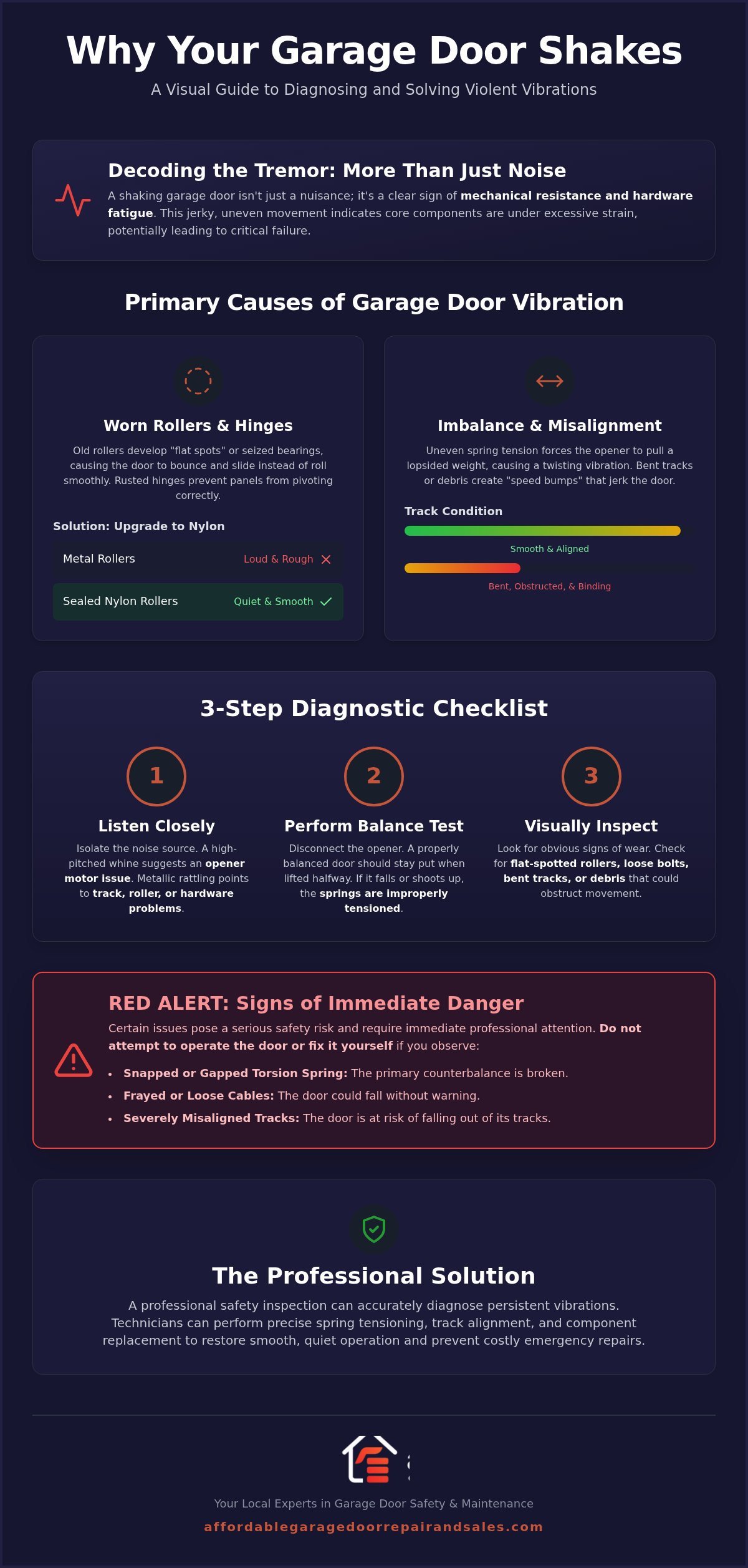
Many homeowners ignore a minor rattle, but when a garage door shakes when opening, it is a physical manifestation of mechanical resistance. This vibration isn’t just a noise; it’s a jerky, uneven movement that suggests your hardware is fighting against itself. While minor rattling might just mean a few loose screws, structural shaking indicates that the core garage door components are under excessive strain. This friction often starts small but quickly escalates into hardware fatigue that can snap cables or damage the opener motor.
A smooth ascent depends entirely on the balance of the door. When the springs don’t provide equal counter-tension, one side of the door may lag behind the other. This creates a twisting force that causes the entire assembly to vibrate as the opener struggles to pull the uneven weight. If the door isn’t balanced, the motor must work twice as hard, leading to the erratic “tremors” you see during operation.
The Impact of Worn Rollers and Hinges
Rollers act as the tires for your door system. When they wear down, they often develop “flat spots” that create a rhythmic thumping and vibration. This is especially common with older plastic rollers that have reached the end of their service life. If your garage door shakes when opening, it’s worth checking these specific parts for wear:
- Flat spots: These cause the door to bounce as it travels through the tracks, leading to a shaky ascent.
- Seized bearings: These prevent the roller from spinning, causing it to slide and create intense friction.
- Rusted hinges: These stop the panels from pivoting smoothly as they transition from vertical to horizontal positions.
Upgrading to sealed nylon rollers is a highly effective solution for Washington homeowners. They offer a much quieter operation and don’t require the same frequent lubrication as traditional metal versions. Because nylon is more forgiving, it absorbs the minor vibrations that metal rollers tend to amplify.
Track Misalignment and Debris
The tracks must be perfectly aligned to ensure a steady movement. Even a slight bend in the steel can cause the door to jerk. In the Pacific Northwest, road salt, dirt, and moisture often accumulate inside the tracks, creating “speed bumps” for the rollers. Track binding is a primary cause of vibration; it is defined as a condition where the door encounters physical resistance within the track, forcing the motor to pull with uneven force to overcome the obstacle. This leads to a shaky, hesitant motion that puts immense stress on the opener’s drive gear and mounting brackets.
Diagnostic Checklist: Identifying the Culprit Behind the Vibration
Identifying the root cause when your garage door shakes when opening requires a methodical process of elimination. You’re looking for the specific point where mechanical resistance meets structural fatigue. Start by listening. If the vibration is accompanied by a high-pitched whine or a grinding sound from the motor unit, the problem is likely internal to the opener. Conversely, if you hear a metallic rattling along the walls, the issue usually resides in the tracks, rollers, or hinges.
The most effective diagnostic tool is the manual balance test. With the door fully closed, pull the emergency release cord to disconnect the opener. Safety Warning: Don’t attempt to manually move the door if you see a gap in the torsion spring or if the cables appear loose or frayed. If the door is safe to handle, lift it halfway. A well-balanced door should stay in place at the midpoint. If it slams down or shoots upward, the springs are improperly tensioned. This imbalance is why a garage door shakes when opening; the motor is forced to overcompensate for the weight, creating a jerky, vibrating motion.
Differentiating Opener vs. Door Issues
Sometimes the shaking is caused by a slipping chain or a worn-out carriage. If your motor is over ten years old, the strain of a heavy door can cause the entire header bracket to vibrate. This often loosens the mounting hardware over time, which amplifies the noise. In these cases, you might benefit from a garage door opener replacement to upgrade to a smoother, quieter belt-drive system. Modern units are designed to reduce the physical feedback felt through the garage walls.
Visual Cues of Hardware Fatigue
Inspect the tracks for “gaposis,” which is a visible separation between the track and the door frame. This gap causes the door to shimmy as it passes through the misaligned section. You should also check for rusted or “frozen” rollers. If a roller doesn’t spin freely, it drags against the steel track, creating significant friction and vibration.
Look closely at the torsion spring. A visible gap in the coils indicates the spring has lost its tension or is nearing the end of its lifespan. Because these systems operate under extreme pressure, they must adhere to strict federal safety standards to prevent catastrophic failure. If you notice any of these visual cues during your 2026 home maintenance check, it’s best to schedule a professional safety inspection to prevent a total mechanical breakdown.
Red Alert: Shaking That Signals a Dangerous Failure
While some vibrations are merely symptoms of aging hardware, certain tremors indicate an immediate safety risk. If your garage door shakes when opening and is accompanied by a sound like a gunshot, a torsion spring has likely snapped. This component is responsible for counterbalancing the door’s weight, which can range from 150 to 400 pounds. When a spring fails, the opener is forced to lift a dead weight it wasn’t designed to handle, leading to violent shaking and the potential for a catastrophic collapse. If you hear this loud bang, stop using the door immediately to prevent the panels from crashing down on a vehicle or family member.
Violent shaking also places the system at high risk of coming off-track. When the door sways significantly, the rollers can pop out of the steel guides, leaving the door hanging precariously by its cables. You should also listen for straining sounds from the motor unit. A high-pitched grinding often indicates that the internal drive gears are stripping. If these gears fail completely, the door may slide down the tracks uncontrollably. While homeowners can often perform essential maintenance steps like tightening hinges, high-tension parts require a different level of caution.
Broken Springs and Cable Tension
Addressing a broken garage door spring repair is a task that strictly requires specialized professional tools and training. Torsion springs operate under extreme mechanical pressure; attempting a DIY fix without the proper winding bars can result in severe injury. Similarly, if you notice a cable is frayed or has slipped off its drum, the door’s balance is compromised. Snapped cables often cause the door to buckle or tilt, which creates the intense vibration you feel when the system tries to operate. For the safety of your household, never attempt to adjust or remove these high-tension components yourself.
When to Call for Emergency 24/7 Service
Homeowners must recognize when a mechanical issue transitions into a security or safety emergency. A door that sways or shakes violently is often on the verge of a “collision risk,” where the panels may strike the track or the header. Reliable emergency garage door repair in Everett ensures that your home remains secure, especially if the door is stuck in an open or partially open position. Immediate technician intervention is mandatory the moment your door exhibits a red alert threshold, such as visible cable fraying or a door that hangs crookedly in the tracks. Taking action before a total breakdown occurs protects your property and avoids the higher costs associated with collision damage.
Prevention and Maintenance: Keeping Your Door Smooth in the PNW
Maintaining a stable system in the Pacific Northwest requires a proactive approach to combat moisture and mechanical wear. If your garage door shakes when opening, consistent maintenance can often stop the vibration before it turns into a total mechanical failure. The most important rule for homeowners is proper lubrication. You should only use high-quality silicone or lithium-based sprays on moving parts like hinges and rollers. Many people mistakenly reach for WD-40; however, this is actually a degreaser that strips away necessary oils and attracts abrasive dust. Using the wrong product often makes the shaking worse by increasing friction over time.
You can also reduce rattling by tightening low-tension hardware. Vibration from daily use naturally loosens the nuts and bolts on the track brackets and door hinges. Using a basic socket wrench to snug these up can significantly quiet a noisy door. You must never touch the bolts on the bottom brackets or the spring system, as these are under extreme tension and require professional handling. For a comprehensive review of your system, scheduling a professional garage door safety inspection is the most reliable way to ensure long-term stability.
The Washington State Maintenance Schedule
The high humidity in cities like Seattle and Tacoma accelerates rust on metal rollers and tracks. You should wipe down the inside of your tracks with a damp rag at least twice a year to remove the buildup of dirt and road salt. This prevents the “speed bump” effect that causes a door to jerk during its ascent. It’s also vital to check your weatherstripping. A worn seal allows moisture and debris to enter the tracks, leading to premature hardware fatigue and erratic movement during the wet winter months.
Upgrading for a Whisper-Quiet Operation
If your system is older, simple maintenance might not be enough to resolve persistent tremors. Upgrading to sealed nylon rollers provides a smoother travel experience and eliminates the metal-on-metal screeching common in older homes. If your opener is a noisy chain-drive model, converting to a modern belt-drive system can make your garage operation nearly silent. For doors that have sustained structural damage or significant rust, a new garage door installation in Washington offers the best long-term stability and energy efficiency for 2026. You can contact our expert team today to schedule a same-day maintenance visit and restore the smooth operation of your door.
Professional Vibration Resolution with Affordable Garage Door Repair & Sales
When your garage door shakes when opening, the physical feedback is a clear signal that your system requires a professional touch. At Affordable Garage Door Repair & Sales LLC, we provide a comprehensive “Quiet & Safe” diagnostic process designed to eliminate mechanical tremors at their source. Our technicians don’t just treat the symptoms; they evaluate the entire system’s geometry to ensure every component works in harmony. This systematic approach allows us to provide transparent, upfront estimates so you never have to worry about hidden fees or unnecessary service “noise” on your final bill.
Safety is our primary objective. A shaking door can quickly transition from a minor annoyance to a serious hazard, especially if a cable snaps or the door falls off its tracks. We maintain 24/7 emergency availability across Washington to address these risks before they lead to property damage or injury. Whether you are dealing with a straining motor in Spokane or a vibrating track in Seattle, our team arrives ready to restore the stability and peace of mind you expect from your home’s largest moving part.
Why Washington Homeowners Trust Our Team
Our identity as a Community Anchor means we understand the specific challenges of the Pacific Northwest climate. We know how the local humidity impacts metal fatigue and track alignment in cities like Everett and Yakima. To ensure a timely resolution, our technicians operate fully stocked service trucks. This allows us to complete most repairs, from spring replacements to track realignments, in a single visit to your home in Pasco or Tacoma. We prioritize long-term mechanical stability over quick fixes, ensuring your door remains resilient throughout the 2026 season and beyond.
Get a Free On-Site Estimate Today
Scheduling your vibration inspection is a straightforward process designed around your convenience. During a professional tune-up, our experts perform a rigorous safety check, examining every hinge, roller, and high-tension cable for signs of wear. We provide a detailed report on your door’s health and offer clear solutions to stop the shaking for good. You can take the first step toward a smoother, quieter home by reaching out to our local specialists. Contact Affordable Garage Door Repair & Sales LLC for a free estimate!
Secure Your Home With a Smooth and Stable Door
Identifying why your garage door shakes when opening is the first step toward reclaiming a quiet and safe home environment. These tremors are rarely just minor noises; they are physical symptoms of underlying hardware fatigue, ranging from worn rollers to imbalanced torsion springs. Addressing these mechanical signals early prevents minor vibrations from escalating into costly structural failures or dangerous off-track incidents. By prioritizing regular maintenance and understanding the specific impacts of our Pacific Northwest climate, you ensure your door remains a reliable and secure part of your property.
You don’t have to navigate these mechanical complexities alone. At Affordable Garage Door Repair & Sales LLC, we provide Free On-Site Estimates and 24/7 Emergency Repair services to keep your family safe. Our expert technicians serve residential communities across Seattle, Everett, Spokane, and Yakima with technical precision and dependable care. Schedule Your Free Garage Door Vibration Inspection Now! to stop the shaking and enjoy the peace of mind that comes with a perfectly balanced door. We look forward to helping you maintain a smooth and efficient home in 2026.
Frequently Asked Questions
Why does my garage door shake and make a loud noise when opening?
Shaking and loud noises are usually caused by increased friction or hardware fatigue within the system. Common culprits include worn-out rollers with flat spots, loose mounting bolts, or tracks that have been knocked out of alignment. If your garage door shakes when opening, it indicates the motor is struggling to overcome physical resistance. This strain creates the vibration and rattling sounds you hear as the door moves along the steel tracks.
Is it dangerous if my garage door vibrates violently?
Yes, violent vibration is a significant safety hazard that indicates a high risk of mechanical failure. When a door sways excessively, the rollers can pop out of the tracks, potentially causing the heavy panels to fall. This instability often signals that a torsion spring is failing or a cable is about to snap. Homeowners in Seattle or Spokane should stop using the door immediately and schedule a professional safety inspection to prevent property damage.
Can I use WD-40 to stop my garage door from shaking?
You should avoid using standard WD-40 because it is a degreaser, not a long-term lubricant. While it may provide temporary relief, it actually strips away necessary oils and attracts abrasive dirt and PNW moisture. This buildup eventually increases friction, making the vibration worse over time. Instead, apply a high-quality silicone or lithium-based spray specifically designed for garage door components to ensure a smooth, quiet, and stable operation for your home in 2026.
How often should I lubricate my garage door tracks and rollers?
Most experts recommend lubricating your garage door hardware every six months to combat the high humidity found in Washington. In coastal areas like Everett or Tacoma, salt air and moisture can accelerate rust on metal parts. Consistent application of silicone spray to hinges, rollers, and springs helps maintain balance and reduces the likelihood that your garage door shakes when opening due to metal-on-metal friction or seized bearings.
What should I do if I hear a loud snap followed by the door shaking?
A loud snapping sound almost always indicates a broken torsion or extension spring. If this occurs, don’t attempt to operate the door, as the opener can’t safely lift the dead weight. The shaking you feel is the motor’s internal gears stripping while trying to pull the unbalanced load. Because these springs are under extreme tension, you must contact a specialist for professional broken spring repair rather than attempting a dangerous DIY fix.
Will nylon rollers make my shaking garage door quieter?
Upgrading to sealed nylon rollers is one of the most effective ways to reduce noise and vibration. Unlike traditional steel rollers, nylon versions absorb shock and glide smoothly without the harsh metal-on-metal contact that causes rattling. They’re particularly beneficial for Washington homeowners looking for a quiet operation. While they won’t fix a broken spring, they significantly dampen the minor tremors that occur during the door’s daily travel through the tracks.
Why is my garage door opener motor vibrating but the door is not moving?
This typically happens when the opener’s drive gear is stripped or the emergency release has been pulled. If the motor hums and vibrates but the door remains stationary, the internal plastic gears may have failed due to the stress of lifting an unbalanced door. It could also indicate that the door is physically stuck in the tracks or a spring has snapped, preventing the carriage from moving the panels along the rail system.
How much does it cost to fix a shaking garage door in Washington State?
Repair costs depend on whether the issue involves simple hardware tightening, roller replacement, or a complex spring repair. Factors such as your location in Washington and the specific components required for the fix will influence the total. Because every door has unique mechanical needs, we recommend a professional safety inspection to identify the exact culprit. We provide free on-site estimates in cities like Yakima, Pasco, and Wenatchee to give you a transparent understanding of your specific repair requirements.