Your garage door opener is often the first thing blamed when a door refuses to move, but the real culprit is usually the high-tension spring. While the motor provides the signal, those springs do the heavy lifting of a door that can weigh over 150 pounds. When they fail, you’re left with a stuck vehicle and a significant safety risk. Understanding the common signs of a broken garage door spring is the best way to avoid being caught off guard by a sudden mechanical failure.
It’s completely normal to feel a sense of dread when you hear a loud, unexplained noise from the garage or find your door won’t budge. You want to ensure your home is secure and your family is safe without facing unnecessary repair bills. This guide will help you quickly diagnose the problem so you can decide if it’s time for professional maintenance. We’ll cover seven critical indicators of spring fatigue, explain why standard springs usually last about 10,000 cycles, and show you how to handle a snapped spring safely in the Everett or Spokane climate.
Key Takeaways
- Understand why garage door springs are rated for approximately 10,000 cycles and how your daily usage patterns determine their actual lifespan.
- Learn to identify the 7 most common signs of a broken garage door spring, including the characteristic “loud bang” and doors that only lift a few inches.
- Discover how to perform a safe balance test to distinguish between a simple spring failure and a more complex garage door opener issue.
- Protect your property and family by following emergency safety protocols that prevent motor burnout and avoid the dangers of high-tension components.
- Find out why professional replacement is the only safe option for torsion springs and how to access 24/7 emergency repair services in Washington.
Understanding the Lifecycle of Garage Door Springs
Your garage door spring is the mechanical backbone of your entire entry system. While many homeowners assume the electric opener does the heavy lifting, the motor is actually only responsible for providing the initial nudge and controlling the movement. The springs act as a counterbalance system that offsets the door’s physical weight. Without functional springs, a door that weighs 150 to 300 pounds becomes dead weight. This puts immense strain on the opener, which can quickly lead to a burnt-out motor. Recognizing the early signs of a broken garage door spring is essential for preventing these cascading mechanical failures and keeping your repair costs manageable.
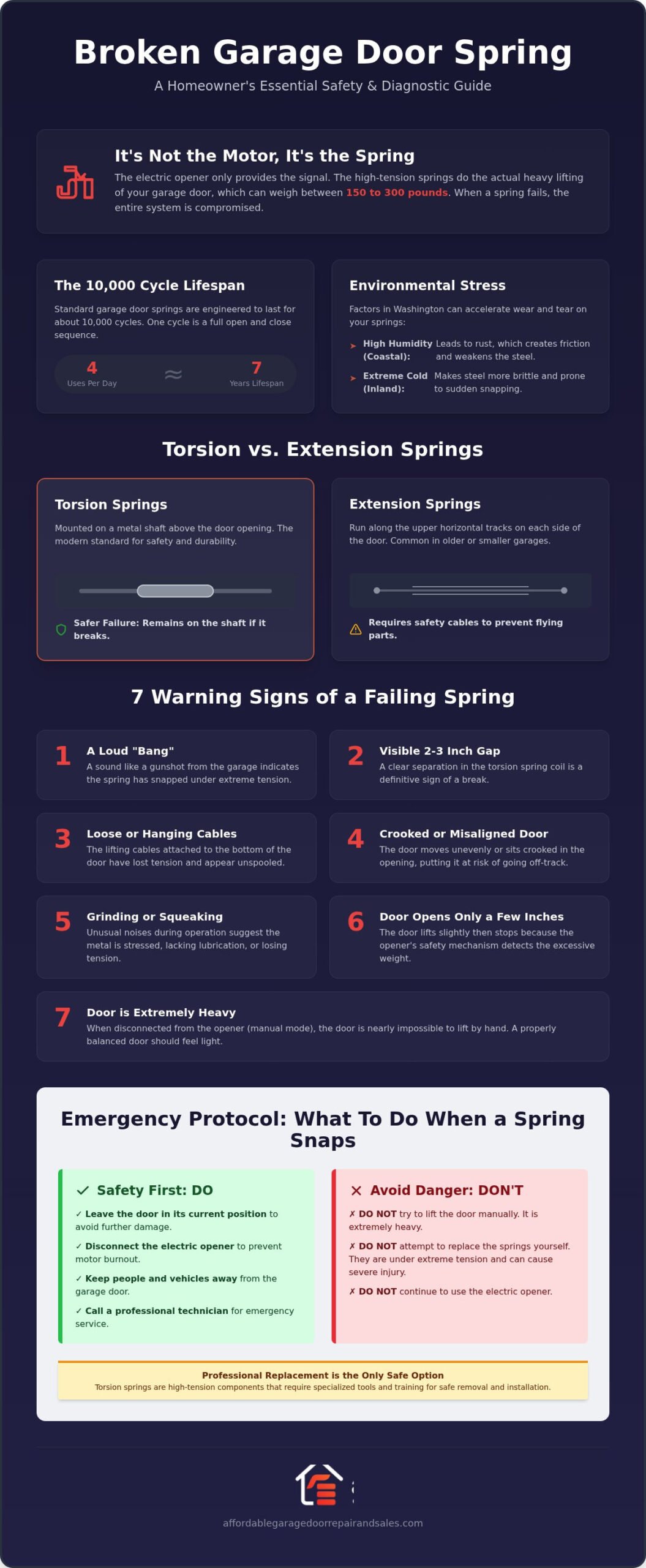
Standard springs are engineered for a specific “cycle life,” which typically sits at 10,000 cycles. One cycle consists of the door opening and closing once. If you use your garage four times a day, your springs are statistically likely to last about seven years. In the Pacific Northwest, environmental factors often play a significant role in this timeline. High humidity in coastal areas like Everett and Seattle can lead to surface rust. This rust creates friction between the coils, which weakens the steel and accelerates the path toward a snap.
Torsion Springs vs. Extension Springs
Modern homes in Washington typically utilize one of two systems. A Torsion spring is mounted on a metal shaft directly above the door opening. These are the preferred standard for safety and performance in local homes because they remain on the shaft even if they fail. This design prevents the spring from flying across the garage and causing injury. Extension springs, which run along the upper horizontal tracks, are more common in older or smaller garages. Because they lack a central shaft, they require safety cables to prevent the metal from becoming a dangerous projectile during a failure. Identifying which system you have is the first step in noticing the signs of a broken garage door spring.
Why Springs Break: The Science of Metal Fatigue
Metal fatigue in springs is the microscopic cracking that occurs over thousands of tension cycles. In Eastern Washington cities like Spokane and Yakima, extreme winter temperatures make steel more brittle and prone to sudden failure. When sub-zero temperatures combine with a lack of proper lubrication, the metal becomes stressed beyond its physical capacity. Regular maintenance can mitigate some of this wear, but once metal fatigue reaches a critical point, a break is inevitable. Keeping the springs clean and lubricated reduces the friction that leads to premature snapping, ensuring your door operates smoothly through every season.
7 Warning Signs Your Garage Door Spring is Broken or Failing
Many homeowners are first alerted to a problem by a sound resembling a gunshot or a heavy collision coming from the garage. This unmistakable loud bang occurs when the steel coil snaps under immense pressure. Because the spring acts as the system’s primary muscle, this sound is a definitive indicator that your counterbalance system has failed. If you hear this noise, it’s best to leave the door in its current position to avoid further damage to the tracks or panels.
If you suspect a failure but didn’t hear the initial snap, look at the metal shaft located directly above your door. A functional torsion spring appears as a single, continuous coil. One of the most obvious physical signs of a broken garage door spring is a visible gap of two to three inches between the coils. This separation occurs because the tension has been released, leaving the two halves of the spring disconnected and unable to provide lift.
When a spring snaps, the steel cables attached to the bottom of the door lose their tension immediately. You might see these cables hanging loosely or appearing “unspooled” from the metal drums at the top of the tracks. This often causes the door to become misaligned or “crooked” as it attempts to move, which can lead to the door becoming stuck off-track if the opener continues to pull on it.
Audible and Visual Red Flags
Before a total mechanical failure, your door may provide subtle warnings. Excessive squeaking, grinding, or a “chattering” sound during operation often suggests the metal is losing its tension or requires professional lubrication. If the door looks uneven while at rest, it likely means one spring has more remaining tension than the other. This imbalance forces the opener to work harder on one side, which eventually leads to a complete system shutdown.
Operational Failures to Watch For
A very common operational failure happens when the door only opens two to six inches before stopping. Modern openers feature safety sensors that detect the excessive weight of a door without spring support. The motor will struggle, make a straining noise, and then reverse the door to prevent the internal gears from stripping.
If you attempt to switch to manual mode by pulling the emergency release cord, you’ll find the door feels incredibly heavy or “dead.” A healthy door should be easy to lift with one hand; if it feels like a 200-pound anchor, the spring is definitely broken. Finally, watch the closing speed. A door with a failing spring often slams down much faster than usual because there is no counterbalance to slow the descent, creating a significant safety hazard for anyone nearby.
Diagnostic Test: Is it the Spring or the Garage Door Opener?
Misdiagnosing a garage door issue is a common mistake that often leads to unnecessary expenses. Many homeowners assume that if the door won’t lift, the motor has reached the end of its life. However, if you invest in a garage door opener replacement while your springs are still broken, the new motor will likely burn out within days. A working opener cannot lift a door with a broken spring because the counterbalance is gone. Identifying the specific signs of a broken garage door spring before calling for service ensures you only pay for the repairs you actually need.
To isolate the problem, you must first disconnect the door from the motor. Locate the red emergency release cord hanging from the opener carriage. Pulling this cord allows you to move the door manually. If the door is extremely heavy or impossible to budge, the problem is mechanical, not electrical. This simple step helps distinguish between “opener strain,” where the motor hums but can’t move, and a “mechanical blockage” caused by a snapped spring or a bent track.
The Balance Test Protocol
A balance test is the most effective way to check for spring fatigue before a total failure occurs. Only perform this test if the door is currently functional and you do not see a visible gap in the coils. If you already suspect the spring has snapped, do not attempt to lift the door manually, as the weight can cause serious injury.
- Step 1: Close the door completely and pull the red emergency release cord.
- Step 2: Lift the door manually to the halfway point (about three or four feet off the ground).
- Step 3: Carefully let go of the door.
A perfectly balanced door will stay in place or move only slightly. If the door slams shut immediately, the springs have lost their tension and are no longer providing the necessary counterbalance. Conversely, if the door shoots upward, the springs may be over-tightened. Both scenarios indicate that your system is out of balance and requires professional adjustment.
Spring vs. Opener Comparison
Use the following comparison to help determine which component is failing. Understanding these differences can save you from a stressful morning when you find your vehicle trapped in the garage.
| Symptom | Broken Spring Indicator | Failing Opener Indicator |
|---|---|---|
| Sound | Loud bang or gunshot noise | Grinding gears or clicking |
| Movement | Opens 2-6 inches and stops | Intermittent starting and stopping |
| Manual Lift | Door feels like dead weight | Door is easy to lift by hand |
Identifying the signs of a broken garage door spring early allows for a targeted repair. If the motor runs but the door stays grounded, check the springs first. Addressing the weight problem is always the priority before troubleshooting the electronics.
Emergency Safety Protocols: What to Do When a Spring Snaps
Once you recognize the signs of a broken garage door spring, your priority must shift immediately from diagnosis to safety. The very first action you should take is to stop using your garage door opener. It’s tempting to try “helping” the motor by lifting the door while pressing the remote, but this is incredibly dangerous. Continuing to operate a door with a snapped spring puts immense strain on the opener’s internal gears and motor. This often leads to a complete motor burnout, which significantly increases the total cost of your repairs.
Keep the door in its current position, whether it’s fully closed or partially open. Alert every member of your household, especially children, to stay away from the garage until a professional arrives. A door without a functional counterbalance system is essentially a heavy, unpredictable weight held up by thin cables. If those cables or the remaining spring hardware fail, the door can drop with enough force to cause catastrophic damage or injury.
The Dangers of DIY Spring Repair
Garage door springs are under extreme torque. Torsion springs store enough energy to lift a steel or wood door weighing over 150 pounds with ease. When an untrained person attempts to replace these components without specialized winding bars and professional experience, that stored energy can be released violently. Common injuries associated with DIY spring repair include deep lacerations, broken fingers, and even permanent facial trauma. Specialized tools are required to wind and unwind the springs safely; standard household wrenches are not a substitute. Most professional repairs are completed quickly and safely, providing you with much-needed peace of mind.
Securing Your Property
If the spring snaps while the door is partially open, you face a security risk and a physical hazard. You can temporarily secure the door by placing a C-clamp on the track directly above one of the rollers. This prevents the door from sliding down or being moved. If the door is already closed, you should manually lock it by sliding the internal locking bar into the track. This ensures your home remains secure while you wait for emergency garage door repair Everett services. Homeowners who ignore the signs of a broken garage door spring often find their property vulnerable to intruders. For a reliable and permanent solution that restores your home’s stability, schedule a professional broken spring repair today.
Professional Spring Replacement Services Across Washington State
When you notice the signs of a broken garage door spring, the next step is connecting with a technician who understands the unique demands of our local climate. Affordable Garage Door Repair & Sales LLC provides 24/7 emergency assistance because hardware failures don’t wait for business hours. Our team carries heavy-duty, galvanized springs that are specifically designed to resist the corrosion common in the Puget Sound area. By addressing the failure quickly, we prevent the excessive wear and tear on your opener that often follows a snapped coil.
Professional replacement is a systematic process that goes far beyond simply swapping out a part. We start with a comprehensive load-bearing analysis to ensure the new springs match the physical weight of your specific door. This is followed by precise winding and calibration to achieve a perfect balance. We don’t just replace the metal; we restore the entire counterbalance system to factory standards. Every service includes a thorough inspection of your cables and drums to ensure the system operates smoothly for years to come.
Our Local Service Reach
We operate regional hubs in Everett, Puyallup, Yakima, and Pasco to maintain industry-leading response times for our neighbors. Homeowners in the Seattle-Tacoma corridor often face tight schedules, and a trapped vehicle can be a major setback for the entire day. Our local presence allows us to reach your driveway quickly with the correct tools and high-cycle parts. Whether you’re dealing with a failure in the freezing temperatures of Spokane or the damp air of the coast, our technicians arrive prepared for the specific challenges of your zip code.
The Affordable Garage Door Repair & Sales LLC Advantage
Our technicians receive rigorous training on both residential setups and commercial garage door repair. This versatility ensures we can handle everything from a small single-car garage to large industrial roll-up doors with the same level of precision. We offer free on-site estimates and prioritize transparent, clear communication throughout the repair process. By choosing a partner that understands the signs of a broken garage door spring and the science of PNW metal fatigue, you ensure the long-term stability and safety of your home’s primary entry point.
Restore Your Home’s Safety and Stability
A snapped spring is a mechanical emergency that requires immediate, expert attention to prevent further damage to your home. By learning to recognize the common signs of a broken garage door spring, you can intervene before a simple part replacement turns into a costly opener overhaul. We have explored how the Pacific Northwest’s unique climate accelerates metal fatigue and why professional calibration is the only way to ensure your door remains balanced and safe for daily use. Taking fast action when you notice these red flags protects both your property and your family.
Affordable Garage Door Repair & Sales LLC is dedicated to providing the stability and peace of mind our Washington neighbors deserve. With 24/7 emergency service and free on-site estimates, we are ready to assist homeowners in Everett, Seattle, Spokane, and the surrounding communities. Contact Affordable Garage Door Repair & Sales LLC for 24/7 Emergency Spring Repair to restore your garage’s functionality today. We look forward to serving as your trusted local partner and ensuring your home remains secure.
Frequently Asked Questions
Can I still open my garage door if the spring is broken?
You should not attempt to open your garage door once a spring has failed. The springs are responsible for lifting the door’s weight, which often exceeds 150 pounds. Attempting to lift it manually can cause severe back strain or injury if the door slips. If you notice the signs of a broken garage door spring, using the electric opener will likely burn out the motor or strip the gears. It’s safest to leave the door closed.
How much does it cost to replace a garage door spring in Washington?
The investment for a spring replacement depends on several factors, including the weight of your door and the specific spring system required. Prices are influenced by whether you have a single or double garage door and the quality of the replacement parts selected. To ensure you receive a fair and accurate price for your specific needs, we recommend scheduling a free on-site estimate with a technician who can inspect your hardware and provide a detailed quote.
Why did my garage door spring break so suddenly?
While a snap feels sudden, it is usually the result of cumulative metal fatigue over several years. Most standard springs reach their limit after approximately 10,000 cycles of opening and closing. Environmental factors like the damp air in Everett or the freezing temperatures in Spokane also contribute to the metal becoming brittle. Identifying the early signs of a broken garage door spring, such as visible rust or minor squeaking, can help you prepare for this inevitable failure.
Should I replace both garage door springs if only one is broken?
Professionals always recommend replacing both springs simultaneously if your door uses a dual-spring system. These components are typically installed at the same time and have the same cycle rating, meaning they wear out at an identical rate. If one spring has snapped, the other is likely nearing the end of its functional life. Replacing both during a single service visit ensures your door remains balanced and saves you the cost of a second emergency call.
How long does a professional garage door spring replacement take?
A professional technician can typically complete a standard spring replacement in 30 to 60 minutes. This timeframe includes the removal of the broken hardware, the installation of the new spring, and the precise winding required to achieve a perfect balance. The technician will also perform a safety check on your cables and rollers to ensure everything is aligned. While the physical replacement is fast, the expertise required to handle high-tension components is essential for safety.
Will a broken spring damage my garage door opener?
A broken spring is one of the leading causes of garage door opener failure. Openers are designed to guide the door’s movement, not to lift its entire physical weight. When the counterbalance system fails, the motor must work significantly harder than it was engineered to do. This extra strain can strip the drive gears or cause the motor to overheat and burn out. Stopping use immediately prevents a simple spring fix from becoming an expensive opener replacement.
What is the difference between a torsion spring and an extension spring?
Torsion springs are mounted on a metal shaft directly above the door and are considered the modern safety standard. They provide a smoother movement and are less likely to fly off if they break. Extension springs are located along the horizontal tracks on either side of the door. While common in older homes, they require safety cables to prevent the metal from becoming a projectile during a snap. Torsion systems generally offer greater durability and a longer lifespan.
How can I prevent my garage door springs from breaking in the future?
You can extend the life of your springs by applying a high-quality silicone-based lubricant to the coils every six months. This prevents the friction and rust that often lead to premature snapping in Washington’s humid climate. Scheduling an annual safety inspection allows a professional to check the balance of your door and make minor adjustments. For high-use households, upgrading to high-cycle springs can double or triple the time between replacements, providing much better long-term value.