A noisy or shaking garage door often points to friction, loose hardware, worn rollers, track misalignment, or a problem with the spring or opener. For a noisy garage door fix in Tacoma, note where the sound comes from and whether the door moves smoothly. Persistent grinding, squeaking, or clanking calls for professional attention. If a spring is broken, don’t force the door open.
It’s easy to assume a loud door just needs lubrication. Minor squeaks from hinges or rollers may sometimes ease with proper lubrication, but shaking, worsening noise, or uneven movement can signal a mechanical issue that lubrication won’t solve. This guide covers common causes, practical safety steps, and repair options in Tacoma, including when a simple adjustment may be enough and when professional repair is safer.
Key Takeaways
- Track when the noise happens and whether the door shakes or moves unevenly; those clues can help narrow down the source.
- Minor squeaks from hinges or rollers may ease with proper lubrication, but persistent grinding, squeaking, or clanking needs attention.
- A broken spring can leave a heavy door without counterbalancing, so don’t force the door open.
- Spring repair, opener replacement, and off-track repair can address common mechanical causes of noisy garage doors.
Garage door repair availability
Tacoma repair availability depends on the fault, access, and the work required. Service-call and after-hours fees also vary by company; there isn’t one Tacoma-wide charge. Ask about the fee structure when arranging service, and describe the noise, movement, and time it occurs. For example, a door that rattles only while closing gives a technician a useful starting point.
Spring repair or replacement addresses problems with the counterbalance that helps a heavy door move. If a spring is broken, leave the door in place instead of trying to operate it. Garage door springs should be replaced in matched pairs. If a cable looks frayed or damaged, consider having the door inspected by a professional.
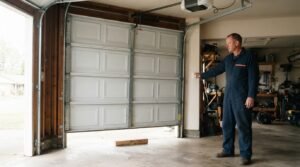
Track repair may be needed when rollers move unevenly, the door sits crooked, or its edge rubs against the frame. A technician can inspect the track alignment and roller path before adjusting the door. Don’t try to force an off-track door back into place. Moving it can worsen the alignment or strain connected parts.
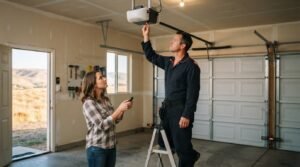
Opener repair or replacement may be needed when the sound starts near the motor, changes as the opener runs, or accompanies inconsistent operation. Note whether the noise occurs during opening, closing, or both. Affordable Garage Door Repair & Sales LLC repairs garage door openers and can address problems involving springs, cables, tracks, rollers, and openers.
During maintenance, a technician can tighten hardware, lubricate moving parts, check track and roller alignment, test the opener, and inspect safety sensors. These steps help distinguish a loose component from a worn or misaligned part. Share whether the door shakes or pauses, and whether it makes grinding, squeaking, or clanking sounds, to help guide the inspection and repair.
Safety risks from noisy garage doors
A noisy door deserves attention to its movement, not just its sound.
Proper lubrication may address a minor squeak, but leave spring, cable, and off-track problems to a professional. Don’t force a door with a broken spring, even if it still moves slightly. If it drops, tilts, or makes persistent grinding, squeaking, or clanking sounds, stop operating it and arrange an inspection.
Tightening Loose Hardware
Loose fasteners can make hinges, brackets, or other connected parts vibrate as the door travels. With the door stationary, look for visibly loose hardware or movement around hinges and brackets. Tightening accessible fasteners may reduce rattling, but don’t adjust spring-connected hardware or reach near moving parts. If the door shakes, sits unevenly, or is difficult to control, leave adjustments to a technician.
Replacing Rollers or Hinges
Consider replacing a roller if it looks cracked, wobbles in its track, or continues making noise after suitable lubrication. Hinges may need attention if they’re bent, damaged, or no longer hold the door sections steadily. Repeated squealing or grinding during travel can also indicate wear. Don’t remove a roller or hinge while the door is under tension; have a professional assess parts that affect its support or movement.
A tune-up can help distinguish a minor noise from a developing mechanical problem. Note when the sound occurs, whether the door shakes, and whether the noise changes between opening and closing. This information helps focus the inspection. Persistent grinding, squeaking, or clanking is a reason to arrange professional service instead of continuing to operate the door.
Silencing the sound starts with identifying its source. A weatherstrip that sticks and releases against itself can create noise, while worn rollers may sound rough as they travel. Lubrication may ease minor hinge or roller squeaks, but it won’t correct every cause. For a safety-focused assessment, a garage door safety inspection can help identify the next repair step.
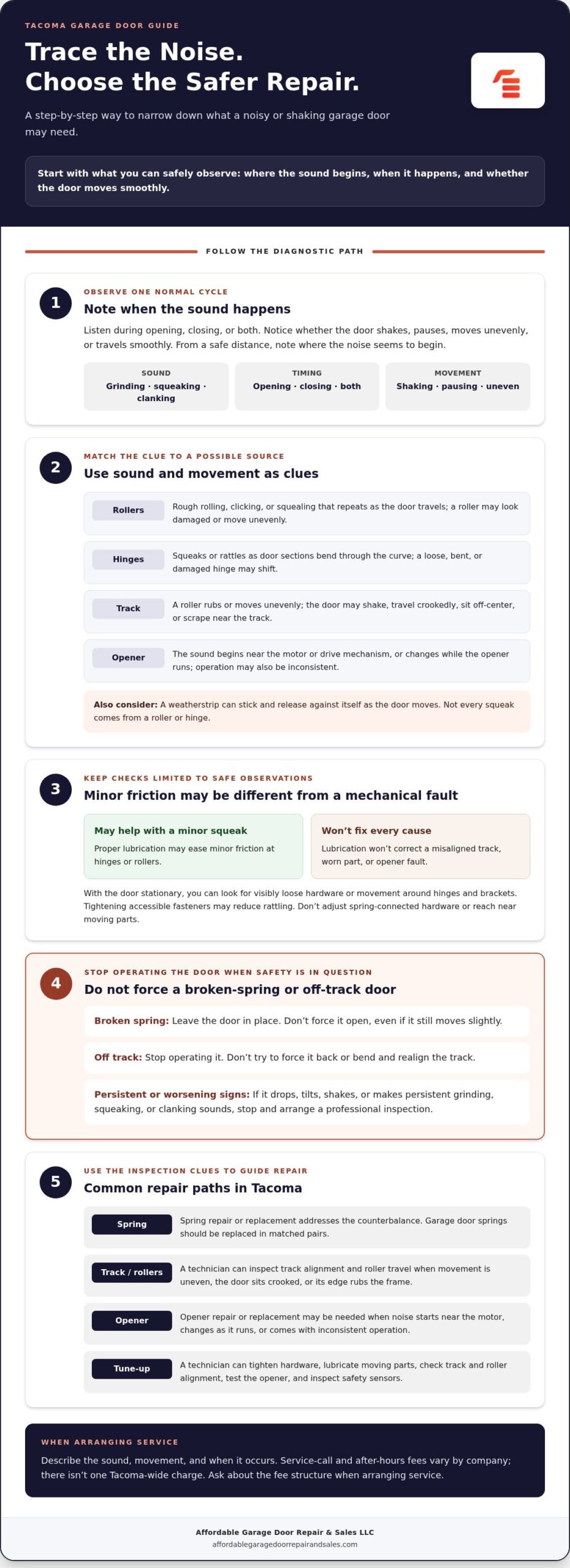
Common causes of a noisy or shaking garage door
A garage door can rattle, squeak, grind, or shake for different mechanical reasons. Note the sound and where it occurs to help narrow down the source.
Diagnosing Roller and Hinge Noise
Roller noise often follows the door as it moves along the track. Listen for rough rolling, clicking, or squealing that repeats during travel. Hinges may squeak or rattle as door sections bend through the curve. Watch from a safe distance: a loose or visibly worn hinge can shift as the panels move.
Minor squeaks from hinges or rollers may sometimes ease with proper lubrication. If the same roller keeps clattering, looks damaged, or doesn’t travel smoothly, lubrication may not address the underlying wear. Compare the sound during opening and closing. A repeated noise at the same point in each cycle can help identify which component needs closer inspection.
Diagnosing Track and Opener Noise
A track-related sound may occur where a roller rubs or moves unevenly. Look for a door that shakes, travels crookedly, or appears to scrape near the track. Don’t try to bend or realign the track yourself. If the door has come off track, stop operating it; further movement can strain connected components and worsen the problem.
Opener noise usually begins near the motor or drive mechanism as the unit runs. Listen for a new hum, rattle, or change in sound while the door is moving. If the opener makes noise but the door also moves unevenly, another component may be involved. Note when the sound starts and stops, then describe it during a repair assessment.
Not every squeak comes from a roller or hinge. A weatherstrip can stick and release against itself, making noise as the door moves. Lubrication may reduce minor friction at hinges or rollers, but it won’t correct a misaligned track, worn part, or opener fault. Persistent grinding, squeaking, or clanking calls for professional attention.
How can I diagnose whether garage door noise comes from rollers, hinges, tracks, or opener?
Start by noting where the sound begins and what the door does as it moves. A noisy garage door fix in Tacoma depends on identifying whether the sound follows the moving door or starts at the opener.
Observe one normal opening and closing cycle from a safe distance. Don’t touch moving parts or operate a door that looks crooked, shakes heavily, or has come off track. Note whether the sound occurs throughout travel, at one point, or only while the opener runs. These clues can help distinguish a moving-part noise from a motor or drive noise.
Roller trouble often sounds like repeated squealing, clicking, or rough rolling as rollers pass along the tracks. Watch for a roller that wobbles or moves unevenly. Hinge noise is more likely near the joints between door sections, especially as those joints bend during travel. A squeak that returns as the panels flex can help narrow down the source.
Track noise may sound like scraping or rubbing in one area. Look for uneven roller travel, visible contact, or a door that shifts sideways. Don’t bend or adjust a track yourself. If the door has slipped out of its track, stop using it and arrange professional repair.
Opener noise begins near the motor or drive unit. Listen for humming, rattling, or a change in sound as the opener operates. If the motor runs but the door pauses or moves unevenly, the noise may involve more than the opener. Note when it starts and stops, then share those details during the assessment.
For an accurate diagnosis, describe the sound and its location rather than guessing at the failed part. If the motor area is noisy or the door movement is inconsistent, arrange garage door repair to assess the opener and connected mechanisms.
Affordable Garage Door Repair & Sales: Spring Repair
Affordable Garage Door Repair & Sales LLC can help when a noisy door points to a spring, opener, or track problem. A door that feels unusually heavy, moves unevenly, or won’t open may need spring repair, not lubrication. If the opener is noisy or no longer operates the door properly, opener repair or replacement may address the issue. For a door that has left its track, off-track repair can help restore its path and movement.
Describe the sound, when it occurs, and any change in how the door moves. Those details help focus the inspection on the likely repair, whether the problem involves a spring, opener, or track.
Contact Affordable Garage Door Repair & Sales LLC to discuss your garage door repair needs.
Choose a Clear Next Step for Your Garage Door
Before arranging a noisy garage door fix in Tacoma, note what changed. Record whether the noise starts during opening or closing, where it seems loudest, and whether the door still moves evenly. This gives the repair conversation a practical starting point without requiring you to diagnose the mechanism yourself. If the door’s movement feels unsafe, stop operating it.
Affordable Garage Door Repair & Sales LLC provides spring repair, broken spring repair, and opener replacement for garage door problems that need mechanical attention. Describe the sound and the door’s behavior so the inspection can focus on the issue you’re experiencing. The company offers upfront honest pricing with no hidden fees and a free safety inspection before work begins.
For help with a noisy or malfunctioning door, contact Affordable Garage Door Repair & Sales LLC. A careful next step can make the repair process more straightforward and help you move toward a quieter, properly functioning door.
Frequently Asked Questions
Why is my door loud or shaking when it runs?
Noise or shaking usually means a moving part is rubbing, loose, worn, or misaligned. The sound’s timing offers a useful clue: a squeak at the same point in travel may come from a hinge or roller, while a sound near the motor may involve the opener. Note whether the door moves smoothly, then share your observations with a repair professional in Tacoma.
What are the common causes of a noisy garage door?
Common sources include dry hinges or rollers, loose hardware, a worn roller, track misalignment, opener noise, and weatherstrip that sticks and releases. A rattle that follows the door, for example, differs from scraping at one track area. Observe the door from a safe distance and note when the noise starts. This simple record can help narrow down the likely cause.
How do I safely lubricate garage door rollers, hinges, springs, and tracks?
Start with the door closed, and keep your hands clear of joints and moving parts. Apply a small amount of garage door lubricant to accessible roller bearings and hinge pivots, following the product label. Don’t loosen or handle springs, which are under tension. Tracks generally need cleaning rather than lubrication; remove loose dirt without bending or adjusting them. Stop if the door is crooked or unstable.
Which lubricants are safe for garage doors, and which should be avoided?
Choose a product whose label specifically allows use on garage-door moving parts, then follow its application directions. Avoid using an unlabelled household oil or spray simply because it’s available; the product may not suit the component or could leave unwanted residue. WD-40 sprayed into a door-seal hole didn’t stop one reported seal noise, so don’t assume it will address every source.
What garage door noises indicate a broken spring, cable, or other dangerous problem?
Persistent grinding, squeaking, or clanking warrants professional attention, especially alongside a crooked door, frayed cable, or sudden change in movement. Don’t force the door open. Affordable Garage Door Repair & Sales LLC provides repair service in Tacoma and nearby communities, as well as Everett, Puyallup, Seattle, Auburn, Wenatchee, Yakima, Pasco, Ellensburg, and Spokane.