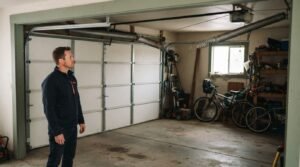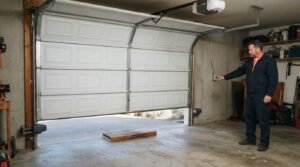
An open garage door calls for caution, not a quick pull. If you’re deciding what to do if your garage door is stuck open, keep people and vehicles clear, don’t force the door, and use another entrance if available. Don’t disconnect an open door from its opener if it may be damaged, because it could fall.
It’s natural to focus first on getting inside or securing the garage. But a door that looks uneven, has a displaced roller, or hangs unsupported can shift, so protect people before testing the mechanism.
The steps below show how to inspect rollers and tracks from a safe position, recognize weather-related sticking, and decide when a repair needs professional attention. You’ll also learn practical ways to reach the home by another route and reduce the risk of injury or further damage while the door remains open.
Key Takeaways
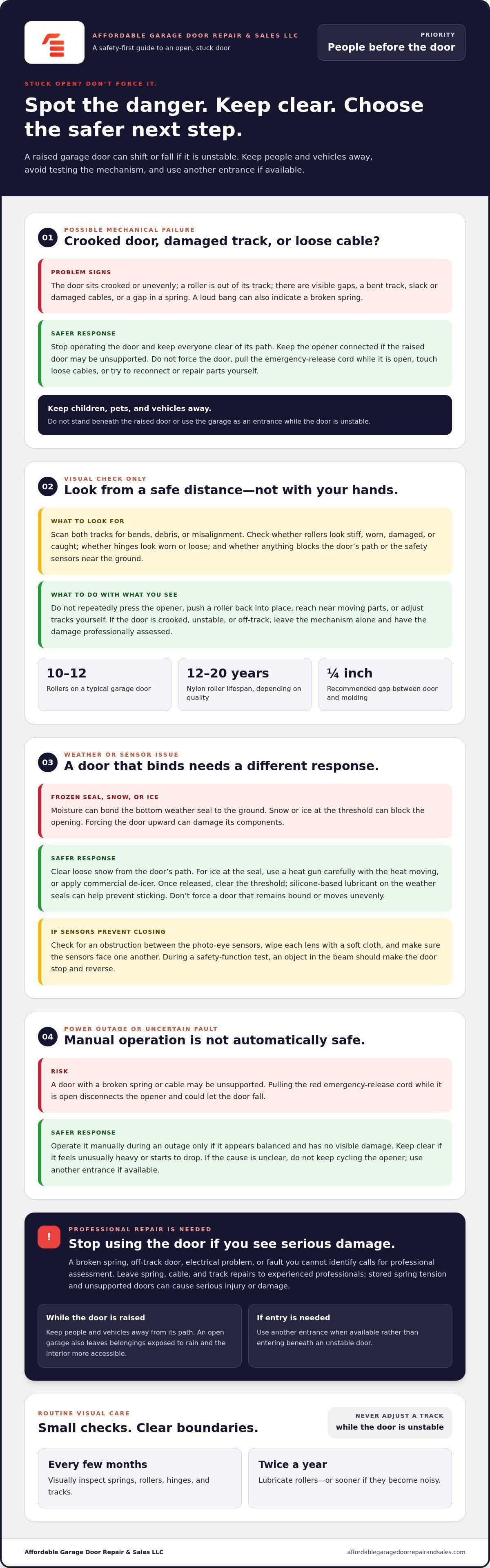
- Look for crooked movement, displaced rollers, or gaps along the tracks, and stop operating the door if it appears off-track.
- Keep clear of a door that may have a spring or cable problem; disconnecting it while open can let it fall.
- Weather can bind a door in place. Learn what to check before trying to move it.
- If the garage isn’t a safe way in, use another entrance and get help for damage that needs repair.
1. Checking rollers and tracks
If you’re deciding what to do if your garage door is stuck open, begin with a visual check from a safe distance. Don’t repeatedly press the opener or try to straighten the door by force. Look along both tracks for bends, debris, or sections that appear misaligned.
An off-track door may sit crooked or unevenly, with rollers out of the tracks or visible gaps between the door and frame. If a roller has left its track, stop operating the door until it’s repaired. Moving it further can worsen the misalignment and make the door less stable.
Check whether the rollers appear stiff, worn, or damaged, and whether they travel smoothly through the track. A garage door typically has 10-12 rollers. Nylon rollers can last 12 to 20 years, depending on their quality. Noise, uneven movement, or a roller that catches may signal wear, but don’t try to push it back into place.
Look for visible wear or looseness at the hinges, too. Hinges connect the door sections, so damage can affect how the door bends and travels along the track. Never reach near a roller or hinge while the door is moving. If the door looks crooked, a roller is displaced, or a track is bent, leave the mechanism alone and arrange professional off-track repair.
If the door won’t close, first look for an obstruction in its path and check whether the rollers sit evenly in straight tracks. Also look for anything blocking the safety sensors, located a few inches above the ground. Inspect springs, rollers, hinges, and tracks visually every few months. Lubricate rollers twice a year, or sooner if they become noisy. If the door is unstable, don’t inspect it up close or attempt to adjust the tracks yourself.
When a rubbing or gapping track needs adjustment, the recommended gap between the garage door and its molding is a quarter-inch. Leave track adjustments to a professional.
2. Avoiding injury and preventing a heavy door from falling
A garage door can look stable while open and still drop without warning. Springs counterbalance its weight, while cables help lift and lower it. If either system fails, the door may fall even when fully open, causing serious injury or damage.
Can a garage door be forced closed if the spring or cable is broken? No. Don’t force it closed or try to hold it in place. A broken spring or loose cable can leave the door unsupported, and the remaining parts may be under enormous tension.
Stay clear of the door’s path, and keep children, pets, and vehicles away from the opening. Don’t stand beneath the raised door, touch loose cables, or try to reconnect a cable by hand. A frayed or hanging cable needs assessment by a technician because tension can make it move suddenly.
If you suspect a spring, cable, or track problem, don’t pull the red emergency-release cord while the door is open. Releasing the opener disconnects it from the door. If the door is unsupported, it could drop. Keep the opener connected and don’t press its control again.
A loud bang or a visible gap in a spring above the door can indicate a broken spring. Leave spring work to experienced professionals. Don’t try to wind, loosen, or replace a spring yourself; its stored tension makes the work hazardous. Take the same precautions if cables look slack, detached, or damaged.
For a broken spring or cable, stop using the door and arrange professional broken spring repair or cable service. If the door is partly open, keep everyone away until it can be secured and repaired. Avoid using the garage as an entrance while the door remains unstable.
3. Environmental causes of a garage door getting stuck
Weather can affect the door, its seals, and the opener’s sensors. In freezing conditions, moisture can bond the bottom weather seal to the ground. Snow or ice near the threshold can also block the opening. Clear loose snow from the door’s path, but don’t force a frozen door upward, as this can damage its components.
For ice at the seal, use a heat gun carefully or apply commercial de-icer. Keep the heat moving instead of concentrating it in one spot. Once the seal releases, clear the threshold and consider applying silicone-based lubricant to the weather seals to help prevent sticking. Don’t force the door if it remains bound or moves unevenly.
Photo-eye sensors can also prevent a door from closing. Check for an obstruction between the sensors, wipe dirt from each lens with a soft cloth, and make sure the sensors face one another. To test the safety function, place an object in the beam while the door closes. The door should stop and reverse.
During a power outage, operate the door manually only if it appears balanced and has no visible damage. Pulling the red emergency-release cord disconnects the opener, but don’t release an open door if a spring or cable may be broken. Keep clear if the door feels unusually heavy or starts to drop.
To re-engage a common opener after using the release, pull the release string down and lift it to disengage; pulling it straight down re-engages it. Follow the opener’s manual for its specific mechanism.
Call for emergency repair if the spring is broken, the door is off-track, there’s an electrical problem, or you can’t identify the fault. The repair time depends on the cause, the work required, and whether replacement parts are needed. A blocked sensor or frozen seal needs a different response from damaged cables or an opener fault. Don’t keep cycling the opener while the door is stuck.
4. Safety steps around a stuck-open door
An open garage leaves the interior exposed while the door remains raised. Overnight, rain can reach stored belongings, and an unsecured opening may make access easier. A door with damaged springs or cables can also fall, so treat the area beneath it as unsafe until the cause is addressed.
What are the risks of leaving a garage door stuck open overnight? The garage remains accessible, and weather can reach items near the opening. If the door has a mechanical fault, it may shift or fall, so keep people and vehicles away.
Move people, pets, and vehicles away from the door’s path. Don’t repeatedly press the wall control or remote, force the door, or put a ladder or other object beneath it. These actions could move an unstable door or create another hazard near the opening.
Use a separate entrance to reach the home, such as a front or side door. Keep the garage-to-house entry closed and secured with its normal lock. If damage is possible, don’t pull the emergency-release cord while the garage door is open. The opener could stop supporting the door, allowing it to drop.
If you need operating instructions, consult the opener’s manual, but don’t attempt repairs on a raised, unstable door. Keep the area clear while arranging help, and tell the technician if you heard a loud bang, saw a loose cable, or noticed the door sitting unevenly. These details can help describe the problem.
For a door that remains open because of suspected damage, get help securing a stuck-open garage door. Leave the opening and mechanism untouched until the door can be assessed safely.
Before performing maintenance, disengage the garage-door opener. This is a preparatory step, not a reason to approach or handle a raised door that may be unstable. Keep the opening clear and leave the door alone while arranging help. Disengaging the opener won’t secure or repair a stuck-open door.
Affordable Garage Door Repair & Sales: Spring Repair
Affordable Garage Door Repair & Sales LLC can help when a stuck-open door points to a spring failure or another mechanical fault. The company repairs springs and off-track doors when rollers have shifted from the tracks. If the opener is the problem, opener repair or replacement can address it.
Don’t try to lower a door if you suspect a broken spring or damaged track. Keep clear of its path and arrange professional repair instead. Tell the technician what you noticed, such as a loud bang, uneven movement, or an opener that stopped responding, to help describe the problem.
For a spring, opener, or off-track issue, contact Affordable Garage Door Repair & Sales or visit affordablegaragedoorrepairandsales.com.
Make the Next Step a Safe One
Knowing what to do if a garage door is stuck open also means knowing when to stop testing it. Before arranging repair, note what happens when you activate the opener, whether the door moved unevenly, and whether weather or a power outage preceded the problem. These observations help describe the fault without putting the mechanism through another cycle.
Keep the garage clear and use another entrance until the door can be operated safely. Affordable Garage Door Repair & Sales LLC provides garage door repair for residential and commercial properties across Washington, including Everett, Puyallup, Seattle, Tacoma, Auburn, Wenatchee, Yakima, Pasco, Ellensburg, and Spokane. Arrange professional repair rather than repeatedly trying to move a door that may be damaged.
Contact Affordable Garage Door Repair & Sales LLC to discuss the repair your garage door needs. A careful next step can help you restore safe, reliable access.
Frequently Asked Questions
Is there another way in?
Yes. Use a separate exterior entrance, such as a front or side door, or enter through a door connecting the house and garage only if the route is clear and safe. If you’re locked out, contact someone with a spare key instead of climbing through a window or trying to move the garage door manually. Keep children and pets away from the opening.
Why Does My Garage Door Get Stuck?
A garage door can stop when the opener, door balance, or travel path is affected. If the motor runs but the door stays still, the trolley may be disengaged. If the door stops at the same point each time, a travel setting or mechanical resistance may be involved. Note what happens during one operation, then avoid repeated cycling, which could worsen the fault.
How to manually close a garage door during a power outage
During a power outage, operate the door manually only if it appears balanced and has no visible damage. Pull the red emergency-release cord to disconnect the opener, then lower the door by hand. Don’t release it if a spring or cable may be broken or if the door feels unusually heavy.