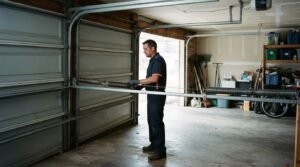
More lubricant doesn’t mean a quieter, smoother door. To learn how to lubricate garage door springs and rollers, use a garage-door spray lubricant with a silicone or lithium base. Apply a light coating to the springs and lubricant only to roller bearings that are exposed; don’t spray inside the tracks or lubricate nylon rollers. Wipe away excess to limit dust and grime buildup.
If your door squeaks or moves roughly, adding more lubricant may seem like the answer. The right product, applied to the right moving parts, can help reduce noise and rust, limit wear, and ease strain on the opener.
This guide explains how to prepare the door and lubricate springs, hinges, cables, and exposed roller bearings. You’ll also learn which parts to leave dry, how often to lubricate, and when unusual movement or visible damage calls for repair rather than routine maintenance.
Key Takeaways
- Choose a weather-resistant silicone- or lithium-based garage door lubricant, and apply a light coating to the springs rather than overloading them.
- Lubricate metal hinge pivot points and suitable moving components, but keep lubricant out of the tracks and off nylon rollers.
- Target exposed roller bearings and extension-spring pulleys to help moving parts operate with less friction and noise.
- Adjust maintenance to the door’s use and climate, and watch for damage or operating problems that lubrication alone won’t resolve.
Why Lubricate Garage Door Springs?
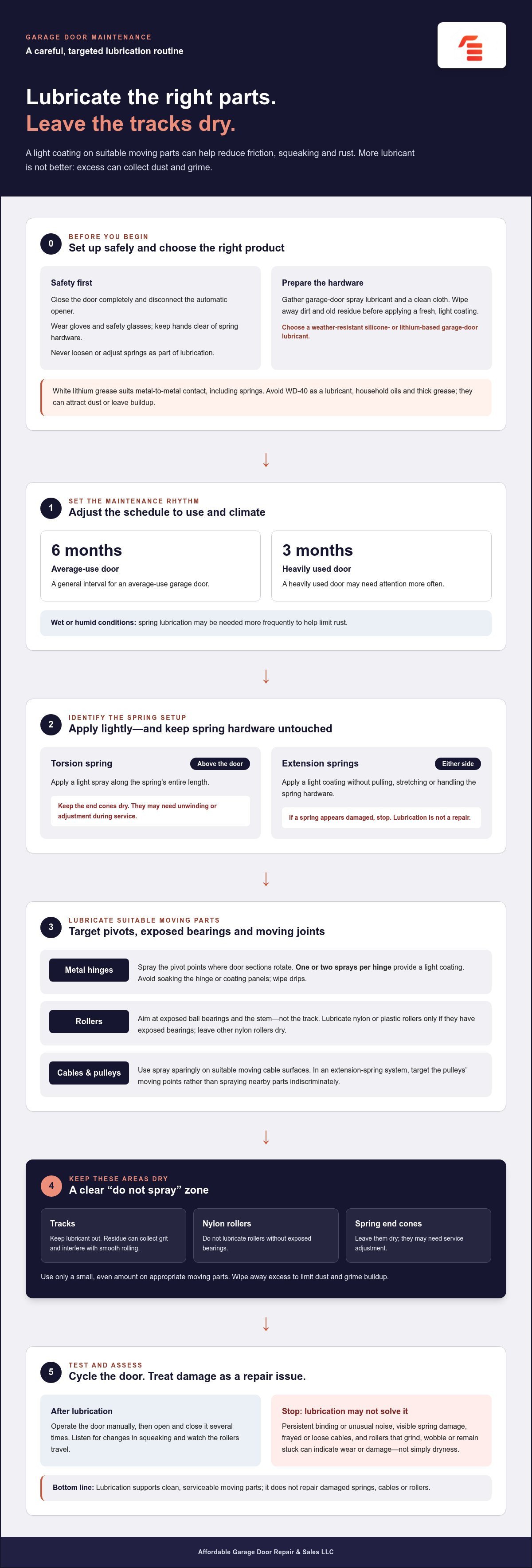
- Choose a weather-resistant silicone- or lithium-based garage door lubricant. White lithium grease suits metal-to-metal contact, including springs. Avoid WD-40 as a lubricant, along with household oils and thick grease; they can attract dust or leave buildup that interferes with movement.
- Set a schedule based on use and climate. Lubricate an average-use garage door every six months; a heavily used door may need attention every three months. Wet or humid conditions can call for more frequent spring lubrication to help limit rust.
- Gather garage door spray lubricant, a clean cloth, gloves, and safety glasses. Use the cloth to remove dirt and old residue before applying a fresh coating. The spray nozzle helps target narrow moving parts without coating nearby surfaces.
- Before starting, close the garage door completely and disconnect the automatic opener. Wear gloves and safety glasses to protect against drips and splashes. Keep your hands clear of spring hardware, and never loosen or adjust springs as part of lubrication.
- Identify the spring type before spraying. A torsion system has a single spring above the door; apply a light spray along its entire length. Keep the end cones dry, since they may need unwinding or adjustment during service.
- With an extension-spring system, the springs are located on either side of the door. Apply a light coating without pulling, stretching, or handling the spring hardware. If a spring appears damaged, stop. Lubrication is not a repair.
- Keep lubricant out of the tracks, where residue can interfere with smooth rolling. Don’t lubricate nylon rollers or spring end cones. Use lubricant only on appropriate moving metal parts; excess can collect dust and grime instead of helping the door run quieter.
- After applying lubricant, operate the door manually to assess its movement. Open and close it several times so lubricant reaches the moving contact points. If the door still binds, makes unusual noises, or has visible spring damage, lubrication alone will not solve the problem.
Lubricating hinges, rollers, and cables
- First, clean the metal hinges, roller stems, and exposed cable surfaces. A dry cloth removes grit and old lubricant so fresh spray does not trap debris against moving parts. Keep the door closed and the automatic opener disconnected while working near the hardware.
- Apply silicone-based garage door lubricant to the pivot points of each metal hinge, where the sections rotate as the door bends. One or two sprays per hinge provide a light coating. Do not soak the hinge or coat nearby panels; wipe away drips before they collect dust.
- For rollers, aim lubricant at the bearings and stem, not the track. If a roller has exposed ball bearings, apply lubricant to them. Do not lubricate nylon rollers without exposed bearings, and avoid thick grease, which can hinder roller movement.
- Use garage door spray lubricant sparingly on suitable moving cable surfaces, keeping it off the tracks and surrounding floor. Inspect the cables as you work. Fraying, looseness, or visible damage calls for repair rather than more lubricant; damaged cables may need garage door cable replacement.
- After applying lubricant, open and close the door several times to work it into the hinge pivots and roller bearings. Listen for changes in squeaking and watch each roller travel. A roller that still sticks may be worn or misaligned, rather than simply dry.
- Keep the inside of the tracks free of lubricant. Residue can collect grit and interfere with smooth rolling, even when the rollers and hinges are maintained. In dusty or humid conditions, inspect these components during routine maintenance and clean away buildup before applying another light coating.
Silicone-based lubricants are recommended for garage door hinges, rollers, and springs because they provide long-lasting lubrication and do not attract dirt or dust.
Lubricating roller bearings
- Inspect each roller before lubricating it. An intact roller that turns smoothly may need little attention. Grinding, visible cracks or chips, or a roller that wobbles in its bracket point to wear or damage, not simply a lack of lubrication. Lubricant will not repair a damaged roller.
- Clean the roller and exposed bearing area with a cloth. Removing dirt and old residue helps prevent debris from mixing with fresh lubricant. Check for moisture around the bearing, as dampness can encourage corrosion on exposed metal.
- Apply garage door spray lubricant directly to exposed ball bearings inside the roller. Carefully move the nozzle around the bearing opening, coating the moving parts rather than the wheel’s outer surface. This helps reduce friction and noise during operation.
- Check the roller material before spraying. Lubricate nylon or plastic rollers only when they have exposed bearings; leave other plastic rollers dry. Keep lubricant out of the track, where residue can collect grit and interfere with the roller’s travel.
- Inspect pulleys in an extension-spring system and apply lubricant to their moving points. Bearings and pulleys may benefit from lubrication that reduces friction and noise. Do not spray nearby cables or tracks indiscriminately; target the moving joint.
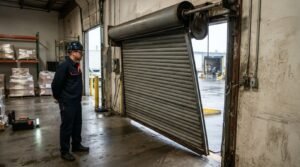
- For roller-style garage doors, focus on moving joints and roller bearings, not the track. Apply a small, even amount, then wipe away excess. This helps prevent grime buildup while supporting smooth movement and may extend the working life of clean, serviceable parts.
- Operate the door and listen for persistent grinding after lubrication. If a roller remains noisy, wobbles, or shows physical damage, lubrication is not the solution. A worn roller needs replacement; a sound roller with dry, exposed bearings may simply need careful maintenance.
Benefits of lubricating garage door springs
- Apply a light coating to torsion springs to help limit rust and squeaking. A clean, lubricated spring can move with less friction as the door opens and closes. This can support smoother operation, especially when dry metal surfaces are causing noise.
- Listen to the door before and after maintenance. If a squeak from a spring or hinge fades after lubrication, friction was likely contributing to the noise. A quieter door also makes new grinding or banging sounds easier to notice.
- Reducing friction at moving parts can help limit wear over time. Springs, hinges, and roller bearings work together through each opening cycle. Lubricating appropriate contact points may extend their useful life, but it will not correct damage or misalignment.
- Pay attention to the opener during each cycle. Smoother door movement may reduce strain on the opener motor caused by resistance in the hardware. Lubrication can support smoother movement, but a struggling opener may also indicate a separate mechanical issue.
- Make lubrication part of a clean maintenance routine. Wipe away dirt and old residue before applying fresh lubricant, then remove any excess. This helps prevent grime from collecting on moving parts and makes rust, wear, or visible damage easier to spot.
- After maintenance, compare the door’s operation over several open-and-close cycles. Note whether spring noise changes and whether the door travels evenly. Persistent noise, grinding, or uneven movement suggests an issue beyond dry hardware, such as a worn or damaged component.
- Treat lubrication as preventive care, not a repair for broken springs. A spring that has snapped or visibly shifted needs professional attention because lubricant cannot restore its function. If the door remains noisy or difficult to operate after maintenance, get help with a garage door that still runs roughly.
Affordable Garage Door Repair & Sales: Spring Repair
Affordable Garage Door Repair & Sales provides spring repair when lubrication cannot solve a damaged or broken spring. A snapped spring, visible damage, or a door that will not open calls for repair, not routine maintenance. Do not try to unwind, adjust, or replace a spring yourself; spring systems are under tension.
Broken spring repair addresses the spring itself, while opener replacement can help when the opener needs replacing. If the door has moved off its tracks, off-track repair addresses that separate issue. Identifying the symptom helps focus on the part that needs service instead of applying more lubricant.
For a broken spring, opener problem, or off-track door, contact Affordable Garage Door Repair & Sales to discuss repair options.
Keep Your Next Door Cycle in Mind
Use routine maintenance to notice changes in your garage door’s movement. A new sound, uneven travel, or a door that behaves differently is a reason to pause and assess the problem, not simply add more lubricant. Knowing how to lubricate garage door springs and rollers helps you care for moving parts, but it does not replace repair when hardware is broken or the opener is failing.
Affordable Garage Door Repair & Sales LLC offers Spring Repair and Broken spring repair for spring problems, along with Opener Replacement when the opener needs attention. If the door’s operation leaves you unsure what needs fixing, contact Affordable Garage Door Repair & Sales LLC to discuss the next step. A well-maintained, properly functioning door starts with paying attention to what it’s telling you.
Frequently Asked Questions
What Lubricant Should You Use?
Choose a weather-resistant lubricant formulated for garage door mechanisms, with a silicone or lithium base. Check the product label for compatible materials and intended use before spraying, especially if your door has both metal and nylon components. Apply lubricant only to the moving contact point you are treating. A light coating helps avoid residue that can collect dirt around the hardware.
Which lubricant is best for garage door springs and rollers?
White lithium grease can suit metal-to-metal spring contact, while silicone spray works well on exposed roller bearings. The roller’s construction matters: leave nylon wheels without exposed bearings dry, and apply lubricant to the bearing rather than the wheel surface. The key to how to lubricate garage door springs and rollers is matching the product and application to each component.
Can you use WD-40, silicone spray, or white lithium grease on garage door parts?
Silicone spray and white lithium grease can be used on suitable garage door components, but WD-40 shouldn’t be your lubricant. It acts as a cleaner and water displacer rather than providing lasting lubrication. Use silicone spray for appropriate moving parts, and reserve white lithium grease for metal-to-metal areas such as springs. Avoid using either product in tracks or on parts that should stay dry.
How much does professional garage door lubrication or spring service cost?
The cost depends on the work required, such as routine lubrication, broken spring repair, replacement parts, or additional diagnosis. Affordable Garage Door Repair & Sales LLC provides upfront honest pricing with no hidden fees, an upfront quote before work begins, and a free garage door inspection and free safety inspection. Homeowners in Everett, Puyallup, Seattle, Tacoma, Auburn, Wenatchee, Yakima, Pasco, Ellensburg, and Spokane can request a quote.